
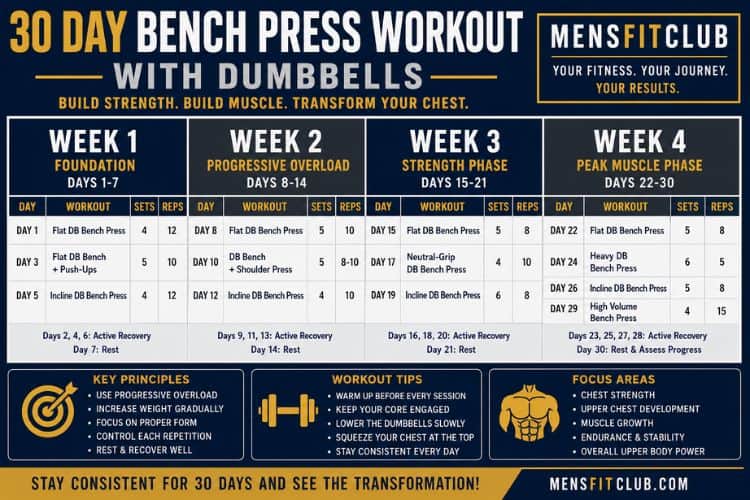
30 Day Dumbbell Bench Press Workout for a Bigger Chest
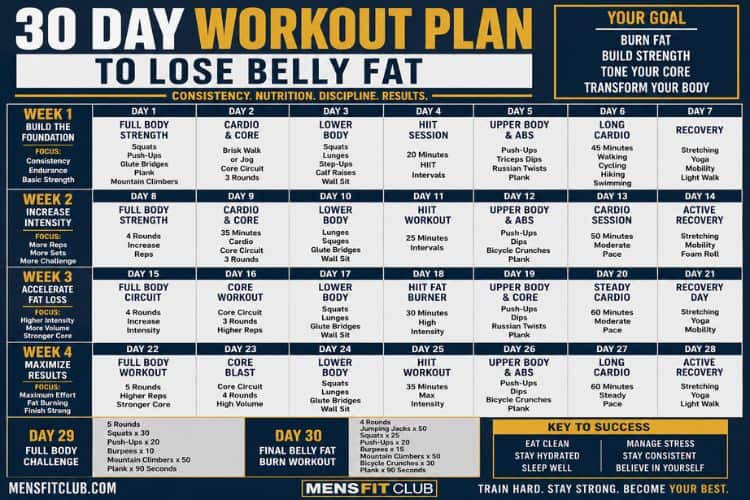
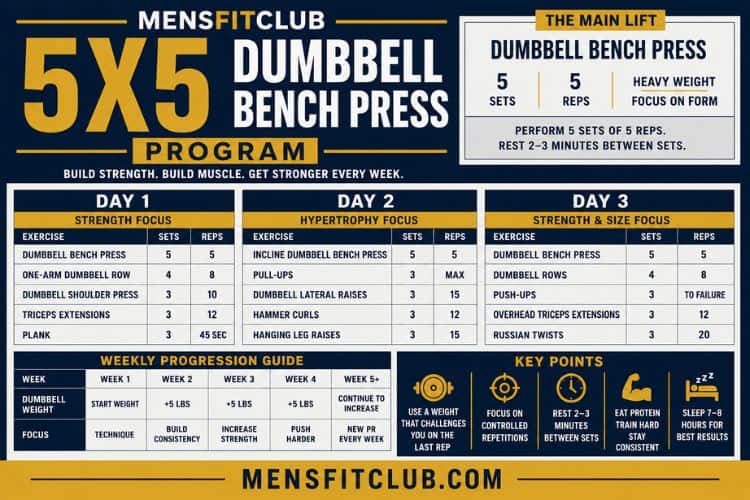
5×5 Dumbbell Bench Press Workout The Ultimate Guide to Gains
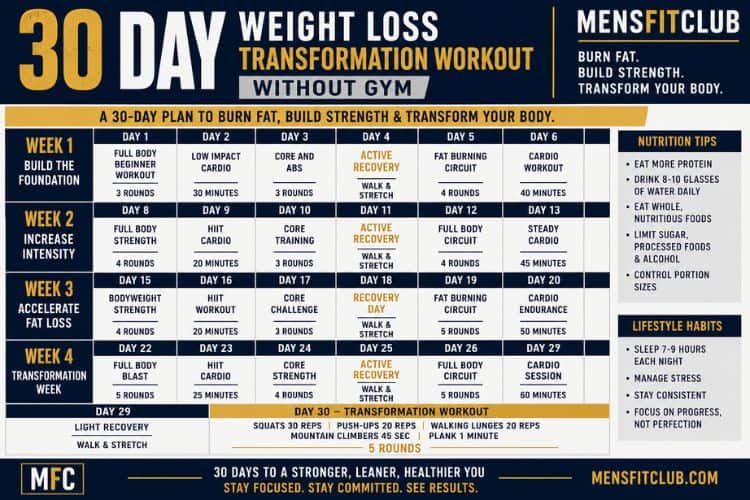
30 Day Weight Loss Transformation Workout Without Gym
28 Day Plank Challenge: Build Core Strength Fast
If you’re looking for a simple yet highly effective way to strengthen your core, improve posture, and boost overall fitness, a 28 day plank challenge is one of the best routines you can follow. Planks are a foundational exercise that target your abs, obliques, lower back, shoulders, and even your glutes. Unlike crunches or sit-ups, planks focus on stability and endurance, helping you build a strong and functional core that supports everyday movements and athletic performance.
This 28 day plank challenge is designed for men of all fitness levels. Whether you’re a beginner just starting your fitness journey or an experienced lifter looking to improve core strength, this progressive plan will help you build endurance, reduce injury risk, and develop a solid midsection. The best part is that you don’t need any equipment, and you can do it anywhere.
What Is a 28 Day Plank Challenge and Why It Works
The plank is an isometric core exercise, meaning you hold a static position instead of performing repeated movements. During a plank, your body forms a straight line from your head to your heels while your core muscles stay engaged the entire time. This constant tension activates deep stabilizing muscles that are often overlooked in traditional ab workouts.
Benefits of the 28 Day Plank Challenge Exercise
- Strengthens the entire core, including deep abdominal muscles
- Improves posture and spinal alignment
- Reduces risk of lower back pain
- Enhances balance and stability
- Builds endurance without stressing joints
- Supports better performance in weight training and sports
Because planks engage multiple muscle groups at once, they are one of the most efficient exercises you can include in your routine.
How to Do a Proper Plank
Before starting the 28 day plank challenge, it’s important to master proper form. Poor form reduces effectiveness and increases injury risk.
Step-by-Step Plank Form
- Start in a forearm position with elbows directly under shoulders
- Extend your legs back and keep feet hip-width apart
- Engage your core by pulling your belly button toward your spine
- Keep your body in a straight line from head to heels
- Avoid sagging hips or raising them too high
- Keep your neck neutral and gaze down
Common 28 Day Plank Challenge Mistakes to Avoid
- Letting your lower back sag
- Holding your breath instead of breathing steadily
- Raising hips too high
- Placing elbows too far forward
- Not engaging the glutes and core
Focus on quality over duration. A shorter plank with perfect form is far more effective than a longer plank with poor posture.
28 Day Plank Challenge Overview
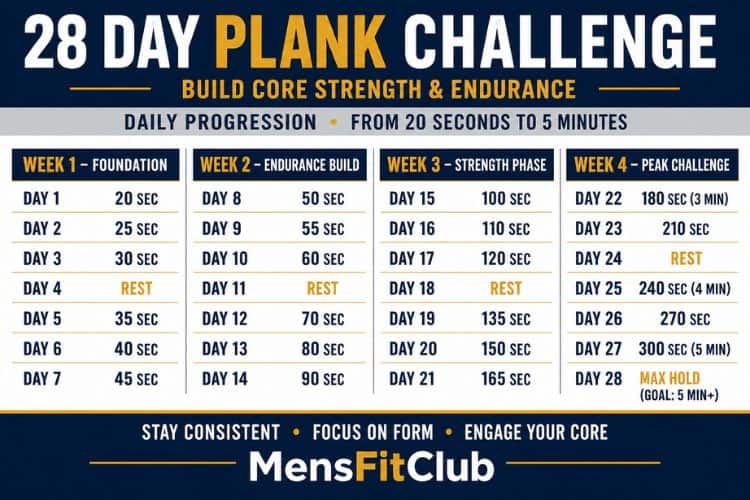
This challenge gradually increases the duration of your plank hold over four weeks. The progression helps build endurance while allowing your body to adapt safely.
Weekly Breakdown
- Week 1: Foundation and form
- Week 2: Increased endurance
- Week 3: Strength and stability
- Week 4: Maximum challenge and peak performance
28 Day Plank Challenge Plan
Week 1: Building the Foundation
The first week focuses on mastering proper form and building initial endurance.
- Day 1: 20 seconds
- Day 2: 25 seconds
- Day 3: 30 seconds
- Day 4: Rest
- Day 5: 35 seconds
- Day 6: 40 seconds
- Day 7: 45 seconds
During this week, concentrate on maintaining proper alignment. Don’t rush the process—this is where your foundation is built.
Week 2: Increasing Endurance 28 Day Plank Challenge
Now that your body is adapting, you’ll begin increasing your hold times.
- Day 8: 50 seconds
- Day 9: 55 seconds
- Day 10: 60 seconds
- Day 11: Rest
- Day 12: 65 seconds
- Day 13: 70 seconds
- Day 14: 75 seconds
You’ll start to feel your core working harder. Stay consistent and maintain controlled breathing.
Week 3: Strength and Stability
This week pushes your endurance further while improving muscle engagement.
- Day 15: 80 seconds
- Day 16: 85 seconds
- Day 17: 90 seconds
- Day 18: Rest
- Day 19: 95 seconds
- Day 20: 100 seconds
- Day 21: 105 seconds
At this stage, mental focus becomes just as important as physical strength. Stay locked in and avoid distractions.
Week 4: Peak 28 Day Plank Challenge
The final week is where you test your limits and build maximum core endurance.
- Day 22: 110 seconds
- Day 23: 120 seconds
- Day 24: Rest
- Day 25: 130 seconds
- Day 26: 140 seconds
- Day 27: 150 seconds
- Day 28: 180 seconds
By the end of this challenge, holding a plank for 3 minutes will feel like a major accomplishment—and it is.
Tips to Complete the 28 Day Plank Challenge Successfully
Stay Consistent
Consistency is the key to results. Even on busy days, your plank session takes just a few minutes. Commit to showing up daily.
Focus on Breathing
Controlled breathing helps you maintain endurance and reduces fatigue. Inhale through your nose and exhale through your mouth.
Engage Your Entire Body
A proper plank isn’t just about abs. Squeeze your glutes, tighten your quads, and engage your shoulders to maximize effectiveness.
Track Your Progress
Keep a log of your daily plank times. Seeing progress over time is motivating and helps you stay committed.
Take Rest Days Seriously
Rest days allow your muscles to recover and grow stronger. Skipping rest can lead to burnout or injury.
Variations to Make the 28 Day Plank Challenge More Effective
Once you’re comfortable with standard planks, you can introduce variations to increase difficulty and target different muscle groups.
Side Plank
Targets the obliques and improves lateral stability.
Plank Shoulder Taps
Adds movement and challenges balance and coordination.
Plank with Leg Lift
Engages glutes and lower core for added intensity.
Forearm to Push-Up Plank
Builds upper body strength while maintaining core tension.
Adding variations once or twice per week can prevent plateaus and keep your workouts engaging.
Nutrition Tips to Support Your 28 Day Plank Challenge
Your results aren’t just built during workouts—they’re also influenced by your diet.
Focus on Protein Intake
Protein supports muscle repair and growth. Include lean meats, eggs, fish, and plant-based protein sources in your meals.
Stay Hydrated
Hydration plays a key role in muscle function and recovery. Aim to drink water consistently throughout the day.
Reduce Processed Foods
Minimizing processed foods helps reduce bloating and improves overall body composition.
Eat Balanced Meals
Include a balance of protein, healthy fats, and complex carbohydrates to fuel your workouts.
Results You Can Expect After 28 Days
If you stay consistent with the 28 day plank challenge, you can expect noticeable improvements in both appearance and performance.
Physical Benefits
- Stronger and more defined core
- Improved posture
- Reduced lower back discomfort
- Increased muscular endurance
Performance Benefits
- Better stability during weightlifting
- Improved athletic performance
- Enhanced balance and coordination
While planks alone won’t give you a six-pack, they play a crucial role in building the foundation for visible abs when combined with proper nutrition and full-body training.
How to Continue After the Challenge
Once you complete the 28 day plank challenge, don’t stop there. Use your new strength as a foundation to build a more advanced routine.
Next Steps
- Combine planks with full-body workouts
- Increase plank duration beyond 3 minutes
- Add weighted planks for more resistance
- Incorporate core circuits into your weekly routine
Keeping planks as part of your long-term fitness plan will help maintain a strong, stable core.
The 28 day plank challenge is a simple yet powerful way to transform your core strength, improve posture, and boost overall fitness. It requires minimal time, no equipment, and can be done anywhere, making it perfect for busy men who want effective results without complicated routines.
By committing to this challenge, focusing on proper form, and staying consistent, you’ll build a stronger, more resilient core that supports every aspect of your fitness journey. Whether your goal is to improve athletic performance, reduce back pain, or build a more defined midsection, this challenge is a proven step in the right direction.
To continue building strength and improving your overall fitness, explore more workouts on MensFitClub. Pair this plank challenge with a Full Body Dumbbell Workout Routine to enhance muscle development, or try a HIIT Workout Plan to boost fat burning and endurance. For beginners, a 30 Minute Full Body Couple Workouts at Home can help you stay consistent, while an 8 Week Strength Training Program provides long-term progress. You can also incorporate a Best Kettlebell Workout Program for Men to add variety and functional strength to your training.


Most Recommended

Subscribe to our Newsletter
Stay up to date on the latest men’s health, fitness and lifestyle trends and tips.
About Us
Men’s Fit Club was started with the goal of empowering men to get the most out of their lives. This meant going beyond exercise and diet tips to really address the broad range of issues that men face on a daily basis – topics like recreation, finding love, sexual health and even sound fashion advice.
Quick Links
© COPYRIGHT MEN'S FIT CLUB 2026. All Rights Reserved