

30-Minute Lower Body Dumbbell Workout for Strength


30 Minute Lower Body Strength Workout (Build Muscle & Power)

5 Shoulder Workouts with Dumbbells: Guide to Stronger Shoulders
30-Minute Chest Workout With Only Dumbbells (Build Muscle Fast)
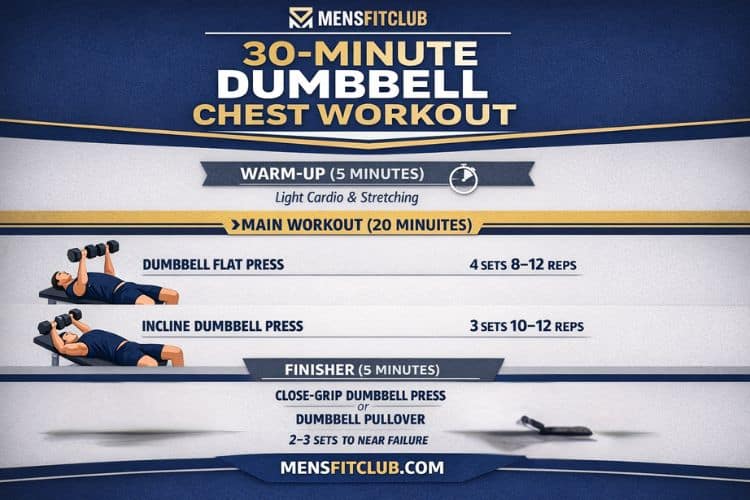
A 30-minute chest workout with only dumbbells is one of the most efficient ways to build muscle, strength, and definition without needing a full gym setup. Whether you train at home or in a busy gym, dumbbells allow a greater range of motion, improved muscle activation, and balanced strength development compared to machines or barbells.
This dumbbell-only chest workout is designed to maximize hypertrophy in a short time frame by combining compound pressing movements with targeted isolation exercises. In just half an hour, you can fully stimulate the upper, middle, and lower chest while also engaging stabilizing muscles in the shoulders and core.
Below, you’ll find a complete SEO-optimized, science-based chest workout plan, including warm-up guidance, exercise breakdowns, training tips, and progression strategies to help you grow a bigger, stronger chest using nothing but dumbbells.
Why Train Chest With Only Dumbbells?
Training chest with dumbbells offers several unique advantages that make them ideal for short, effective workouts.
Dumbbells allow each side of your body to work independently, reducing strength imbalances and improving muscular symmetry. Unlike barbells, dumbbells enable a deeper stretch at the bottom of presses and fly movements, which is essential for muscle growth. They also require more stabilization, activating smaller muscle fibers that contribute to overall chest development.
For anyone with limited equipment, dumbbells are incredibly versatile. With just a flat bench—or even the floor—you can perform a full range of chest exercises that target all portions of the pectoral muscles.
Chest Muscles Worked in a Dumbbell Chest Workout
Understanding chest anatomy helps you train smarter and get better results from a 30-minute session.
Pectoralis Major
The main chest muscle responsible for pressing and pushing movements. It consists of upper (clavicular), middle, and lower fibers.
Pectoralis Minor
A smaller muscle beneath the pec major that helps stabilize the shoulder blade.
Secondary Muscles
During dumbbell chest exercises, the shoulders (anterior delts), triceps, core, and upper back also assist, making these movements highly effective compound lifts.
How to Structure a 30-Minute Dumbbell Chest Workout
To make the most of a short workout, structure is critical. This plan follows a proven hypertrophy format:
- 5 minutes warm-up and activation
- 20 minutes main workout (compound + isolation)
- 5 minutes burnout or finisher
Rest periods are kept short to maintain intensity while still allowing adequate recovery between sets.
Warm-Up for a Dumbbell Chest Workout (5 Minutes)
Never skip your warm-up. Proper preparation increases performance and reduces injury risk.
Start with light movements that increase blood flow to the chest and shoulders. Perform arm circles, band pull-aparts (if available), or light dumbbell presses with very low weight. Focus on slow, controlled reps and full range of motion.
A good warm-up primes the chest muscles and improves pressing strength during your working sets.
The Ultimate 30-Minute Chest Workout With Only Dumbbells
This workout is designed for muscle growth, strength, and definition using moderate to heavy dumbbells. Choose a weight that challenges you while allowing proper form.
Dumbbell Flat Press
The dumbbell flat press is the foundation of any chest workout. It primarily targets the middle chest while also engaging the shoulders and triceps.
Lie flat on a bench or the floor with a dumbbell in each hand. Lower the weights slowly until your elbows are just below chest level, then press upward while squeezing your chest at the top. Keep your wrists neutral and elbows slightly tucked.
Perform controlled reps to maximize time under tension.
Incline Dumbbell Press
Incline dumbbell presses emphasize the upper chest, an area many lifters struggle to develop.
Set a bench at a slight incline or elevate your upper back if training at home. Lower the dumbbells slowly and press them upward in a smooth arc. Focus on driving the weights together at the top without locking out your elbows.
Upper chest development adds thickness and a more defined look to your overall chest.
Dumbbell Chest Fly
Dumbbell chest flys isolate the chest by minimizing triceps involvement.
With a slight bend in your elbows, lower the dumbbells out wide in a controlled motion until you feel a deep stretch across your chest. Bring the weights back together by squeezing your chest muscles, not by swinging the arms.
This exercise is crucial for chest width and muscle separation.
Dumbbell Floor Press
The floor press is an excellent alternative if you don’t have a bench. It also reduces shoulder strain while emphasizing the pressing portion of the movement.
Lie on the floor with dumbbells at chest level. Press the weights upward until your arms are straight, then lower them until your triceps touch the floor. Pause briefly before pressing again.
This movement builds pressing strength and chest thickness.
Close-Grip Dumbbell Press
A close-grip dumbbell press shifts emphasis toward the inner chest while still hitting the triceps.
Hold the dumbbells close together throughout the movement. Lower them slowly and press up while squeezing your chest hard at the top. Keep the motion controlled to avoid relying on momentum.
Dumbbell Pullover (Optional Finisher)
The dumbbell pullover stretches and strengthens the chest while also engaging the lats.
Hold a single dumbbell with both hands, lower it behind your head, then pull it back over your chest. Focus on keeping tension in the chest throughout the movement.
This exercise works well as a burnout at the end of your workout.
Sample 30-Minute Dumbbell Chest Workout Plan
Here’s how to structure the session efficiently:
Main Workout (20 Minutes)
Dumbbell Flat Press
4 sets of 8–12 reps
Rest 45 seconds
Incline Dumbbell Press
3 sets of 10–12 reps
Rest 45 seconds
Dumbbell Chest Fly
3 sets of 12–15 reps
Rest 30 seconds
Dumbbell Floor Press
3 sets of 10–12 reps
Rest 30 seconds
Finisher (5 Minutes)
Close-Grip Dumbbell Press or Dumbbell Pullover
2–3 sets to near failure
This structure ensures full chest activation within a tight time window.
Training Tips for Maximum Chest Growth
Small adjustments can make a big difference in results.
Focus on slow eccentric (lowering) phases to increase muscle tension. Keep your chest lifted and shoulder blades slightly retracted during presses to protect your shoulders. Avoid locking out aggressively at the top to keep tension on the chest.
Mind-muscle connection is critical. Actively think about squeezing the chest during every rep.
How Heavy Should Your Dumbbells Be?
Choose a weight that allows you to reach near failure within the target rep range. If you can easily exceed the prescribed reps, increase the weight. If you struggle to maintain form, lower it slightly.
Progressive overload—gradually increasing reps, sets, or weight over time—is essential for long-term muscle growth.
Can You Build a Big Chest With Only Dumbbells?
Yes. Dumbbells are more than enough to build an impressive chest when used correctly.
They provide a greater range of motion than barbells, improve muscle balance, and allow flexible training anywhere. Many lifters develop better chest symmetry and definition using dumbbells compared to machines.
Consistency, proper nutrition, and progressive overload matter far more than equipment variety.
Dumbbell Chest Workout at Home vs Gym
At home, dumbbell chest workouts are convenient and time-efficient. Without machines or cables, you rely on pure muscle control, which can improve activation.
In the gym, heavier dumbbells and adjustable benches allow for more variation and intensity. Both settings are effective if your programming is solid.
How Often Should You Train Chest With Dumbbells?
For most lifters, training chest 2 times per week delivers optimal results. This allows sufficient recovery while providing enough stimulus for growth.
A 30-minute dumbbell chest workout fits perfectly into upper-body splits, push days, or full-body routines.
Common Dumbbell Chest Workout Mistakes
Avoid rushing through reps or bouncing the weights at the bottom. Poor form shifts tension away from the chest and increases injury risk.
Another common mistake is neglecting the upper chest. Always include incline movements to maintain balanced development.
The 30-Minute Dumbbell Chest Workout
A 30-minute chest workout with only dumbbells proves that you don’t need fancy equipment or long gym sessions to build muscle. With smart exercise selection, controlled tempo, and consistent progression, dumbbells can deliver serious chest gains.
Stick to the plan, train with intent, and fuel your body properly. Over time, this simple yet powerful workout will help you develop a stronger, fuller, and more defined chest—anytime, anywhere.
For a complete and efficient upper-body training session, incorporating dumbbell-only chest routines is one of the best ways to build strength and definition—whether you’re working out at home or in the gym. To help you get the most out of your half-hour, this 30-minute chest workout with only dumbbells combines proven exercises that target every part of the pectoral muscles, from presses to isolation moves. o supplement this plan, check out additional resources like our guide to the Best Chest Workouts Dumbbell Exercises for technique tips and variations, how to perform the Best Chest Exercises With Dumbbells for muscle growth, and at-home variations in At Home Chest Exercises With Dumbbells to adapt your routine without a bench. For exercise breakdowns that focus on form and injury prevention, read our complete advice on How To Do Bench Dumbbell Flyes, and if you need a broader upper-body focus, the Best Upper Body Dumbbell Exercises For Men offers balanced training beyond the chest.


Most Recommended

Subscribe to our Newsletter
Stay up to date on the latest men’s health, fitness and lifestyle trends and tips.
About Us
Men’s Fit Club was started with the goal of empowering men to get the most out of their lives. This meant going beyond exercise and diet tips to really address the broad range of issues that men face on a daily basis – topics like recreation, finding love, sexual health and even sound fashion advice.
Quick Links
© COPYRIGHT MEN'S FIT CLUB 2026. All Rights Reserved