

30 Minute Workout 4 Days a Week: Strength and Fitness Plan

8 Week Strength Training Program for Muscle Growth

4 Week Dumbbell Program: Strength and Muscle Building Plan

45 Minute Kettlebell Strength Training Program: Full-Body Power
30-Minute Full Body Functional Workout Routine
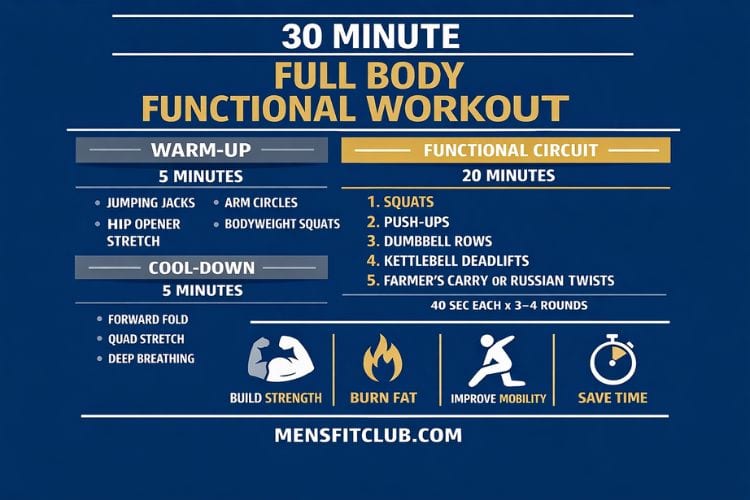
Functional training has become one of the most effective ways to build real-world strength, burn fat, and improve overall athletic performance. Unlike traditional bodybuilding routines that isolate muscles, a functional workout focuses on movement patterns, coordination, and total-body strength. In this guide, you’ll learn how to perform a 30 minute full body functional workout routine that improves mobility, strength, endurance, and daily performance—all in half an hour.
What Is Functional Training Workout Routine?
Functional training is a style of exercise that mimics real-life movements such as lifting, pushing, pulling, squatting, rotating, and carrying. Instead of isolating one muscle group at a time, functional workouts train the body as an integrated system.
Key Benefits of Functional Training
- Builds practical strength for everyday tasks
- Improves mobility and joint stability
- Enhances balance and coordination
- Burns more calories than traditional workouts
- Reduces injury risk
- Improves athletic performance
Functional workouts are ideal for men who want strength, fat loss, and performance in one efficient session.
Why a 30 Minute Full Body Functional Workout Routine Works
You don’t need hours in the gym to get results. A well-designed 30-minute functional workout can:
- Stimulate muscle growth
- Elevate heart rate for fat burning
- Improve strength endurance
- Boost metabolism for hours
Short, high-quality sessions are also easier to stay consistent with, which is the most important factor for long-term results.
Equipment Needed for This Functional Workout Routine
This workout can be done at home or in the gym with minimal equipment.
Optional Equipment
- Dumbbells or kettlebells
- Resistance bands
- Medicine ball
- Bodyweight only (beginner-friendly)
You can modify every movement depending on your available equipment.
30 Minute Full Body Functional Workout Routine Structure
This routine is structured into three phases:
- Warm-Up (5 minutes)
- Main Functional Circuit (20 minutes)
- Cool-Down (5 minutes)
Phase 1 – 5 Minute Dynamic Warm-Up
A proper warm-up increases blood flow, improves mobility, and prevents injuries.
H3: Warm-Up Exercises (Perform 30–45 Seconds Each)
Jumping Jacks
Activate the cardiovascular system and loosen the shoulders and hips.
Arm Circles & Shoulder Rolls
Improve shoulder mobility and prepare for pushing and pulling.
Hip Openers (World’s Greatest Stretch)
Increase hip mobility and thoracic rotation.
Bodyweight Squats
Prime the legs and core.
High Knees or March in Place
Elevate heart rate and activate hip flexors.
Phase 2 – 20 Minute Full Body Functional Workout Routine Circuit
This circuit targets push, pull, squat, hinge, carry, and core—the six fundamental movement patterns.
Workout Format
- Perform 5 exercises in a circuit
- Work for 40 seconds, rest 20 seconds
- Complete 3–4 rounds
- Total time: ~20 minutes
Exercise 1 – Dumbbell or Bodyweight Squats
Movement Pattern: Squat
Muscles: Quads, glutes, core
How to Perform
- Stand with feet shoulder-width apart
- Push hips back and squat down
- Keep chest upright and knees tracking over toes
- Drive through heels to stand
Why It’s Functional
Squats mimic sitting, standing, and lifting objects—core daily movements.
Exercise 2 – Push-Ups or Dumbbell Press Functional Workout Routine
Movement Pattern: Push
Muscles: Chest, shoulders, triceps
How to Perform
- Place hands on the floor or dumbbells
- Lower chest toward the ground
- Push back up while keeping core tight
Why It’s Functional
Pushing movements are used in everyday tasks like pushing doors, lifting objects, and bracing.
Exercise 3 – Dumbbell Rows or Resistance Band Rows
Movement Pattern: Pull
Muscles: Back, biceps, rear delts
How to Perform
- Hinge forward at hips
- Pull dumbbells toward your waist
- Squeeze shoulder blades together
Why It’s Functional
Pulling strengthens posture and protects the shoulders and spine.
Exercise 4 – Hip Hinge (Kettlebell Deadlift or Glute Bridge)
Movement Pattern: Hinge
Muscles: Glutes, hamstrings, lower back
How to Perform
- Push hips back while keeping spine neutral
- Lower weight toward the ground
- Drive hips forward to stand
Why It’s Functional
Hinge movements mimic picking objects off the floor safely.
Exercise 5 – Core Rotation or Carry Functional Workout Routine
Choose one depending on equipment.
Option A: Russian Twists (Core Rotation)
- Sit on the floor with knees bent
- Rotate torso side to side holding weight
Option B: Farmer’s Carry (Core Stability)
- Hold dumbbells at your sides
- Walk for 30–40 seconds
Why It’s Functional
Rotational and stability exercises improve spine health and athletic movement.
Phase 3 – 5 Minute Cool-Down and Mobility
Cooling down improves recovery and flexibility.
Cool-Down Exercises
- Standing forward fold stretch
- Quad stretch
- Chest and shoulder stretch
- Deep breathing (1–2 minutes)
Beginner vs Intermediate vs Advanced Modifications
Functional workouts can be scaled for any fitness level.
Beginner Functional Workout Routine Modifications
- Use bodyweight only
- Reduce work time to 30 seconds
- Rest 30–40 seconds
- Complete 2–3 rounds
Intermediate Functional Workout Routine Modifications
- Add dumbbells or kettlebells
- Use 40/20 intervals
- Complete 3–4 rounds
Advanced Functional Workout Routine Modifications
- Increase weight
- Use 45/15 intervals
- Add plyometrics (jump squats, explosive push-ups)
- Complete 4–5 rounds
Benefits of a Full Body Functional Workout Routine
Builds Strength and Muscle
Functional exercises recruit multiple muscles at once, stimulating hypertrophy and strength gains.
Burns Fat Efficiently
Circuit-style training keeps heart rate elevated, creating a calorie-burning and fat-loss effect.
Improves Athletic Performance
Functional training enhances coordination, agility, and power, making it ideal for sports and real-world movement.
Enhances Mobility and Joint Health
Movements across multiple planes improve joint stability and reduce injury risk.
Saves Time
A 30-minute session is efficient and realistic for busy schedules.
Weekly Schedule for Functional Training Workout Routine
Here’s how to integrate this workout into a weekly plan.
3-Day Functional Plan
- Day 1: Full Body Functional Workout
- Day 2: Rest or Mobility
- Day 3: Full Body Functional Workout
- Day 4: Rest
- Day 5: Full Body Functional Workout
- Weekend: Active recovery
5-Day Functional Plan
- Day 1: Full Body Functional
- Day 2: Upper Body Strength
- Day 3: Full Body Functional
- Day 4: Lower Body Strength
- Day 5: Full Body Functional
Progressive Overload for Functional Workouts
To keep progressing, you must increase difficulty over time.
Ways to Progress
- Increase weight
- Increase reps or work time
- Reduce rest periods
- Add more rounds
- Add advanced variations
Progressive overload ensures continuous strength and fat-loss results.
Common Functional Workout Routine Mistakes to Avoid
Skipping the Warm-Up
Functional training involves multiple joints—warming up is essential.
Poor Form
Quality movement is more important than speed or weight.
Ignoring Core Engagement
A strong core protects your spine and improves performance.
Not Tracking Progress
Track weights, rounds, and reps to ensure improvement.
Nutrition Tips to Maximize Functional Workout Routine Results
Functional training works best with proper nutrition.
Protein Intake
Aim for 0.7–1 gram of protein per pound of body weight.
Balanced Carbs and Fats
Carbs fuel workouts, fats support hormones and recovery.
Hydration
Drink water before, during, and after training.
Who Should Do Functional Training Workout Routine?
Functional workouts are ideal for:
- Beginners building foundational strength
- Busy professionals with limited time
- Athletes improving performance
- Men focused on fat loss and conditioning
- Anyone wanting real-world strength
Frequently Asked Questions About Functional Workout Routine
Is functional training good for muscle building?
Yes. Functional training builds muscle, especially when progressive overload and proper nutrition are applied.
Can I do this workout every day?
Yes, but alternate intensity and allow recovery days for optimal results.
Is this workout good for fat loss?
Absolutely. Functional circuits burn calories and increase metabolic rate.
Do I need a gym?
No. This routine can be done at home with bodyweight or minimal equipment.
Sample 30 Minute Functional Workout Routine (Printable)
Circuit (Repeat 3–4 Rounds)
- Squats – 40 sec
- Push-Ups – 40 sec
- Dumbbell Rows – 40 sec
- Kettlebell Deadlifts – 40 sec
- Farmer’s Carry or Russian Twists – 40 sec
Rest: 20 sec between exercises
Build Strength and Burn Fat in 30 Minutes Functional Workout Routine
A 30 minute full body functional workout routine is one of the most efficient ways to build strength, improve performance, and burn fat. By focusing on real-world movement patterns—squat, push, pull, hinge, carry, and rotate—you create a balanced, athletic, and resilient body.
Whether you’re training at home or in the gym, this functional workout provides everything you need in a short, powerful session. Stay consistent, progressively overload your exercises, fuel your body properly, and you’ll see measurable improvements in strength, physique, and overall fitness.
If you enjoyed this 30 minute full body functional workout routine, you can explore more effective full-body training guides on MensFitClub. Check out our 30-Minute Kettlebell Workout For Total-Body Strength for a powerful home routine, the Ultimate 30-Minute Dumbbell Workout For Beginners to build muscle and burn fat, and the Best Kettlebell HIIT Workout Guide for combining cardio and strength. You can also learn how to structure progressive training with our Barbell Circuit Workouts Building Strength And Endurance and discover an efficient Full Body Dumbbell Workout Plan For Beginners to maximize results with minimal equipment.


Most Recommended

Subscribe to our Newsletter
Stay up to date on the latest men’s health, fitness and lifestyle trends and tips.
About Us
Men’s Fit Club was started with the goal of empowering men to get the most out of their lives. This meant going beyond exercise and diet tips to really address the broad range of issues that men face on a daily basis – topics like recreation, finding love, sexual health and even sound fashion advice.
Quick Links
© COPYRIGHT MEN'S FIT CLUB 2026. All Rights Reserved