

30 Minute Workout 4 Days a Week: Strength and Fitness Plan

8 Week Strength Training Program for Muscle Growth

4 Week Dumbbell Program: Strength and Muscle Building Plan

45 Minute Kettlebell Strength Training Program: Full-Body Power
45 Minute Full Body Functional Strength Training Circuit
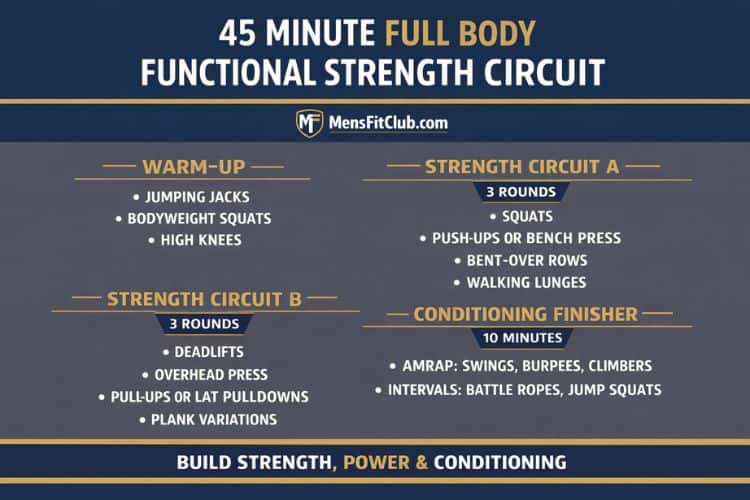
Functional strength training has become one of the most effective ways to build real-world strength, improve athletic performance, and burn fat efficiently. Unlike traditional bodybuilding routines that isolate muscles, functional strength circuits train the body as a complete system. A 45-minute full body functional strength training circuit combines compound lifts, dynamic movements, and metabolic conditioning to develop strength, endurance, mobility, and power at the same time.
This guide will walk you through a complete 45-minute functional strength training circuit, explain how it works, and show you how to structure it for muscle growth, fat loss, and athletic performance.
What Is Functional Strength Training Circuit?
Functional strength training focuses on movements that mimic real-life activities. Instead of training muscles in isolation, you train movement patterns such as pushing, pulling, squatting, hinging, rotating, and carrying. This approach improves coordination, balance, and stability while building usable strength.
Functional training circuits typically use compound exercises, free weights, kettlebells, bodyweight movements, and resistance tools like sleds or bands. The goal is to enhance how your body performs in daily life and sports rather than just how it looks.
Benefits of a 45 Minute Full Body Functional Strength Training Circuit
Builds Total Body Strength
Compound movements like squats, presses, and deadlifts recruit multiple muscle groups at once, increasing overall strength more efficiently than isolation exercises.
Improves Conditioning and Endurance
Circuits keep your heart rate elevated, improving cardiovascular fitness and muscular endurance.
Enhances Mobility and Stability
Functional exercises require coordination and joint stability, helping to improve mobility and reduce injury risk.
Burns Fat Efficiently
High-intensity circuits increase calorie burn and boost post-workout metabolism, making them ideal for fat loss.
Saves Time
A structured 45-minute circuit delivers a full workout in less time than traditional split routines.
How the 45 Minute Functional Strength Circuit Is Structured
This workout is divided into four main phases:
- Warm-Up (5 minutes)
- Strength Circuit A (15 minutes)
- Strength Circuit B (15 minutes)
- Conditioning Finisher (10 minutes)
You will perform exercises in circuit style with minimal rest between movements and longer rest between rounds.
Warm-Up (5 Minutes)
A proper warm-up prepares your joints, muscles, and nervous system for intense training.
Perform 2 rounds:
- Jumping jacks – 30 seconds
- Bodyweight squats – 15 reps
- Arm circles – 10 each direction
- Hip hinges – 15 reps
- High knees – 30 seconds
Functional Strength Circuit A (15 Minutes)
This circuit focuses on lower body strength and upper body pushing and pulling patterns.
1. Barbell or Dumbbell Squat
Squats are one of the best functional exercises for building lower body strength and core stability. They mimic sitting, standing, and lifting patterns used daily.
Sets: 3
Reps: 8–12
Rest: 30 seconds
2. Push-Ups or Dumbbell Bench Press
Push movements strengthen the chest, shoulders, and triceps while improving pressing power.
Sets: 3
Reps: 10–15
Rest: 30 seconds
3. Bent-Over Rows (Dumbbell or Barbell) Functional Strength Circuit
Rows develop the back, biceps, and posture, balancing pushing exercises.
Sets: 3
Reps: 10–12
Rest: 30 seconds
4. Walking Lunges
Lunges improve unilateral leg strength, balance, and hip mobility.
Sets: 3
Reps: 12–16 steps
Rest: 30 seconds
How to Perform Circuit A:
Complete all four exercises back-to-back, then rest 1–2 minutes before repeating. Perform 3 total rounds.
Strength Circuit B (15 Minutes)
This circuit focuses on posterior chain strength, overhead stability, and core engagement.
1. Deadlifts (Barbell, Dumbbell, or Kettlebell)
Deadlifts strengthen the glutes, hamstrings, lower back, and grip, making them one of the most functional lifts.
Sets: 3
Reps: 6–10
Rest: 30 seconds
2. Overhead Press (Dumbbell or Barbell)
Overhead pressing improves shoulder stability, upper body strength, and core activation.
Sets: 3
Reps: 8–12
Rest: 30 seconds
3. Pull-Ups or Lat Pulldowns
Pulling movements strengthen the lats, upper back, and arms while improving posture.
Sets: 3
Reps: 6–12
Rest: 30 seconds
4. Plank Variations
Planks build core stability, which is essential for functional strength and injury prevention.
Sets: 3
Time: 30–45 seconds
Rest: 30 seconds
How to Perform Circuit B:
Complete all four exercises in sequence, rest 1–2 minutes, and repeat for 3 rounds.
Conditioning Finisher (10 Minutes)
This final circuit increases heart rate, improves conditioning, and maximizes fat burning.
Option 1: AMRAP (As Many Rounds As Possible)
Perform the following exercises for 10 minutes:
- Kettlebell swings – 15 reps
- Burpees – 10 reps
- Mountain climbers – 20 reps
- Medicine ball slams – 10 reps
Move quickly with good form and aim to complete as many rounds as possible.
Option 2: Interval Conditioning
- 30 seconds work
- 30 seconds rest
- Rotate through: battle ropes, sled pushes, jump squats, and jump rope
Cool Down and Mobility (5 Minutes)
Finish your workout with light stretching:
- Hamstring stretch
- Hip flexor stretch
- Chest and shoulder stretch
- Cat-cow spine mobility drill
How to Progress This Functional Strength Circuit
Increase Load
Gradually increase weights every 1–2 weeks while maintaining proper form.
Increase Reps or Rounds
Add reps or additional rounds to increase volume and challenge.
Reduce Rest Periods
Shorter rest increases conditioning and fat-burning effects.
Add Advanced Variations
Use single-leg exercises, tempo training, or instability tools like kettlebells and bands.
Who Should Do a 45 Minute Functional Strength Circuit?
This workout is ideal for:
- Beginners wanting a balanced full body routine
- Athletes looking to improve performance
- Lifters wanting strength and conditioning in one session
- Busy individuals needing an efficient workout
- Anyone focused on fat loss and muscle tone
Functional Strength Training vs Traditional Weight Training
Traditional weight training often isolates muscles and focuses on hypertrophy. Functional strength training focuses on movement patterns, coordination, and real-world strength. While both have benefits, combining them can deliver superior results.
Functional circuits also improve cardiovascular fitness, which many traditional programs neglect.
Common Mistakes in Functional Strength Circuits
Using Too Much Weight
Functional training requires proper movement patterns. Using excessive weight can compromise form and increase injury risk.
Skipping Warm-Ups
Warming up improves performance and reduces injury risk.
Ignoring Core Work
Core stability is essential for functional movement and injury prevention.
Poor Rest Management
Too little rest can reduce strength output, while too much rest can reduce conditioning benefits.
Nutrition Tips to Support Functional Strength Training
Protein Intake
Consume 0.7–1 gram of protein per pound of bodyweight to support muscle repair and growth.
Carbohydrates for Performance
Carbs fuel high-intensity training. Include whole grains, fruits, and starchy vegetables.
Healthy Fats
Fats support hormones and recovery. Include nuts, seeds, olive oil, and fatty fish.
Hydration
Drink water consistently throughout the day to support performance and recovery.
Sample Weekly Functional Strength Training Circuit Schedule
Day 1: 45-minute full body functional circuit
Day 2: Active recovery or mobility work
Day 3: Functional strength circuit
Day 4: Cardio or sports training
Day 5: Functional strength circuit
Day 6: Optional hypertrophy or accessory workout
Day 7: Rest
Why Functional Strength Training Is Perfect for MensFitClub Readers
Functional strength training aligns perfectly with the MensFitClub philosophy of building strong, athletic, and capable physiques. These circuits are efficient, scalable, and suitable for home gyms, commercial gyms, and outdoor training environments. They also translate well into Pinterest-friendly workouts, blog guides, and downloadable infographics.
Build Strength, Power, and Conditioning in 45 Minutes
A 45-minute full body functional strength training circuit is one of the most effective ways to build total body strength, improve conditioning, and burn fat. By combining compound lifts, dynamic movements, and high-intensity conditioning, you can transform your fitness and performance in less than an hour.
Whether your goal is muscle growth, fat loss, or athletic performance, functional strength circuits provide a balanced, efficient, and powerful training approach. Stick with this program, progressively increase intensity, and fuel your body properly to see long-term results.
To maximize results from your 45-minute full body functional strength training circuit, you can pair this workout with other proven routines on MensFitClub. If you want a structured weekly plan, check out the 3-Day Full Body Workout Guide that breaks down balanced training frequency and recovery strategies. For more advanced programming, the 45-Minute Full Body Strength Training Workout provides a detailed structure for building lean muscle and boosting fat loss. If you prefer shorter, high-impact routines, the 30-Minute Full Body Workout For Maximum Results offers an efficient circuit-based approach that complements functional training perfectly. You can also explore the Best Workout Programs For Men to build a complete training framework, or browse the Full Body Workout Plan Maximizing Your Fitness for long-term progression and performance tips.


Most Recommended

Subscribe to our Newsletter
Stay up to date on the latest men’s health, fitness and lifestyle trends and tips.
About Us
Men’s Fit Club was started with the goal of empowering men to get the most out of their lives. This meant going beyond exercise and diet tips to really address the broad range of issues that men face on a daily basis – topics like recreation, finding love, sexual health and even sound fashion advice.
Quick Links
© COPYRIGHT MEN'S FIT CLUB 2026. All Rights Reserved