

30 Minute Workout 4 Days a Week: Strength and Fitness Plan

8 Week Strength Training Program for Muscle Growth

4 Week Dumbbell Program: Strength and Muscle Building Plan

45 Minute Kettlebell Strength Training Program: Full-Body Power
5 Day Barbell Workout: Strength and Muscle-Building Training Plan
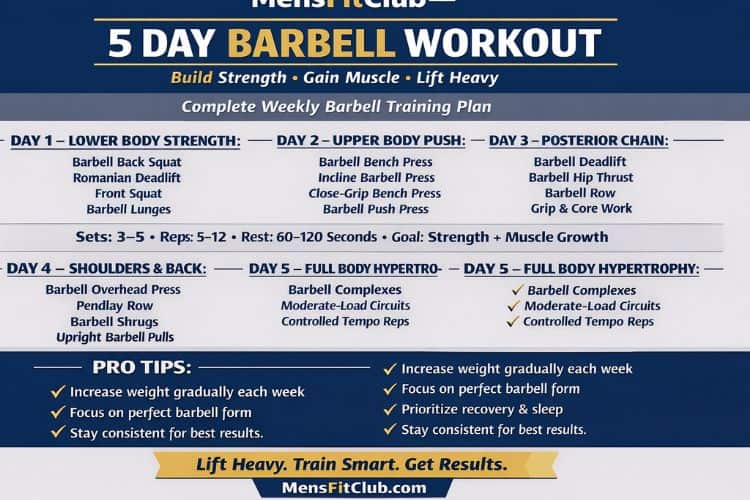
A structured 5 day barbell workout is one of the most effective ways to build raw strength, lean muscle mass, and long-term athletic performance. Barbell training remains the gold standard for progressive overload, compound movement mastery, and total-body development. When programmed correctly, a five-day barbell split allows you to train frequently, recover properly, and steadily increase your lifts week after week.
This guide breaks down everything you need to know about running a successful five-day barbell workout program, including training principles, exercise selection, recovery strategies, and long-term progression. Whether your goal is size, strength, or both, this program is designed to deliver consistent results.
Why Choose a 5 Day Barbell Workout?
A five-day training split strikes the perfect balance between volume and recovery. Unlike full-body programs that can become exhausting or low-frequency splits that slow progress, a five-day barbell workout allows you to focus on specific movement patterns while still training the major lifts multiple times per week.
Barbells enable heavier loading, precise progression, and full-body muscle recruitment. Squats, presses, deadlifts, and rows form the backbone of serious strength training because they stimulate the nervous system, engage multiple joints, and create the greatest hormonal response for muscle growth.
Training five days per week also improves skill acquisition. The more often you practice barbell movements, the better your technique becomes, which translates into safer lifting and higher performance.
Who Is This Program Best For?
This 5 day barbell workout is ideal for intermediate lifters who already understand basic barbell mechanics and want to push their strength and physique to the next level. Beginners can still follow the structure, but they should reduce volume and focus on learning proper form before adding heavy loads.
Advanced lifters will benefit from the frequency, allowing them to manage intensity across the week while still hitting heavy lifts. This program works equally well for athletes, physique-focused lifters, and anyone looking to improve overall strength capacity.
Training Principles Behind This 5 Day Barbell Workout
Before diving into the workout structure, it’s important to understand the principles that make this program effective.
Progressive Overload
Progressive overload is the foundation of all muscle and strength gains. Each week, you should aim to increase either the weight, the number of reps, or overall training volume. Barbell training makes progression measurable and consistent, which is why it’s superior for long-term results.
Compound Lift Priority
This program prioritizes compound barbell movements at the beginning of each session. These exercises recruit the most muscle mass and produce the highest training stimulus. Isolation work is used strategically to support weak points and improve muscle balance.
Volume Management
Training five days per week requires intelligent volume control. Each muscle group is trained with enough stimulus to grow but not so much that recovery suffers. Rest days are built into the week to allow joints, connective tissue, and the nervous system to recover.
Weekly Structure of the 5 Day Barbell Workout
This program is organized to distribute stress evenly across the week while emphasizing major lifts.
Day 1: Barbell Squat Focus (Lower Body Strength)
The first day centers on barbell squats and lower-body strength development. Squats are one of the most demanding lifts, so placing them early in the week ensures you’re fresh and capable of lifting heavy.
This session targets the quadriceps, glutes, hamstrings, and core while also reinforcing full-body stability. Supporting barbell movements help balance strength and improve squat performance over time.
Day 2: Barbell Bench Press Focus (Upper Body Push)
Day two shifts attention to the upper body with a pressing emphasis. The barbell bench press builds chest, shoulders, and triceps while also challenging upper-back stability.
Secondary barbell pressing variations and accessory movements support shoulder health and pressing strength. This day balances heavy compound work with moderate volume to avoid joint fatigue.
Day 3: Barbell Deadlift Focus (Posterior Chain)
The third training day revolves around barbell deadlifts and posterior-chain development. Deadlifts train the hamstrings, glutes, lower back, traps, and grip strength simultaneously.
Because deadlifts place high stress on the nervous system, volume is controlled while intensity remains high. Assistance exercises improve hip hinge mechanics and reinforce spinal stability.
Day 4: Barbell Overhead Press & Upper Back
This day emphasizes overhead pressing strength and upper-back development. Barbell overhead presses build shoulder mass, core strength, and upper-body coordination.
Upper-back barbell movements are included to balance pressing volume, improve posture, and enhance shoulder health. This combination supports long-term performance and injury prevention.
Day 5: Full Body Barbell Hypertrophy
The final day blends full-body barbell movements with moderate loads and higher repetitions. This session increases training volume without excessive strain and promotes hypertrophy across multiple muscle groups.
The focus is controlled execution, muscle tension, and quality reps rather than maximal loading.
Sample 5 Day Barbell Workout Breakdown
Day 1: Lower Body Strength
Barbell back squats form the centerpiece of the session, performed with challenging weight and longer rest periods. Romanian deadlifts follow to strengthen the hamstrings and glutes. Front squats or paused squats add additional quad emphasis and improve squat depth. The session finishes with barbell lunges and core stability work.
Day 2: Upper Body Push
Barbell bench presses lead the workout with heavy sets focused on strength progression. Incline barbell presses shift emphasis toward the upper chest and shoulders. Close-grip bench presses increase triceps engagement. Light barbell shoulder raises or push-press variations finish the session.
Day 3: Posterior Chain Strength
Conventional or sumo deadlifts are performed as the primary lift. Barbell hip thrusts reinforce glute activation and lockout strength. Barbell rows support upper-back development and deadlift posture. Grip and lower-back endurance work closes the session.
Day 4: Overhead Press & Upper Back
Standing barbell overhead presses challenge shoulder strength and core stability. Pendlay rows or bent-over barbell rows follow to strengthen the upper back. Upright barbell pulls or shrugs build traps and shoulder stability. Light arm work can be added for balance.
Day 5: Full Body Hypertrophy
Moderate-load barbell complexes or circuits are used to increase time under tension. Squat-to-press combinations, barbell rows, and deadlift variations are performed with controlled tempo. The goal is muscle fatigue, metabolic stress, and improved work capacity.
How to Progress on a 5 Day Barbell Workout
Progression is the key to long-term success. Each week, aim to increase your working weights slightly while maintaining proper form. Small jumps of 2.5–5 pounds are enough to drive adaptation without overwhelming recovery.
If you stall on a lift, reduce volume temporarily or switch to a variation for a few weeks. This prevents plateaus and keeps joints healthy.
Deload weeks every 6–8 weeks allow your body to recover fully while maintaining movement patterns.
Recovery and Rest Days
Training five days per week requires intentional recovery. Sleep quality, nutrition, and mobility work directly impact your progress. Aim for at least seven to eight hours of sleep per night and prioritize protein intake to support muscle repair.
Light mobility sessions, walking, and stretching on rest days improve circulation and reduce stiffness. Avoid turning rest days into intense cardio sessions that interfere with recovery.
Nutrition to Support Barbell Training
A 5 day barbell workout demands adequate fuel. Protein intake should remain high to support muscle growth, while carbohydrates provide energy for heavy lifting sessions.
Hydration also plays a major role in performance and joint health. Consistent nutrition habits amplify training results and improve recovery between sessions.
Common Mistakes to Avoid
One of the biggest mistakes lifters make is adding too much weight too quickly. Barbell training rewards patience and consistency. Poor form under heavy loads increases injury risk and slows progress.
Another common issue is neglecting warm-ups and mobility. Preparing your joints and nervous system before heavy lifts improves performance and longevity.
Finally, avoid excessive volume. More is not always better, especially when training five days per week.
Benefits of a 5 Day Barbell Workout Program
This program builds functional strength, lean muscle mass, and mental toughness. Barbell training improves bone density, posture, and coordination while supporting long-term athletic performance.
A structured five-day split provides variety without sacrificing focus, keeping training engaging and sustainable.
A well-designed 5 day barbell workout is one of the most powerful training methods for building strength and muscle. By prioritizing compound lifts, managing volume, and progressing consistently, you can achieve impressive results with minimal equipment.
Stick to the plan, respect recovery, and focus on long-term progression. Barbell training rewards discipline, patience, and effort—and this program is built to help you maximize all three.
For those who want to expand their barbell training knowledge beyond the five-day plan above, you’ll find plenty of high-value resources on MensFitClub.com to complement your routine. Start by checking out this comprehensive Barbell Program To Build Strength and Muscle Efficiently to master essential lifts like squats, deadlifts, and presses that form the backbone of any barbell split. If you’re curious how a structured split compares across different training styles, our 5 Day Workout Split For Maximum Gains and 5 Day Split Workout Routine For Maximum Gains guides break down weekly set/rep schemes for balanced muscle development. For quick strength-focused sessions that pair well with longer barbell days, the 20‑Minute Full Body Barbell Workout Power Strength Routine offers an efficient alternative when time is limited. Finally, dive into upper-body mass and strength building with our Upper Body Barbell Workout Build Strength and Muscle Mass.


Most Recommended

Subscribe to our Newsletter
Stay up to date on the latest men’s health, fitness and lifestyle trends and tips.
About Us
Men’s Fit Club was started with the goal of empowering men to get the most out of their lives. This meant going beyond exercise and diet tips to really address the broad range of issues that men face on a daily basis – topics like recreation, finding love, sexual health and even sound fashion advice.
Quick Links
© COPYRIGHT MEN'S FIT CLUB 2026. All Rights Reserved