

30 Minute Get Fit Dumbbell Workout for Over 50

28-Minute Cardio Workout for Beginners (No Equipment Needed)

Kettlebell Weight Training for Over 50: Complete Guide to Strength

7 Day Cardio Workout Challenge: Maximize Your Calorie Burn
60-Minute CrossFit Workout: The Ultimate Full-Body WOD Session
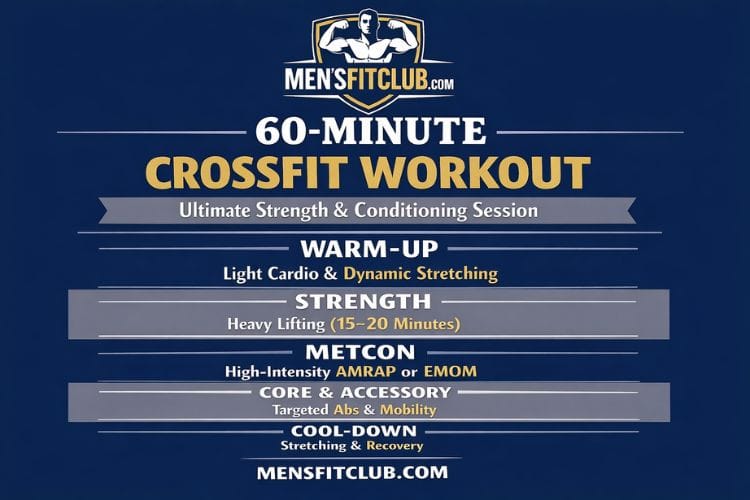
A 60-minute CrossFit workout is one of the most effective ways to build total-body strength, improve conditioning, and push your physical and mental limits in a single session. Unlike traditional gym routines that isolate muscles or rely on steady-state cardio, CrossFit workouts combine functional movements, high-intensity intervals, and compound lifts to deliver maximum results in minimal time. When structured properly, a full 60-minute CrossFit workout allows you to train strength, power, endurance, agility, and mobility all in one complete session.
This guide breaks down exactly how to structure a 60-minute CrossFit workout, explains why it works, and provides a full programming example suitable for intermediate to advanced athletes, with scalable options for beginners. Whether your goal is fat loss, muscle building, athletic performance, or overall fitness, this workout format delivers measurable results.
What Is a 60-Minute CrossFit Workout?
A 60-minute CrossFit workout is a structured training session that follows the principles of constantly varied functional movements performed at high intensity. Unlike shorter WODs that focus on speed alone, a full hour allows time for proper warm-up, strength development, metabolic conditioning, and recovery work.
CrossFit workouts typically combine barbell lifts, bodyweight movements, kettlebell exercises, gymnastics skills, and cardiovascular elements such as rowing or running. Over the course of 60 minutes, you challenge multiple energy systems while training movements that translate directly to real-world strength and athletic ability.
This type of workout is commonly used in CrossFit affiliates worldwide and aligns with the methodology popularized by CrossFit, which emphasizes broad, general, and inclusive fitness.
Why a 60-Minute CrossFit Workout Is So Effective
One of the biggest advantages of a 60-minute CrossFit workout is balance. Short workouts can be intense but limited in scope, while longer sessions allow for comprehensive training without rushing through critical components.
A full hour provides enough time to warm up thoroughly, build strength safely, and perform conditioning at a high output without sacrificing technique. This balance reduces injury risk while increasing long-term progress.
From a physiological standpoint, CrossFit workouts stimulate both aerobic and anaerobic energy systems. Heavy lifts train neuromuscular strength, while high-intensity conditioning improves cardiovascular efficiency. This combination leads to greater calorie burn, improved insulin sensitivity, and enhanced recovery capacity.
How to Structure a 60-Minute CrossFit Workout
To get the most out of a 60-minute CrossFit workout, the session should be divided into clearly defined phases. Each phase serves a specific purpose and contributes to overall performance and results.
Warm-Up Phase (10–12 Minutes)
The warm-up prepares the body for the demands of high-intensity functional training. It should gradually raise the heart rate, increase joint mobility, and activate key muscle groups.
A proper warm-up improves movement efficiency, reduces injury risk, and allows you to perform lifts and conditioning movements with better technique. In a CrossFit setting, warm-ups often include light cardio, dynamic stretching, and movement prep that mirrors the exercises used later in the workout.
During this phase, intensity should be moderate, focusing on quality of movement rather than speed or load.
Strength or Skill Component (15–20 Minutes)
The strength portion is where progressive overload and technical development take place. This segment typically focuses on one major compound lift or a complex movement pattern such as squats, deadlifts, presses, or Olympic lifts.
Training strength before conditioning ensures that you can lift heavier loads with proper form while fresh. Over time, this leads to measurable improvements in muscle mass, bone density, and overall force production.
In a 60-minute CrossFit workout, this phase is not rushed. Rest periods are intentional, allowing for quality sets and consistent performance across working sets.
Metabolic Conditioning (MetCon) Phase (15–20 Minutes)
The MetCon is the heart of a CrossFit workout. This phase combines multiple movements performed at high intensity to elevate the heart rate and challenge muscular endurance.
MetCons can take many formats, including AMRAPs (as many rounds as possible), EMOMs (every minute on the minute), or time-based circuits. The goal is sustained effort with controlled breathing and efficient movement patterns.
In a full 60-minute workout, the MetCon is long enough to challenge aerobic capacity while still demanding strength and coordination. This is where most of the calorie burn and cardiovascular benefits occur.
Accessory and Core Work (5–8 Minutes)
Accessory movements target smaller muscle groups and correct imbalances that may not be fully addressed during the main lifts or conditioning.
Core training during this phase improves spinal stability, posture, and transfer of force during compound lifts. A strong core enhances performance in nearly every CrossFit movement, from Olympic lifting to gymnastics.
This phase also helps reduce injury risk by strengthening stabilizing muscles often neglected in traditional workouts.
Cool-Down and Mobility (5–8 Minutes)
Cooling down allows the heart rate to return to normal gradually while promoting recovery. Light movement, stretching, and mobility work help reduce muscle stiffness and improve flexibility.
Regular cool-down routines enhance recovery between sessions and improve long-term joint health. Over time, this leads to better performance and consistency in training.
Complete 60-Minute CrossFit Workout Example
Below is a full 60-minute CrossFit workout designed to build strength, conditioning, and functional fitness.
Warm-Up (10 Minutes)
Begin with five minutes of light cardio such as rowing, jogging, or cycling to raise the heart rate. Follow with dynamic movements including air squats, walking lunges, arm circles, hip openers, and light kettlebell swings. Focus on controlled movement and full range of motion.
Strength Component: Back Squat (20 Minutes)
Work up to a challenging but manageable load for back squats. Perform five working sets of five repetitions at approximately 75–80 percent of your one-rep max. Rest two to three minutes between sets.
This strength segment builds lower-body power, improves core stability, and reinforces proper squat mechanics essential for CrossFit performance.
MetCon: 18-Minute AMRAP
Complete as many rounds as possible in 18 minutes of the following:
Thrusters, pull-ups, box jumps, and double-unders or jump rope. The combination of barbell, gymnastics, and plyometric movements challenges the entire body while pushing cardiovascular endurance.
Maintain steady pacing rather than sprinting early. Consistency is key for maximizing total work output.
Accessory and Core Work (7 Minutes)
Finish with controlled core exercises such as hanging knee raises, weighted planks, or Russian twists. Move with intention, focusing on bracing and breathing rather than speed.
This phase reinforces midline stability and supports overall performance.
Cool-Down (5 Minutes)
Slow walking or light cycling followed by stretching of the hips, hamstrings, quads, shoulders, and upper back. Focus on deep breathing to activate the parasympathetic nervous system and promote recovery.
Scaling Options for Beginners
A 60-minute CrossFit workout can be scaled for all fitness levels. Beginners should reduce loading, substitute simpler movements, and shorten MetCon durations as needed.
For example, back squats can be replaced with goblet squats, pull-ups with ring rows, and double-unders with single-unders. Intensity should be challenging but sustainable, allowing proper technique throughout the session.
Scaling is not a step backward; it is a critical part of long-term progress and injury prevention.
Benefits of Training with 60-Minute CrossFit Workouts
Training with longer CrossFit sessions builds a strong aerobic base while maintaining high levels of strength and power. Over time, athletes experience improved work capacity, increased muscle definition, and enhanced mental toughness.
From a fat-loss perspective, the combination of resistance training and high-intensity conditioning increases metabolic rate both during and after the workout. This leads to greater total energy expenditure compared to steady-state cardio alone.
Additionally, functional movements improve coordination, balance, and mobility, making everyday tasks easier and reducing the risk of injury outside the gym.
How Often Should You Do a 60-Minute CrossFit Workout?
Most athletes benefit from performing 60-minute CrossFit workouts three to five times per week, depending on recovery, nutrition, and training experience.
Rest days and active recovery sessions are essential to allow the nervous system and muscles to adapt. Consistency over time matters more than pushing maximum intensity every session.
Listening to your body and adjusting volume when needed ensures sustainable progress and long-term success.
Nutrition and Recovery for CrossFit Training
Fueling your body properly is critical for performance in long, intense workouts. A balanced diet with adequate protein, complex carbohydrates, and healthy fats supports muscle repair and energy production.
Hydration, sleep, and mobility work are equally important. Quality recovery habits allow you to train harder, recover faster, and reduce injury risk.
The 60-Minute CrossFit Workout
A well-designed 60-minute CrossFit workout is one of the most efficient ways to build strength, endurance, and functional fitness in a single session. By combining structured warm-ups, focused strength work, intense conditioning, and proper recovery, you create a training experience that delivers results across all areas of fitness.
Whether you are training for performance, physique, or overall health, this workout format provides the variety, challenge, and effectiveness that CrossFit is known for. Commit to consistency, prioritize movement quality, and embrace the intensity—and the results will follow.
To deepen your understanding of CrossFit and expand your training tools beyond this 60-minute session, check out our related articles on CrossFit Workouts Transforming Body and Mind for insights into how varied functional training boosts overall fitness and endurance, CrossFit Is It Good For You? to weigh the benefits and potential pitfalls of high-intensity functional training, and CrossFit Workouts at Home To Try for scalable at-home sessions you can incorporate on rest days. For structured planning ideas, our Best CrossFit Training Programs for Ultimate Fitness article provides a range of program options to match every experience level. These resources will help you optimize your training consistency and performance no matter where you are in your CrossFit journey.


Most Recommended

Subscribe to our Newsletter
Stay up to date on the latest men’s health, fitness and lifestyle trends and tips.
About Us
Men’s Fit Club was started with the goal of empowering men to get the most out of their lives. This meant going beyond exercise and diet tips to really address the broad range of issues that men face on a daily basis – topics like recreation, finding love, sexual health and even sound fashion advice.
Quick Links
© COPYRIGHT MEN'S FIT CLUB 2026. All Rights Reserved