

30 Minute Get Fit Dumbbell Workout for Over 50

28-Minute Cardio Workout for Beginners (No Equipment Needed)

Kettlebell Weight Training for Over 50: Complete Guide to Strength

7 Day Cardio Workout Challenge: Maximize Your Calorie Burn
60-Minute Full Body Workout: One-Hour Training Plan for Strength
A 60-minute full body workout is one of the most effective and time-efficient ways to build muscle, increase strength, and burn fat in a single training session. Whether you’re training at home or in the gym, dedicating one focused hour allows you to hit every major muscle group, elevate your heart rate, and create the metabolic stimulus needed for long-term results. Unlike split routines that isolate muscle groups across different days, a full body workout promotes balanced development, improves movement patterns, and supports consistent progress for beginners and experienced lifters alike.
This guide breaks down everything you need to know about structuring the perfect 60-minute full body workout, including exercise selection, training phases, intensity guidelines, and recovery strategies. If your goal is strength, hypertrophy, fat loss, or overall fitness, this one-hour plan delivers a complete solution.
Why a 60-Minute Full Body Workout Works So Well
A full body workout performed over 60 minutes strikes the perfect balance between volume, intensity, and recovery. This duration provides enough time to train compound lifts, accessory movements, and conditioning without rushing or sacrificing form.
Training the entire body in one session stimulates more muscle fibers, increases hormonal response, and improves caloric expenditure compared to shorter or overly fragmented workouts. Because multiple muscle groups are activated simultaneously, full body workouts also enhance coordination, stability, and functional strength.
Another key advantage is consistency. When each workout targets the whole body, missing a day does not derail progress as much as it would with a body-part split. This makes 60-minute full body workouts ideal for busy schedules and sustainable long-term fitness.
Who Should Follow a 60-Minute Full Body Workout Plan
This style of training works exceptionally well for beginners who need to learn proper movement patterns and for intermediate lifters looking to improve overall performance. Advanced athletes can also benefit by adjusting intensity, load, and tempo to maintain progressive overload.
Full body workouts are ideal if your goals include building lean muscle, losing fat, improving conditioning, or increasing athletic performance. They are also excellent for men over 30 and 40 who want efficient training sessions that support recovery and joint health.
How to Structure a 60-Minute Full Body Workout
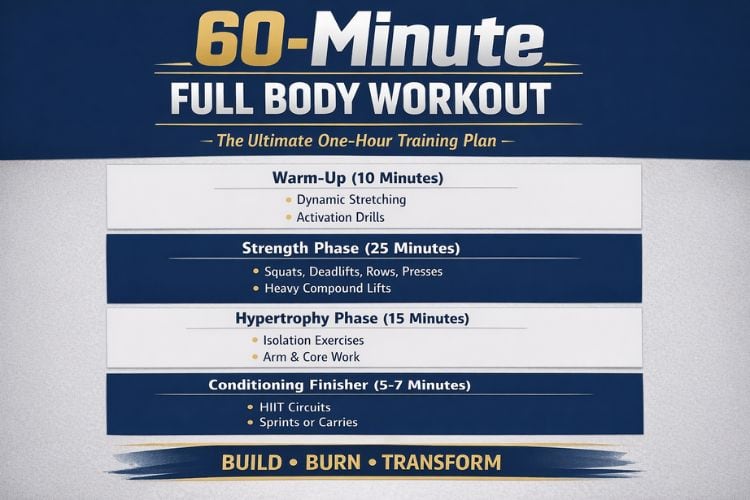
A well-designed 60-minute workout should be broken into distinct phases that maximize efficiency and performance. Each segment serves a specific purpose, ensuring that you train safely and effectively from start to finish.
Warm-Up Phase (10 Minutes)
The warm-up prepares your muscles, joints, and nervous system for intense exercise. This phase should focus on increasing blood flow, improving mobility, and activating key muscle groups.
Dynamic movements such as arm circles, leg swings, bodyweight squats, hip openers, and light cardio help raise your core temperature. Activation drills for the glutes, core, and upper back are especially important for full body sessions, as they enhance stability during compound lifts.
Skipping the warm-up increases injury risk and reduces training quality, so this phase should never be rushed.
Strength and Compound Training Phase (25 Minutes)
The strength phase forms the foundation of your workout. This is where you focus on compound exercises that engage multiple muscle groups at once. Compound movements allow you to lift heavier loads, build more muscle, and develop functional strength.
Exercises such as squats, deadlifts, presses, rows, and lunges should take priority. Performing these movements early ensures optimal energy levels and proper form. Rest periods during this phase should be moderate, allowing sufficient recovery without losing training density.
Hypertrophy and Accessory Training Phase (15 Minutes)
Accessory exercises target smaller muscle groups and correct imbalances that compound lifts may not fully address. This phase adds volume to your workout and enhances muscle definition.
Isolation movements for the arms, shoulders, calves, and core fit well here. Supersets or circuits can be used to increase intensity while keeping rest times short. This approach maintains a high heart rate and boosts calorie burn without sacrificing muscle engagement.
Conditioning and Finisher Phase (5–7 Minutes)
The conditioning segment pushes your cardiovascular system while reinforcing full body muscle engagement. Short, intense bursts of work followed by minimal rest elevate your metabolic rate and improve endurance.
This phase can include bodyweight circuits, loaded carries, or high-intensity intervals. The goal is to finish strong without compromising technique or safety.
Cool-Down and Recovery Phase (3–5 Minutes)
Cooling down helps lower heart rate, reduce muscle tightness, and initiate recovery. Stretching the hips, hamstrings, chest, shoulders, and back promotes flexibility and reduces soreness.
Deep breathing exercises during the cool-down support nervous system recovery and prepare your body for the rest of the day.
Sample 60-Minute Full Body Workout Routine
This balanced routine is designed to train all major muscle groups within one hour while maintaining intensity and proper pacing.
Lower Body and Core Focus
Begin with a compound lower body movement such as squats or deadlifts. These exercises recruit the glutes, quads, hamstrings, and core simultaneously. Follow with lunges or step-ups to improve unilateral strength and stability.
Core engagement is constant throughout lower body training, making this an efficient way to build foundational strength.
Upper Body Push Movements
Upper body pushing exercises target the chest, shoulders, and triceps. Movements such as presses or push-ups develop pressing strength and improve upper body coordination.
Maintaining controlled tempo and proper shoulder positioning is essential for joint health and performance.
Upper Body Pull Movements
Pulling exercises balance pressing movements and strengthen the back and biceps. Rows and pull variations improve posture, grip strength, and overall upper body stability.
A strong back supports all major lifts and reduces the risk of shoulder and lower back injuries.
Accessory and Arm Work
Accessory movements add volume to the arms and shoulders while enhancing muscle symmetry. Short rest periods keep intensity high and contribute to overall calorie expenditure.
This phase also improves muscular endurance and definition.
Conditioning Finisher
Finish the workout with a high-intensity circuit that challenges both strength and endurance. This final push elevates heart rate and maximizes fat-burning potential.
Training Frequency for 60-Minute Full Body Workouts
Most people benefit from performing full body workouts two to four times per week. Beginners may start with two sessions to allow recovery, while intermediate and advanced trainees can handle three or four sessions with proper programming.
Rest days between sessions help muscles repair and grow, ensuring consistent progress without burnout.
Progressive Overload and Long-Term Results
To continue making progress, you must gradually increase training demands. Progressive overload can be achieved by increasing weight, adding repetitions, improving tempo control, or reducing rest times.
Tracking workouts and making small adjustments each week ensures steady improvement in strength and muscle development.
Nutrition to Support a 60-Minute Full Body Workout
Training performance and recovery depend heavily on proper nutrition. Consuming adequate protein supports muscle repair, while carbohydrates fuel intense workouts.
Hydration also plays a crucial role in endurance and recovery. Drinking water before, during, and after training helps maintain performance and reduce fatigue.
Recovery and Injury Prevention
Recovery is just as important as training intensity. Quality sleep, proper warm-ups, mobility work, and balanced programming all contribute to injury prevention.
Listening to your body and adjusting intensity when needed ensures long-term sustainability and consistent results.
Benefits of Consistent Full Body Training
Regular 60-minute full body workouts improve strength, muscle tone, cardiovascular fitness, and overall health. They promote balanced development, improve posture, and enhance athletic performance.
Because each session targets the entire body, these workouts are efficient, flexible, and adaptable to nearly any fitness level or goal.
The 60-Minute Full Body Workout
A 60-minute full body workout is one of the most powerful tools for building a strong, lean, and functional physique. By combining compound movements, targeted accessory work, and conditioning, this training style delivers maximum results in minimal time.
Whether your goal is muscle growth, fat loss, or total fitness, committing to consistent one-hour full body sessions can transform your body and performance. Train with purpose, focus on proper form, and stay consistent—the results will follow.
For even more full body training ideas that complement your 60-minute workout, check out our detailed “60‑Minute Full Body Weightlifting Program for Strength and Muscle”, which breaks down a structured hour-long gym session with heavy lifts and accessory work. If you’re short on time but still want a complete session, our “30‑Minute Barbell HIIT Workout: Full‑Body Strength & Fat‑Burning” delivers intense barbell intervals in half the time. For those looking to build strength over multiple days, the “3‑Day Full Body Circuit Workout: Get Strong & Lean in Less Time” provides an effective weekly training plan. Beginners will benefit from the “Best Full Body Gym Workout for Beginners” that outlines essential movements and progression tips, and our classic “Full Body Workout Plan Maximizing Your Fitness” offers foundational principles and full body exercise recommendations to round out your fitness library.


Most Recommended

Subscribe to our Newsletter
Stay up to date on the latest men’s health, fitness and lifestyle trends and tips.
About Us
Men’s Fit Club was started with the goal of empowering men to get the most out of their lives. This meant going beyond exercise and diet tips to really address the broad range of issues that men face on a daily basis – topics like recreation, finding love, sexual health and even sound fashion advice.
Quick Links
© COPYRIGHT MEN'S FIT CLUB 2026. All Rights Reserved