


30 Minute EMOM Workout For Strength And Endurance

20 Minute Full Body Workout for Beginners: Guide to Build Strength

Strength & Power Chest Workout: Maximize Gains in 45 Minutes
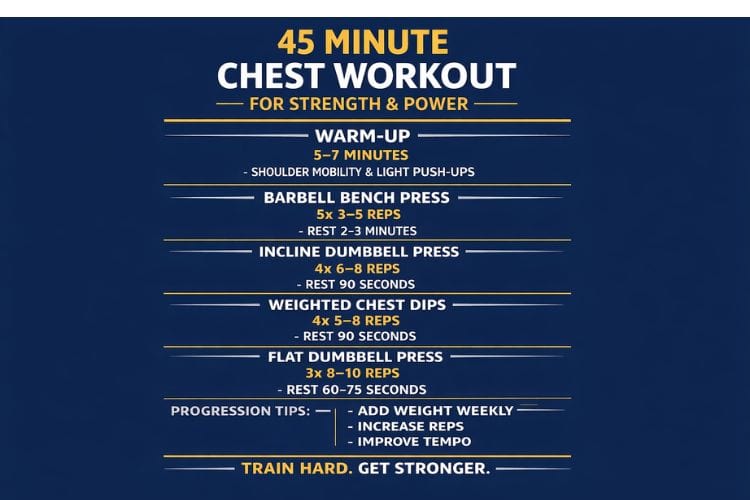
Building a powerful chest isn’t about endless pump work or random high-rep sets. True chest strength and power come from structured training, heavy compound lifts, proper volume, and progressive overload applied with intention. A well-designed 45 minute chest workout for strength and power gives you enough time to lift heavy, stimulate muscle fibers responsible for strength and size, and still recover properly between sessions.
This workout is built specifically for men who want measurable strength gains, increased pressing power, and visible chest development without wasting time in the gym. Whether your goal is to bench more weight, build explosive upper-body strength, or create a thicker, more dominant chest, this plan delivers.
Why Train Chest for Strength and Power?
Chest training for strength and power goes beyond aesthetics. A strong chest improves overall athletic performance, supports shoulder stability, enhances pushing mechanics, and directly transfers to compound lifts like the bench press, overhead press, and dips.
Powerful chest muscles also play a major role in sports that involve pushing, throwing, or explosive upper-body movements. Strength-focused chest training builds neuromuscular efficiency, allowing you to generate more force in less time.
When your chest is trained correctly, you’ll notice:
- Increased bench press strength
- Improved pressing endurance
- Greater upper-body power output
- Better posture and shoulder support
- Faster muscle growth from higher mechanical tension
How This 45 Minute Chest Workout Is Structured
This workout follows a strength-first, power-supported approach, meaning the heaviest compound movements are performed early when energy levels are highest. Assistance exercises then reinforce strength through controlled volume and targeted muscle activation.
Workout Structure:
- Heavy compound lifts (low reps, long rest)
- Secondary strength movements (moderate reps)
- Power and accessory work (controlled intensity)
- Efficient rest periods to fit within 45 minutes
This structure ensures maximal strength development without sacrificing hypertrophy or joint health.
Warm-Up (5–7 Minutes)
A proper warm-up is essential for heavy chest training. It prepares the nervous system, increases blood flow, and protects the shoulders and elbows.
Focus on mobility, activation, and light movement rather than fatigue.
Warm-Up Focus:
- Arm circles and shoulder rotations
- Scapular retractions
- Light push-ups
- Band or cable chest activation
- Gradual ramp-up sets for bench press
Never skip the warm-up when training heavy. Strong muscles require prepared joints.
The 45 Minute Chest Workout for Strength and Power
Barbell Bench Press (Primary Strength Lift)
The barbell bench press is the foundation of chest strength. It allows maximal load, full control, and progressive overload over time.
Sets: 5
Reps: 3–5
Rest: 2–3 minutes
Focus on explosive intent during the press while maintaining strict control on the descent. Lower the bar slowly, pause briefly near the chest if possible, then drive the bar upward with maximum force.
This rep range targets fast-twitch muscle fibers and increases neural drive, which is essential for strength gains.
Incline Dumbbell Bench Press (Upper Chest Strength)
Incline dumbbell presses build upper chest thickness while improving unilateral strength and shoulder stability.
Sets: 4
Reps: 6–8
Rest: 90 seconds
Use a moderate incline and control the weight through the full range of motion. Dumbbells increase muscle activation and help correct strength imbalances that limit barbell progress.
This exercise reinforces pressing mechanics while adding volume without excessive joint stress.
Weighted Chest Dips (Power and Load Transfer)
Chest dips are one of the most underrated strength-building movements for the chest. When performed with a slight forward lean, they heavily activate the lower and mid-chest fibers.
Sets: 4
Reps: 5–8
Rest: 90 seconds
Add weight if bodyweight dips are too easy. Focus on powerful upward movement while keeping the shoulders stable and controlled.
Dips improve lockout strength and translate directly to stronger bench press performance.
Flat Dumbbell Press (Controlled Strength Volume)
Flat dumbbell presses extend time under tension while reinforcing chest activation after heavy barbell work.
Sets: 3
Reps: 8–10
Rest: 60–75 seconds
Lower the dumbbells slowly and press with intent. This movement adds hypertrophy-supporting volume without compromising recovery.
Explosive Push-Ups or Medicine Ball Push-Ups (Power Finisher)
To finish the workout, incorporate an explosive movement to reinforce power output.
Sets: 3
Reps: 10–15
Rest: 45–60 seconds
Push-ups performed explosively train rate of force development and improve pressing speed. This is especially beneficial for athletes and lifters focused on power.
Weekly Progression Strategy for Strength Gains
Progressive overload is the key driver of long-term strength improvement. Without it, your chest workouts become maintenance sessions instead of growth sessions.
Ways to Progress:
- Add 2.5–5 lbs to your bench press weekly
- Increase reps within the target range
- Add an extra set to compound lifts
- Improve tempo control and pause reps
- Reduce rest time slightly over time
Track your lifts. Strength gains require data, consistency, and patience.
Optimal Rest Periods for Strength and Power
Rest periods directly impact performance. Too little rest limits strength output, while excessive rest reduces workout efficiency.
Recommended Rest Times:
- Heavy compound lifts: 2–3 minutes
- Secondary strength exercises: 90 seconds
- Accessories and power finishers: 45–75 seconds
These rest intervals balance maximal force production with time efficiency.
Common Mistakes That Kill Chest Strength Progress
Many lifters train chest frequently but fail to see real strength gains due to poor programming or technique errors.
Avoid these mistakes:
- Training chest with high reps only
- Skipping progressive overload
- Poor bench press form
- Neglecting upper chest development
- Overtraining without adequate recovery
Strength requires intelligent effort, not random intensity.
Chest Training Frequency for Strength and Power
Chest can be trained 1–2 times per week depending on recovery, volume, and overall split.
Recommended Approach:
- One heavy strength-focused chest session
- One lighter hypertrophy or assistance-focused session (optional)
This allows consistent progression without joint burnout.
Nutrition for Chest Strength and Power
Training hard is only half the equation. Strength gains demand adequate fuel.
Nutrition Priorities:
- High-protein intake for muscle repair
- Complex carbohydrates for training energy
- Healthy fats for hormone support
- Proper hydration for performance
Under-eating will stall progress no matter how perfect your program is.
Recovery Tips for Heavy Chest Training
Strength workouts place high stress on the nervous system. Recovery must be taken seriously.
Recovery Essentials:
- 7–9 hours of sleep per night
- Active recovery or mobility work
- Deload weeks every 6–8 weeks
- Proper warm-ups and cool-downs
Progress happens during recovery, not just during workouts.
Who Is This Chest Workout For Strength And Power Best For
This 45 minute chest workout is ideal for:
- Lifters focused on strength and power
- Men looking to increase bench press numbers
- Intermediate to advanced trainees
- Athletes needing explosive upper-body strength
- Busy individuals needing efficient, effective workouts
Beginners can use this structure with lighter loads and higher reps while learning proper form.
Build Real Chest Strength in 45 Minutes Power Workout
You don’t need marathon gym sessions to build a strong, powerful chest. You need focused intensity, intelligent programming, and consistent progression. This 45 minute chest workout for strength and power delivers exactly that.
By prioritizing heavy compound lifts, reinforcing strength with assistance work, and finishing with explosive movements, you build not only size but functional power that carries over into every upper-body lift.
Train with purpose, track your progress, and commit to steady overload. Strength isn’t built overnight—but with the right plan, it’s built efficiently.
For more ways to build a stronger, more muscular chest and enhance your pressing power, be sure to explore related resources on MensFitClub. If you’re looking to expand your exercise library, check out The Best Chest Workout Routine to Build Mass and Strength Fast to complement today’s strength-focused session with hypertrophy-driven moves. Want to dial in individual movements with expert form cues? Our Barbell Bench Press Guide to Building Chest Strength breaks down technique and variations for pressing heavier. For targeted upper-body development, The Best Chest Workout Exercises offers a full list of effective chest moves you can rotate into your training. If you’re interested in cable work to add constant tension through your chest range of motion, don’t miss The Best Cable Chest Exercises. And for an alternative time-efficient plan with slightly different volume and pacing, the 35 Minute Chest Workout Plan at the Gym.


Most Recommended

Subscribe to our Newsletter
Stay up to date on the latest men’s health, fitness and lifestyle trends and tips.
About Us
Men’s Fit Club was started with the goal of empowering men to get the most out of their lives. This meant going beyond exercise and diet tips to really address the broad range of issues that men face on a daily basis – topics like recreation, finding love, sexual health and even sound fashion advice.
Quick Links
© COPYRIGHT MEN'S FIT CLUB 2026. All Rights Reserved