

30-Minute Lower Body Dumbbell Workout for Strength


30 Minute Lower Body Strength Workout (Build Muscle & Power)

5 Shoulder Workouts with Dumbbells: Guide to Stronger Shoulders
4-Week Progressive Overload Workout Plan: Build Muscle Strength
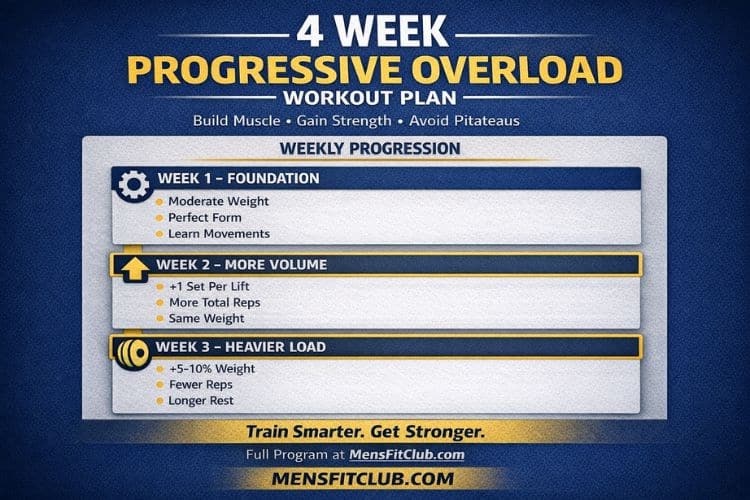
A 4 week progressive overload workout plan is one of the most effective ways to build muscle, increase strength, and avoid training plateaus. Many people train hard but fail to see results because their workouts lack structure, progression, and measurable overload. Progressive overload fixes that problem by giving your body a clear reason to adapt week after week.
In this guide, you’ll learn exactly how progressive overload works, why it’s essential for muscle growth, and how to apply it using a proven 4-week workout plan. Whether your goal is muscle gain, fat loss, or improved performance, this structured approach ensures steady progress without burnout.
What Is Progressive Overload Workout Training?
Progressive overload is the gradual increase of stress placed on the body during exercise. This stress forces muscles, tendons, and the nervous system to adapt by becoming stronger and more resilient.
When you lift the same weights for the same reps every week, your body has no reason to grow. Progressive overload introduces small, planned changes that challenge your muscles just enough to stimulate growth without overtraining.
Key Progressive Overload Methods
There are several effective ways to apply progressive overload:
- Increasing weight lifted
- Adding more repetitions
- Increasing total sets or training volume
- Improving tempo or time under tension
- Reducing rest time between sets
- Improving form and range of motion
A successful 4 week progressive overload workout plan typically combines several of these methods to keep training productive and sustainable.
Why a 4 Week Progressive Overload Plan Works
A four-week timeframe is ideal because it allows enough time for measurable strength gains without pushing the body into excessive fatigue. It also fits perfectly into training cycles, making it easy to repeat or modify based on results.
Shorter programs often don’t allow enough time for adaptation, while longer plans can stall progress if intensity isn’t managed correctly. Four weeks strikes the perfect balance between intensity, recovery, and consistency.
Who Should Use This Progressive Overload Workout Plan?
This 4 week progressive overload workout plan is suitable for:
- Beginners learning proper training structure
- Intermediate lifters looking to break plateaus
- Busy individuals who want efficient workouts
- Men focused on strength and lean muscle gain
- Anyone seeking a structured, goal-driven routine
The plan can be adjusted for dumbbells, barbells, machines, or home workouts, making it flexible for different fitness levels.
Weekly Progressive Overload Workout Training Split Overview
This program follows a 4-day upper/lower split, which allows sufficient recovery while hitting each muscle group twice per week.
Weekly Schedule Example:
- Day 1: Upper Body Strength
- Day 2: Lower Body Strength
- Day 3: Rest or Active Recovery
- Day 4: Upper Body Hypertrophy
- Day 5: Lower Body Hypertrophy
- Day 6–7: Rest or Light Cardio
This split balances heavy compound lifts with hypertrophy-focused accessory work.
Progressive Overload Strategy by Week
Each week builds upon the last using a controlled overload strategy. The goal is progress—not exhaustion.
Week 1: Foundation and Technique Progressive Overload Workout
Week 1 focuses on establishing proper form, learning movement patterns, and identifying working weights.
Training Focus
- Moderate weight
- Controlled tempo
- Perfect technique
- Leaving 1–2 reps in reserve
This week sets the baseline for future overload.
Upper Body Strength Day
Focus on compound movements that recruit multiple muscle groups.
Exercises include pressing, rowing, and pulling movements performed with moderate weight and strict form.
Lower Body Strength Day
Lower body workouts emphasize squats, hinges, and lunges with controlled depth and tempo.
This phase builds joint stability and neuromuscular coordination.
Week 2: Volume Increase Progressive Overload Workout
Week 2 increases total training volume to push muscles beyond their previous workload.
Progressive Overload Method
- Add 1 extra set to main lifts
- Increase total reps per exercise
- Maintain same weight as Week 1
Volume progression improves muscular endurance and hypertrophy.
Training Adaptation
Muscles respond by increasing glycogen storage, improving work capacity, and initiating muscle protein synthesis.
Week 3: Intensity Increase Progressive Overload Workout
Week 3 increases load while slightly reducing volume to emphasize strength gains.
Progressive Overload Method
- Increase weight by 5–10%
- Reduce reps slightly
- Maintain rest periods
This phase places higher mechanical tension on muscles, a key driver of muscle growth.
Recovery Considerations
Sleep, nutrition, and hydration become more important during this week due to increased intensity.
Week 4: Peak Overload and Performance
Week 4 challenges your strength and muscular endurance while maintaining control.
Progressive Overload Method
- Increase reps at heavier weight
- Shorten rest times slightly
- Focus on mind-muscle connection
This week tests the adaptations built during the previous three weeks.
Sample Upper Body Progressive Overload Workout Structure
Each upper body session targets chest, back, shoulders, and arms.
Key Movements
- Horizontal press
- Vertical pull
- Horizontal row
- Shoulder press
- Arm isolation
Compound lifts are performed first, followed by accessory exercises for balanced development.
Sample Lower Body Progressive Overload Workout Structure
Lower body sessions focus on quads, hamstrings, glutes, and calves.
Key Movements
- Squat or leg press
- Hip hinge movement
- Single-leg exercise
- Hamstring isolation
- Calf work
This combination builds strength, power, and muscular balance.
Rest Period Guidelines
Rest times play a crucial role in progressive overload training.
- Strength sets: 90–120 seconds
- Hypertrophy sets: 45–75 seconds
- Accessory work: 30–60 seconds
Managing rest periods ensures consistent performance across sets.
Nutrition Tips for Progressive Overload Workout Success
Training alone is not enough. Nutrition fuels adaptation.
Protein Intake
Aim for adequate protein intake to support muscle repair and growth. Spread protein evenly across meals for best results.
Carbohydrates for Performance
Carbohydrates fuel workouts and replenish glycogen stores, improving recovery and training intensity.
Hydration and Micronutrients
Hydration supports muscle function, joint health, and endurance. Include fruits and vegetables to cover micronutrient needs.
Common Progressive Overload Workout Mistakes to Avoid
Many lifters stall progress by making avoidable errors.
Adding Too Much Weight Too Fast
Small increases lead to sustainable progress. Large jumps increase injury risk and fatigue.
Ignoring Recovery
Progressive overload requires recovery. Overtraining reduces strength gains and increases burnout.
Poor Exercise Form
Lifting heavier with poor form shifts tension away from target muscles and raises injury risk.
Tracking Progress Effectively
Tracking ensures that progressive overload is applied correctly.
What to Track
- Weight lifted
- Reps completed
- Sets performed
- Rest times
- Perceived exertion
Consistent tracking reveals patterns and prevents stagnation.
What to Do After the 4 Weeks Progressive Overload Workout Plan
After completing the plan, you have several options:
- Repeat the program with heavier starting weights
- Switch to a new training split
- Deload for one week before restarting
- Transition to a specialization phase
This flexibility keeps training fresh and results consistent.
Benefits of a 4 Week Progressive Overload Workout Plan
Following this plan delivers measurable benefits.
- Increased muscle mass
- Improved strength
- Better workout structure
- Reduced plateaus
- Improved recovery awareness
The simplicity of progressive overload makes it one of the most reliable training principles.
Is Progressive Overload Necessary for Fat Loss?
While fat loss primarily depends on calorie balance, progressive overload preserves lean muscle mass during fat loss phases. Maintaining muscle helps keep metabolism high and improves body composition.
Progressive Overload Training
A 4 week progressive overload workout plan provides structure, clarity, and measurable progress. Instead of guessing in the gym, you follow a logical system that tells your body exactly how to adapt.
Whether your goal is strength, muscle growth, or improved performance, progressive overload remains the foundation of effective training. Stick to the plan, prioritize recovery, and track your progress consistently. Small improvements each week lead to powerful long-term results.


Most Recommended

Subscribe to our Newsletter
Stay up to date on the latest men’s health, fitness and lifestyle trends and tips.
About Us
Men’s Fit Club was started with the goal of empowering men to get the most out of their lives. This meant going beyond exercise and diet tips to really address the broad range of issues that men face on a daily basis – topics like recreation, finding love, sexual health and even sound fashion advice.
Quick Links
© COPYRIGHT MEN'S FIT CLUB 2026. All Rights Reserved