
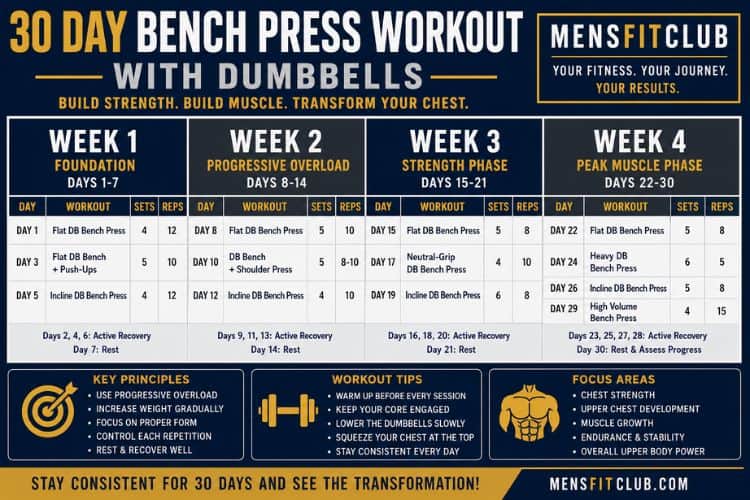
30 Day Dumbbell Bench Press Workout for a Bigger Chest
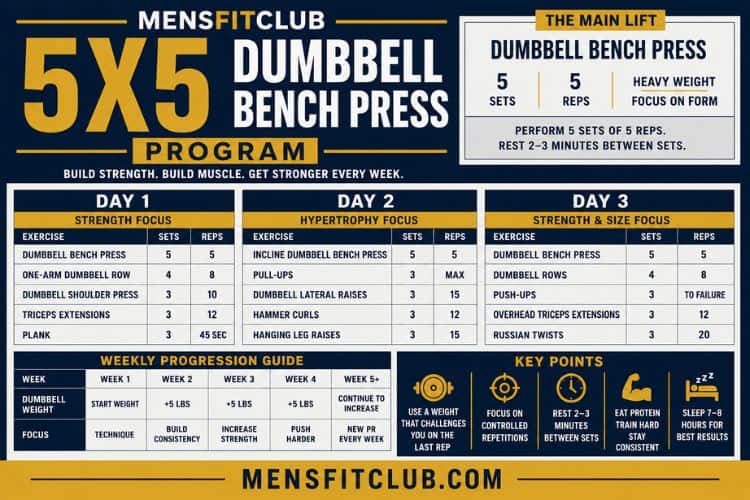
5×5 Dumbbell Bench Press Workout The Ultimate Guide to Gains
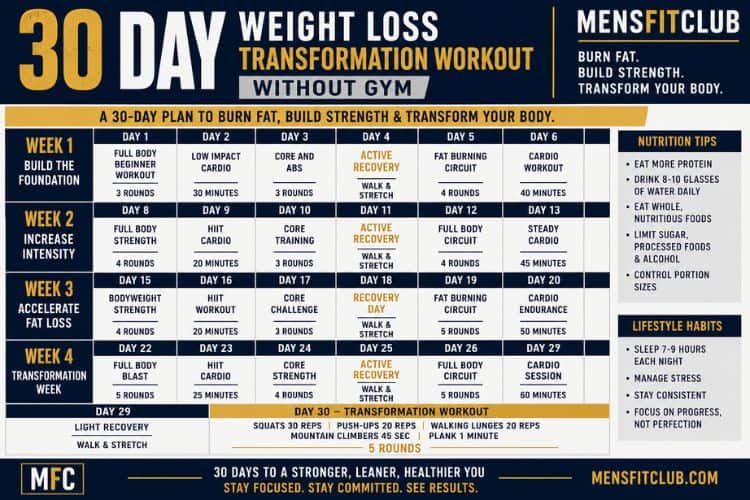
30 Day Weight Loss Transformation Workout Without Gym
Best Arm Workouts for Lean Muscle (No Bulk Just Definition)
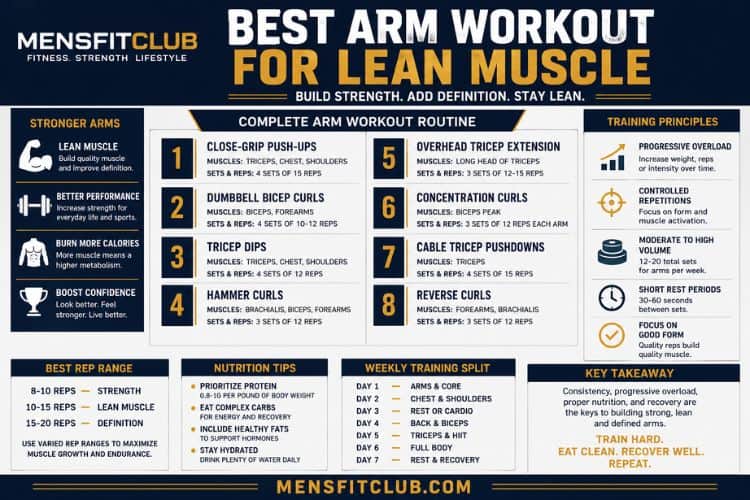
Building lean, muscular arms is one of the most common fitness goals for men who want to improve strength, athletic performance, and overall physique. A well-structured arm workout not only helps you develop bigger biceps and stronger triceps, but also creates balanced upper-body definition that enhances your appearance and confidence. The best arm workout for lean muscle focuses on moderate-to-high training volume, controlled repetitions, progressive overload, and proper nutrition to maximize muscle growth while keeping body fat low.
Unlike workouts designed purely for mass, lean muscle training combines hypertrophy-focused resistance exercises with shorter rest periods and higher overall training intensity. This method helps stimulate muscle growth while increasing calorie burn, leading to toned and defined arms rather than bulky size. Whether you train at home or in the gym, incorporating the right exercises and workout structure can help you build impressive arms efficiently.
Why Lean Muscle Training Matters for Arm Development
Lean muscle training emphasizes functional muscle growth with lower body fat percentages. Instead of simply adding size, the goal is to create visible muscle definition, endurance, and strength. The arms respond extremely well to consistent resistance training because the biceps and triceps are involved in many pulling and pushing movements throughout the week.
The biceps make up the front portion of the upper arm and are responsible for elbow flexion and pulling movements. The triceps, which make up nearly two-thirds of the arm’s total size, are responsible for elbow extension and pressing power. Training both muscle groups equally is essential for balanced development.
A lean muscle arm workout should include:
- Compound exercises for overall strength
- Isolation exercises for muscle definition
- Moderate rep ranges between 8–15 reps
- Shorter rest periods
- Progressive overload
- Proper recovery and nutrition
Combining these elements creates the perfect environment for lean muscle growth.
Benefits of Arm Workouts for Lean Muscle
Improved Upper Body Definition
Consistent arm training enhances muscle visibility and improves overall upper-body aesthetics. Defined biceps and triceps help create a more athletic physique.
Increased Functional Strength
Strong arms improve performance in everyday activities and athletic movements such as lifting, pulling, pushing, climbing, and carrying.
Better Calorie Burn
Resistance training increases muscle mass, which raises your resting metabolic rate and helps your body burn more calories throughout the day.
Enhanced Athletic Performance
Arm strength improves performance in sports, weightlifting, CrossFit, martial arts, and bodyweight exercises.
Better Posture and Stability
Training the arms alongside supporting muscles improves shoulder stability and posture while reducing injury risk.
Best Training Principles for Arm Workout For Lean Muscle
Focus on Progressive Overload
Progressive overload means gradually increasing the difficulty of your workouts over time. You can do this by:
- Increasing weight
- Adding repetitions
- Increasing sets
- Improving exercise tempo
- Reducing rest time
Small improvements each week lead to long-term muscle growth.
Use Controlled Repetitions
Avoid using momentum when training arms. Controlled movements maximize muscle tension and improve activation. Lower the weight slowly during each repetition to increase time under tension.
Train with Moderate to High Volume
Lean muscle training responds well to higher training volume. Aim for:
- 12–20 total working sets for arms weekly
- 2–3 arm sessions per week
- 8–15 reps per set
Keep Rest Periods Short
Short rest periods between 30–60 seconds help maintain workout intensity and increase calorie burn.
Prioritize Form Over Weight
Lifting excessively heavy weights with poor form reduces muscle activation and increases injury risk. Proper technique should always come first.
Anatomy of the Arm Muscles
Understanding the arm muscles helps you train more effectively.
Biceps Brachii
The biceps consist of two heads:
- Long head
- Short head
These muscles help flex the elbow and rotate the forearm.
Brachialis
Located underneath the biceps, the brachialis contributes to overall arm thickness and strength.
Triceps Brachii
The triceps consist of three heads:
- Long head
- Lateral head
- Medial head
Training all three heads is necessary for complete arm development.
Forearms
Strong forearms improve grip strength and overall arm appearance.
Best Arm Workout for Lean Muscle
This workout combines compound and isolation exercises to maximize lean muscle growth and arm definition.
Warm-Up Routine
Before training, spend 5–10 minutes warming up:
- Jump rope
- Arm circles
- Push-ups
- Resistance band curls
- Light dumbbell presses
A proper warm-up increases blood flow and reduces injury risk.
Lean Muscle Arm Workout Routine
1. Close-Grip Push-Ups Arm Workout For Lean Muscle
Muscles Worked
- Triceps
- Chest
- Shoulders
How to Perform
Place your hands shoulder-width apart and keep your elbows close to your body while lowering yourself toward the floor.
Sets and Reps
4 sets of 15 reps
This exercise creates excellent triceps activation while improving upper-body endurance.
2. Dumbbell Bicep Curls Arm Workout For Lean Muscle
Muscles Worked
- Biceps
- Forearms
How to Perform
Stand upright with dumbbells at your sides. Curl the weights toward your shoulders while keeping elbows stationary.
Sets and Reps
4 sets of 10–12 reps
Slow eccentric lowering improves muscle definition and growth.
3. Tricep Dips Arm Workout For Lean Muscle
Muscles Worked
- Triceps
- Chest
- Shoulders
How to Perform
Use parallel bars or a bench. Lower yourself until your elbows reach 90 degrees, then push upward.
Sets and Reps
4 sets of 12 reps
Dips are one of the best bodyweight exercises for lean triceps development.
4. Hammer Curls Arm Workout For Lean Muscle
Muscles Worked
- Brachialis
- Biceps
- Forearms
How to Perform
Hold dumbbells with a neutral grip and curl upward while maintaining controlled movement.
Sets and Reps
3 sets of 12 reps
Hammer curls improve arm thickness and forearm development.
5. Overhead Tricep Extension Arm Workout For Lean Muscle
Muscles Worked
- Long head of triceps
How to Perform
Hold one dumbbell overhead with both hands and lower it behind your head before pressing upward.
Sets and Reps
3 sets of 12–15 reps
This movement stretches the triceps deeply for maximum activation.
6. Concentration Curls Arm Workout For Lean Muscle
Muscles Worked
- Biceps peak
How to Perform
Sit on a bench and curl one arm at a time while bracing the elbow against your thigh.
Sets and Reps
3 sets of 12 reps each arm
Concentration curls improve muscle isolation and peak contraction.
7. Cable Tricep Pushdowns
Muscles Worked
- Triceps
How to Perform
Push the cable downward while keeping elbows close to your torso.
Sets and Reps
4 sets of 15 reps
High-rep pushdowns create excellent muscle definition and blood flow.
8. Reverse Curls Arm Workout For Lean Muscle
Muscles Worked
- Forearms
- Brachialis
How to Perform
Use an overhand grip while curling the barbell or dumbbells upward.
Sets and Reps
3 sets of 12 reps
Reverse curls strengthen grip and forearm muscles.
Best Weekly Training Split for Lean Arms
Day 1 – Arms and Core
- Full arm workout
- Core exercises
2 – Chest and Shoulders
- Bench press
- Shoulder press
- Push-ups
3 – Rest or Cardio
4 – Back and Biceps
- Pull-ups
- Rows
- Hammer curls
5 – Triceps and HIIT
- Tricep-focused workout
- High-intensity cardio
6 – Full Body Workout
7 – Rest and Recovery
This schedule provides enough recovery while maximizing training frequency.
Best Rep Range for Lean Muscle Arms Workout
8–10 Reps
Best for strength and hypertrophy.
10–15 Reps
Ideal for lean muscle growth and endurance.
15–20 Reps
Excellent for muscle definition and metabolic stress.
Using varied rep ranges helps stimulate different muscle fibers for complete development.
Nutrition Tips for Arm Workout For Lean Muscle
Training alone will not build lean muscle without proper nutrition.
Prioritize Protein Intake
Protein supports muscle repair and growth. Aim for:
- 0.8–1 gram of protein per pound of body weight
Best protein sources include:
- Chicken breast
- Lean beef
- Eggs
- Fish
- Greek yogurt
- Protein shakes
Eat Complex Carbohydrates
Carbohydrates fuel workouts and aid recovery.
Good sources include:
- Oatmeal
- Brown rice
- Sweet potatoes
- Quinoa
- Whole grains
Include Healthy Fats
Healthy fats support hormone production and recovery.
Sources include:
- Avocados
- Nuts
- Olive oil
- Salmon
Stay Hydrated
Muscle performance decreases when dehydrated. Drink plenty of water before, during, and after workouts.
Best Cardio for Arm Workout For Lean Muscle Definition
Adding cardio helps reduce body fat and reveal arm definition.
HIIT Cardio
High-intensity interval training burns calories efficiently while preserving muscle mass.
Examples include:
- Sprint intervals
- Battle ropes
- Jump rope
- Burpees
Low-Intensity Cardio
Walking, cycling, or swimming improves recovery and supports fat loss.
Aim for 2–4 cardio sessions weekly.
Common Arm Workout For Lean Muscle Training Mistakes
Training Too Heavy
Excessively heavy weights reduce form quality and increase injury risk.
Neglecting Triceps
Many lifters over-focus on biceps while ignoring triceps, even though triceps make up most of the arm size.
Using Momentum
Swinging weights reduces muscle tension and effectiveness.
Overtraining
Training arms daily limits recovery and muscle growth.
Ignoring Nutrition
Poor eating habits prevent lean muscle development regardless of workout quality.
Home Arm Workout for Lean Muscle
If you train at home, you can still build lean arms effectively.
Home Workout Circuit
Push-Ups
15 reps
Chair Dips
15 reps
Resistance Band Curls
15 reps
Pike Push-Ups
12 reps
Plank Shoulder Taps
20 reps
Repeat for 4 rounds.
Advanced Techniques for Arm Workout For Lean Muscle Growth
Supersets
Perform two exercises back-to-back with no rest.
Example:
- Bicep curls
- Tricep pushdowns
Supersets increase workout intensity and calorie burn.
Drop Sets
Reduce weight immediately after reaching failure and continue the set.
Tempo Training
Slow down repetitions to increase time under tension.
Example:
- 3-second lowering phase
- 1-second pause
- Explosive lift
Partial Reps
Adding partial reps at the end of a set increases muscle fatigue and growth stimulus.
Recovery Tips for Arm Workout For Lean Muscle Growth
Sleep
Aim for 7–9 hours of sleep nightly.
Stretching
Post-workout stretching improves flexibility and recovery.
Active Recovery
Light cardio and mobility work improve circulation.
Rest Days
Muscles grow during recovery, not during workouts.
How Long Does It Take to Build Lean Arm Muscle?
Most people notice improved muscle definition within 4–6 weeks of consistent training and nutrition. Significant muscle growth typically occurs after 8–12 weeks of progressive workouts.
Results depend on:
- Genetics
- Training consistency
- Nutrition
- Sleep
- Workout intensity
Patience and consistency are the keys to success.
Best Equipment for Arm Workout For Lean Muscle Training
Dumbbells
Versatile and excellent for unilateral training.
Resistance Bands
Perfect for home workouts and muscle endurance.
Barbells
Ideal for strength-focused arm exercises.
Cable Machines
Provide constant tension for muscle definition.
Pull-Up Bars
Excellent for biceps and upper-body strength.
The best arm workout for lean muscle combines smart exercise selection, progressive overload, moderate-to-high training volume, and proper nutrition. Building lean, defined arms requires consistency, patience, and balanced training for both the biceps and triceps. Whether you train in the gym or at home, focusing on controlled movements, shorter rest periods, and proper recovery will help maximize muscle definition and overall arm strength.
Remember that lean muscle development is not only about aesthetics. Strong arms improve athletic performance, functional strength, posture, and confidence. Stay consistent with your workouts, fuel your body properly, and continue progressing each week to achieve stronger, more defined arms.
For more arm-building strategies, lean muscle workouts, and upper-body training routines, check out these related articles from MensFitClub. These guides will help readers improve arm definition, increase strength, and maximize lean muscle growth through effective workout programming and recovery strategies. Explore the benefits of functional dumbbell training with 30 Minute Dumbbell Functional Arm Workout for Strength, build stronger biceps and triceps using Best Arm Exercises With Dumbbells For Men, and improve muscle definition with 45-Minute Bodyweight Arm Workout: Build Biceps & Triceps. Readers looking for a complete arm transformation plan can also follow 7 Day Arm Workout Plan for Stronger Toned Muscles or increase workout intensity with 30 Day Arm Dumbbell Challenge for Bigger Biceps and Triceps.


Most Recommended

Subscribe to our Newsletter
Stay up to date on the latest men’s health, fitness and lifestyle trends and tips.
About Us
Men’s Fit Club was started with the goal of empowering men to get the most out of their lives. This meant going beyond exercise and diet tips to really address the broad range of issues that men face on a daily basis – topics like recreation, finding love, sexual health and even sound fashion advice.
Quick Links
© COPYRIGHT MEN'S FIT CLUB 2026. All Rights Reserved