
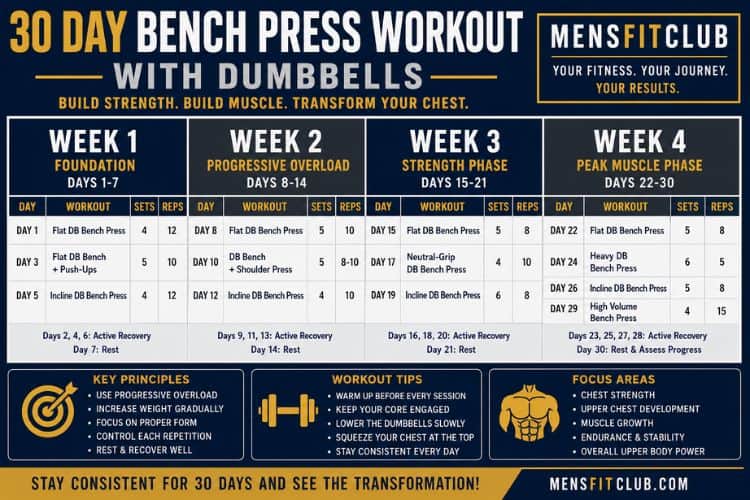
30 Day Dumbbell Bench Press Workout for a Bigger Chest
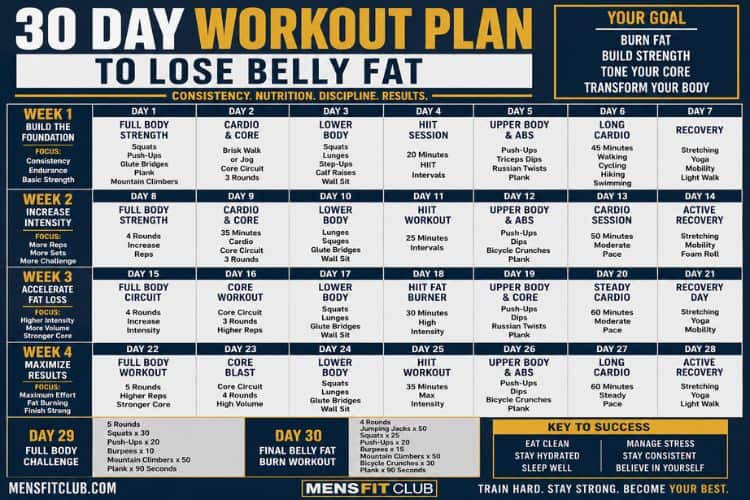
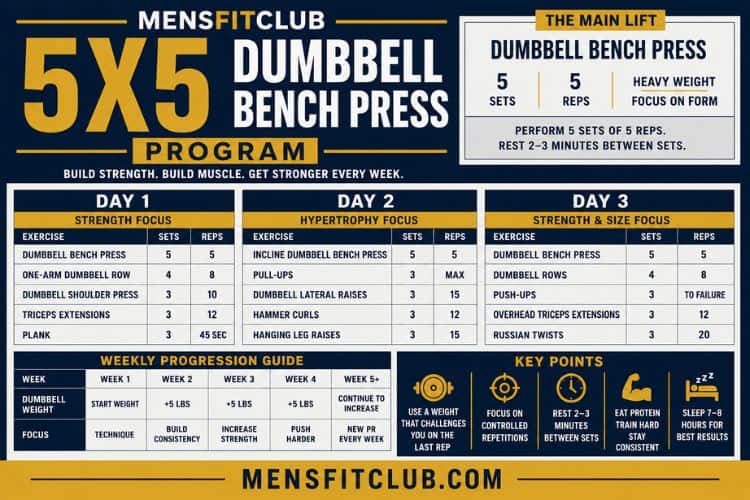
5×5 Dumbbell Bench Press Workout The Ultimate Guide to Gains
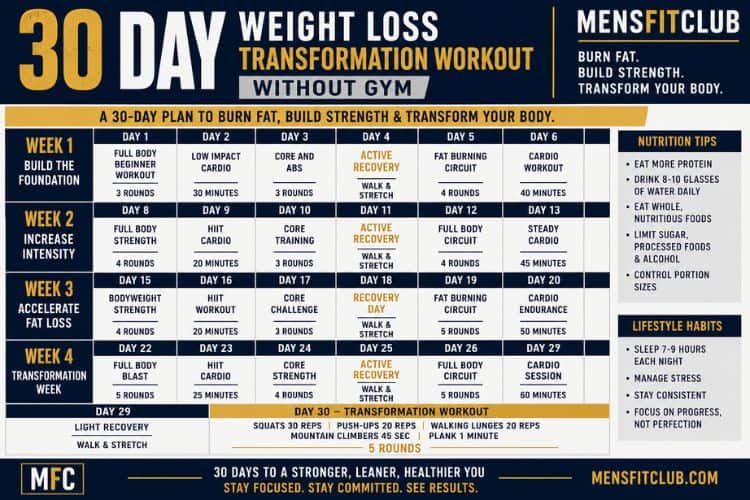
30 Day Weight Loss Transformation Workout Without Gym
Resistance Band Bench Press for Strength And Muscle Growth
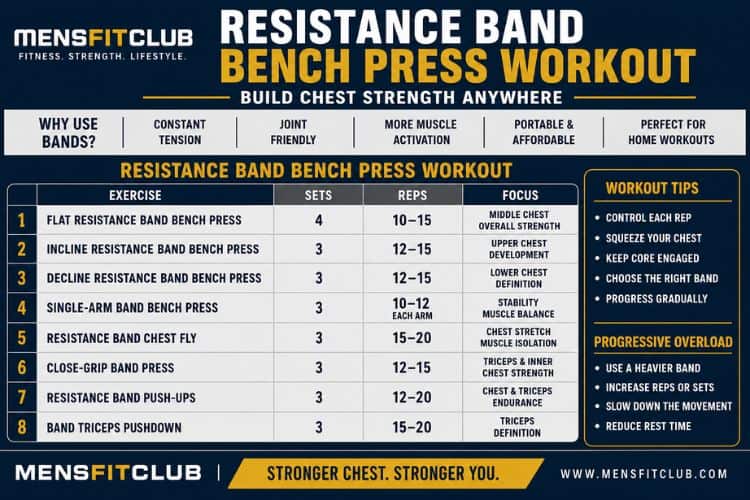
A resistance band bench press workout is one of the most effective ways to develop chest strength and upper-body muscle without relying on heavy barbells or expensive gym equipment. Resistance bands provide constant tension throughout the movement, forcing the chest, shoulders, and triceps to work harder during every phase of the exercise. Whether you train at home, travel frequently, or want to add variety to your strength routine, resistance band bench press exercises can help you build muscle, improve stability, and increase pressing power.
Unlike traditional free weights, resistance bands challenge muscles differently because the tension increases as the band stretches. This creates a unique training effect that can enhance muscle activation and improve joint health. For beginners and advanced lifters alike, a resistance band bench press workout can deliver impressive results while reducing stress on the shoulders and elbows.
Why Use Resistance Bands for Bench Press Training?
Resistance bands have become increasingly popular among athletes, bodybuilders, and fitness enthusiasts because they provide versatile and effective resistance. Bands are lightweight, affordable, and easy to store, making them ideal for home workouts.
Some major benefits include:
- Constant tension during every repetition.
- Less stress on joints compared to heavy barbells.
- Improved muscle activation.
- Enhanced stability and coordination.
- Portable and convenient for travel.
- Suitable for all fitness levels.
Because resistance bands provide accommodating resistance, the exercise becomes harder near the top of the movement where muscles are strongest. This helps maximize strength gains and muscle growth.
Muscles Worked During Resistance Band Bench Press Exercises
The band bench press primarily targets the chest muscles while also engaging several supporting muscle groups.
Pectoralis Major
The pectoralis major is the primary muscle responsible for pushing movements. Resistance bands effectively stimulate both the upper and lower portions of the chest.
Triceps
The triceps assist with elbow extension during the pressing movement and contribute significantly to lockout strength.
Front Deltoids
The anterior deltoids help stabilize the shoulders and provide additional pressing power.
Core Muscles
Maintaining proper posture during resistance bench press movements activates the abdominal muscles and improves stability.
Serratus Anterior
This often-overlooked muscle supports shoulder health and enhances overall pressing mechanics.
Advantages of Resistance Band Bench Press Workouts
Safe for Beginners
Resistance bands provide controlled resistance, making them ideal for beginners who are learning proper form.
Excellent for Home Training
You can perform a complete chest workout without needing a barbell or weight bench.
Improves Stabilizer Muscles
Bands force your body to maintain control throughout the movement, recruiting stabilizing muscles that are often neglected.
Supports Joint Health
Because resistance increases gradually, bands place less strain on the shoulders and elbows.
Portable and Affordable
Resistance bands are inexpensive and can easily fit into a gym bag or suitcase.
How to Perform a Resistance Band Bench Press
Step 1: Secure the Band
Anchor the resistance band behind a bench or around a sturdy object.
Step 2: Lie on the Bench
Position yourself flat on the bench while holding the handles at chest level.
Step 3: Engage Your Core
Keep your feet planted firmly and tighten your abdominal muscles.
Step 4: Press Upward
Push the handles upward until your arms are almost fully extended.
Step 5: Lower Slowly
Return to the starting position under control while maintaining tension in the chest muscles.
Step 6: Repeat
Perform the desired number of repetitions while focusing on proper technique.
Common Resistance Band Bench Press Mistakes
Many people reduce the effectiveness of the exercise by making simple form errors.
Allowing Elbows to Flare Excessively
Keep elbows at approximately 45 degrees to protect the shoulders.
Using Too Much Resistance
Heavy bands may compromise form. Choose a resistance level that allows controlled movement.
Rushing the Repetitions
Slow, controlled reps increase muscle activation and reduce injury risk.
Neglecting Full Range of Motion
Lower the handles fully to maximize chest engagement.
Best Resistance Band Bench Press Variations
Adding different variations can challenge your muscles from various angles.
Flat Resistance Band Bench Press
This classic variation targets the middle chest and builds overall pressing strength.
Sets: 4
Reps: 10-15
Incline Resistance Band Bench Press
Elevating the upper body shifts emphasis toward the upper chest.
Sets: 3
Reps: 12-15
Decline Resistance Band Bench Press
This movement focuses on the lower chest region.
Sets: 3
Reps: 12-15
Single-Arm Resistance Band Bench Press
Training one side at a time improves stability and corrects muscular imbalances.
Sets: 3
Reps: 10-12 per side
Resistance Band Floor Press
Performing the exercise on the floor reduces shoulder stress and increases triceps activation.
Sets: 4
Reps: 12-15
Resistance Band Bench Press Workout for Beginners
If you are new to resistance training, start with a moderate-intensity routine.
Workout A
Resistance Band Flat Bench Press
3 sets of 12 repetitions
Resistance Band Push-Ups
3 sets of 10 repetitions
Resistance Band Chest Fly
3 sets of 15 repetitions
Standing Band Triceps Extension
3 sets of 15 repetitions
Plank
3 rounds of 30 seconds
This routine develops foundational strength while improving movement patterns.
Intermediate Resistance Band Bench Press Workout
After several weeks of training, increase the volume and intensity.
Workout B
Flat Band Bench Press
4 sets of 10 repetitions
Incline Band Bench Press
3 sets of 12 repetitions
Single-Arm Bench Press
3 sets of 10 repetitions per arm
Resistance Band Push-Up
3 sets of 15 repetitions
Triceps Pushdown
4 sets of 15 repetitions
Train two to three times per week for optimal results.
Advanced Resistance Band Bench Press Workout
Advanced lifters can use supersets and higher training volume to stimulate muscle growth.
Workout C
Flat Band Bench Press
5 sets of 8 repetitions
Incline Resistance Bench Press
4 sets of 10 repetitions
Resistance Band Chest Fly
4 sets of 15 repetitions
Explosive Resistance Band Push-Up
3 sets of 12 repetitions
Single-Arm Bench Press
3 sets of 12 repetitions
Close-Grip Resistance Band Press
3 sets of 15 repetitions
Rest 60 seconds between sets.
Resistance Band Chest Fly for Additional Muscle Development
Chest flies complement bench press exercises by isolating the pectoral muscles.
Benefits
- Increased chest definition.
- Improved flexibility.
- Better muscle symmetry.
- Greater range of motion.
Perform three to four sets of 15 repetitions after your pressing exercises.
Weekly Resistance Band Bench Press Training Schedule
Monday
Chest and Triceps
Tuesday
Back and Biceps
Wednesday
Rest
Thursday
Resistance Bench Press Workout
Friday
Legs and Core
Saturday
Shoulders and Arms
Sunday
Active Recovery
Following this schedule allows adequate recovery and supports muscle growth.
Progressive Overload with Resistance Bands
Progressive overload is essential for continuous improvement.
Ways to increase intensity include:
- Using heavier bands.
- Increasing repetitions.
- Adding more sets.
- Slowing down the lowering phase.
- Performing supersets.
- Reducing rest periods.
Gradually increasing the workload helps stimulate muscle hypertrophy and strength gains.
Resistance Band Bench Press Workout for Muscle Building
Hypertrophy training requires moderate repetitions and sufficient volume.
Sample Muscle-Building Routine
Band Bench Press
4 sets of 10 repetitions
Incline Bench Press
3 sets of 12 repetitions
Chest Fly
3 sets of 15 repetitions
Close-Grip Press
3 sets of 12 repetitions
Push-Ups
3 sets to failure
Aim for 60 to 90 seconds of rest between sets.
Resistance Band Bench Press Workout for Fat Loss
Resistance training can also support weight loss by increasing calorie expenditure and preserving lean muscle.
Circuit Workout
Bench Press
15 repetitions
Push-Ups
15 repetitions
Mountain Climbers
30 seconds
Chest Fly
15 repetitions
Jump Squats
20 repetitions
Repeat the circuit four times with minimal rest.
Nutrition Tips for Better Results
Training effectiveness depends heavily on proper nutrition.
Consume Enough Protein
Aim for approximately 0.7 to 1 gram of protein per pound of body weight.
Stay Hydrated
Water supports performance and recovery.
Prioritize Whole Foods
Focus on lean proteins, vegetables, fruits, whole grains, and healthy fats.
Eat Post-Workout Meals
Consume protein and carbohydrates within two hours after training.
Recovery Strategies
Muscles grow during recovery, not during workouts.
Sleep Seven to Nine Hours
Quality sleep supports hormone production and muscle repair.
Stretch Regularly
Mobility work improves flexibility and reduces soreness.
Take Rest Days
Allow at least one or two recovery days each week.
Manage Stress
High stress levels may negatively affect muscle growth and recovery.
Who Should Use Resistance Band Bench Press Workouts?
Resistance bench press workouts are ideal for:
- Beginners.
- Home gym users.
- Older adults.
- Athletes.
- Travelers.
- Individuals recovering from injuries.
- Lifters seeking joint-friendly alternatives.
Because resistance bands provide scalable resistance, they are suitable for virtually every fitness level.
Frequently Asked Questions
Are resistance bands effective for chest growth?
Yes. Resistance bands provide continuous tension that can stimulate muscle hypertrophy and improve strength.
Can resistance bands replace barbell bench presses?
For many people, resistance bands can effectively replace traditional presses, especially when training at home.
How often should I train chest with resistance bands?
Two to three sessions per week generally provide excellent results while allowing sufficient recovery.
Which resistance band is best?
Choose a band that allows you to perform eight to fifteen repetitions with proper form.
A resistance band bench press workout is one of the most versatile and effective methods for building chest strength, increasing muscle mass, and improving upper-body performance. Whether your goal is muscle growth, fat loss, or maintaining fitness at home, resistance bands offer a convenient and joint-friendly solution. By combining proper technique, progressive overload, quality nutrition, and consistent training, you can achieve impressive results without relying on heavy weights or expensive equipment. Add these resistance bench press exercises to your weekly routine and experience the benefits of stronger, healthier, and more defined chest muscles.
To maximize your results from this resistance band bench press workout, explore more chest and strength-building resources on MensFitClub. If you’re looking to improve your pressing power, check out our Progressive Overload Bench Press Guide. For additional chest development, follow the 35 Minute Chest Workout Plan at the Gym. Home exercisers can complement band training with the 35 Minute Bodyweight Chest Workout Routine at Home. To build more size and definition, visit The Best Chest Workout Routine for Definition and Mass. Finally, learn more chest-building principles and exercise variations in Best Chest Workout: Your Hypertrophy Blueprint to Build Muscle. Combining these workouts and training strategies will help you develop a stronger, more muscular chest while improving overall upper-body strength.


Most Recommended

Subscribe to our Newsletter
Stay up to date on the latest men’s health, fitness and lifestyle trends and tips.
About Us
Men’s Fit Club was started with the goal of empowering men to get the most out of their lives. This meant going beyond exercise and diet tips to really address the broad range of issues that men face on a daily basis – topics like recreation, finding love, sexual health and even sound fashion advice.
Quick Links
© COPYRIGHT MEN'S FIT CLUB 2026. All Rights Reserved