
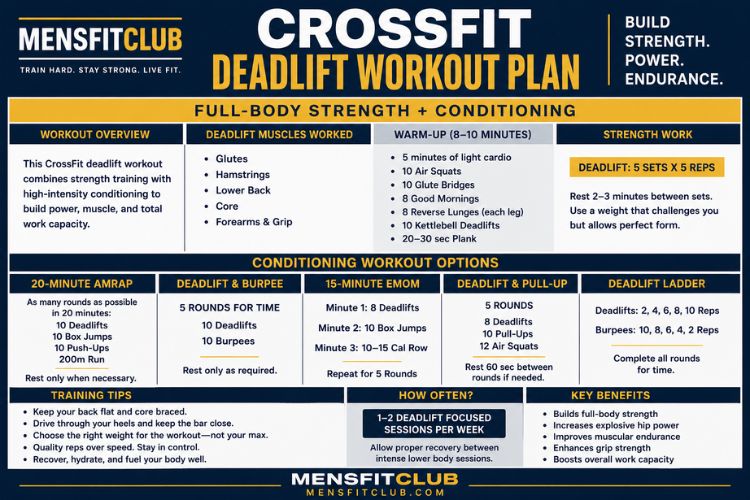
CrossFit Deadlift Workout Plan For Strength Power & WOD
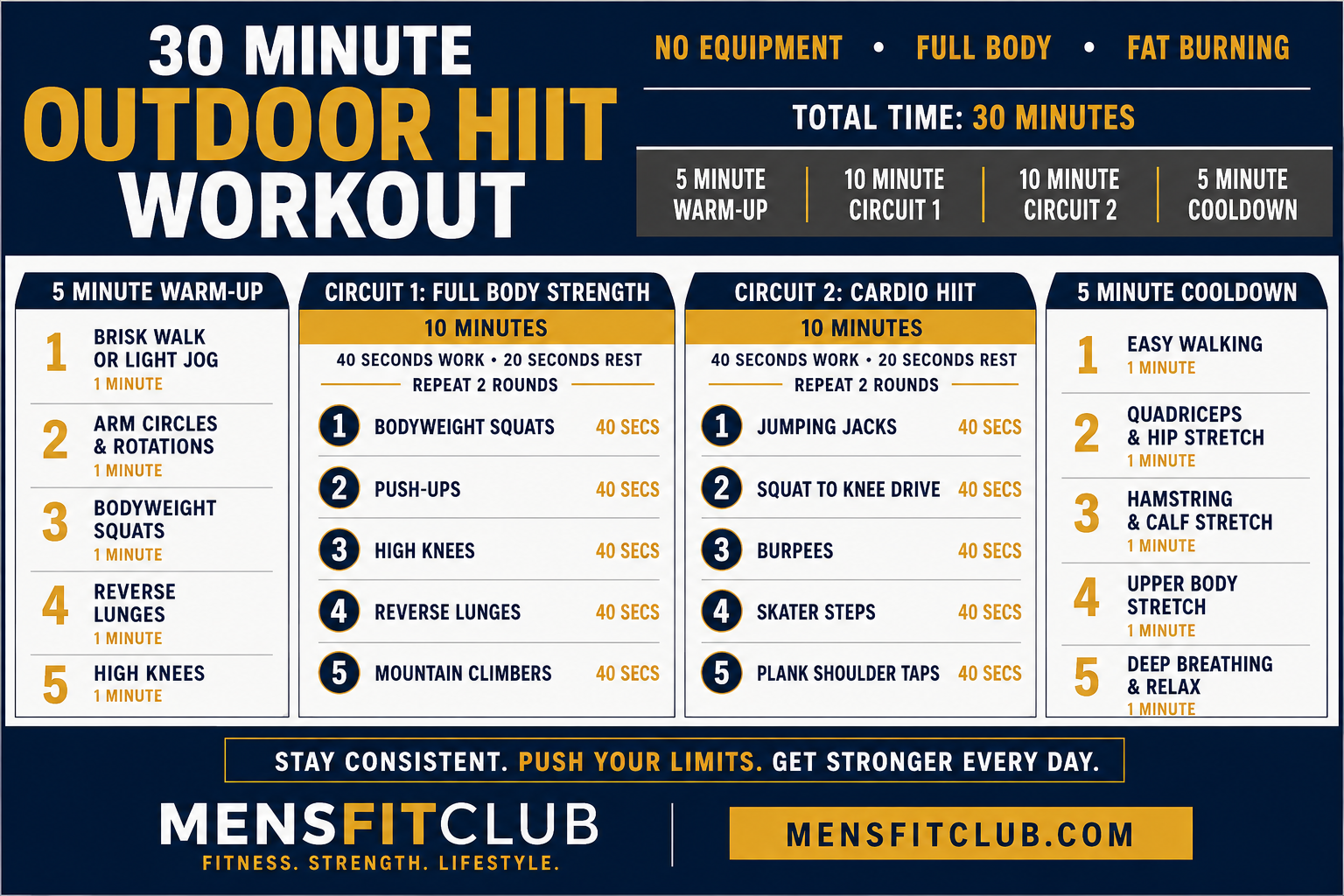
30 Minute Outdoor HIIT Workout: Full Body Routine
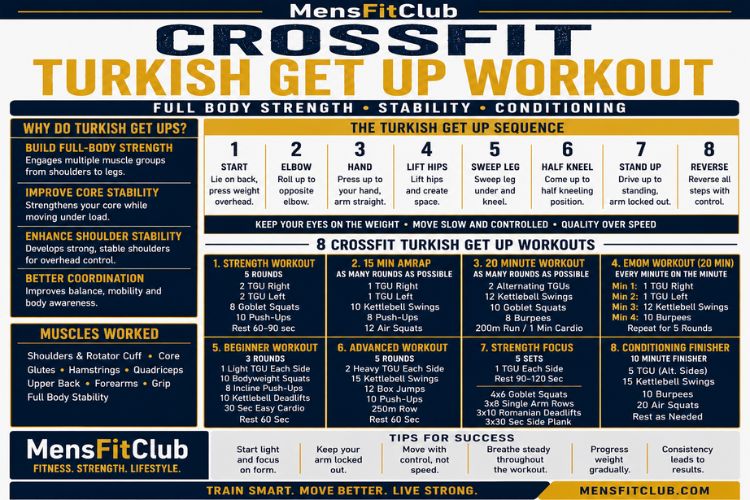
CrossFit Turkish Get Up Workout for Full Body Strength
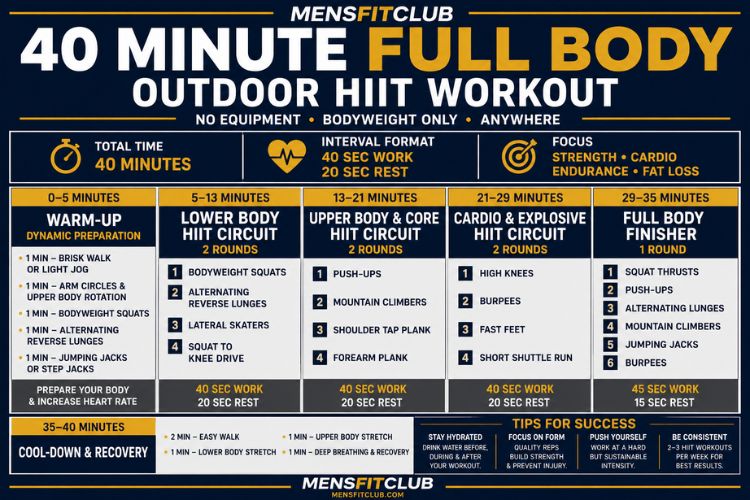
40 Minute Outdoor HIIT Workout For Total Body Burn
3 Day Bench Press Program for Strength & Power
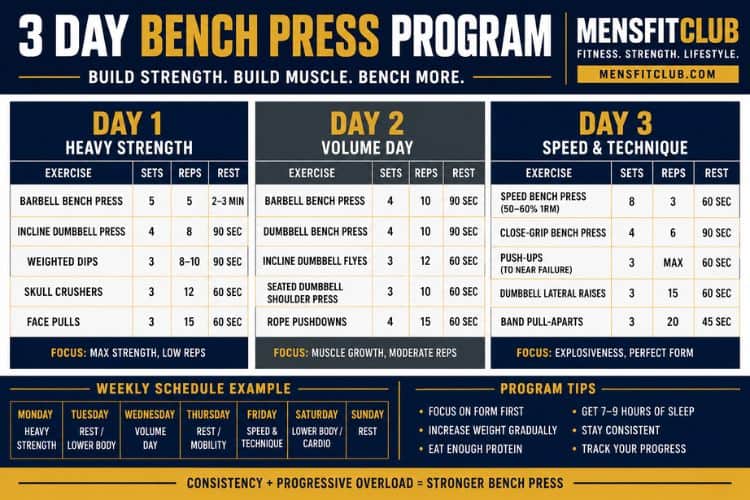
The bench press is one of the most popular exercises for building upper body strength and muscle. Whether your goal is to increase your one-rep max, build a bigger chest, or improve overall pushing power, following a structured 3 day bench press program can help you achieve better results. Training the bench press three times per week allows you to practice the movement more frequently while balancing heavy, moderate, and volume sessions to maximize progress.
Unlike random chest workouts, a dedicated bench press program focuses on progressive overload, proper recovery, and accessory movements that strengthen the muscles involved in pressing. With the right combination of intensity and volume, lifters of all levels can see steady improvements in both strength and muscle development.
Why Train Bench Press Three Days Per Week?
A 3 day bench press program offers an ideal balance between training frequency and recovery. Many lifters find that benching only once a week doesn’t provide enough practice, while daily bench pressing can lead to overtraining.
Training three times weekly provides several benefits:
- Improved technique and form
- Greater strength gains
- Increased chest, shoulder, and triceps development
- Better neuromuscular efficiency
- Enhanced recovery compared to higher-frequency programs
By varying the intensity across the week, you can train hard without excessive fatigue.
Muscles Worked During the 3 Day Bench Press Program
The bench press is a compound exercise that targets several muscle groups simultaneously.
Pectoralis Major
The chest muscles are the primary movers during the exercise. They are responsible for pushing the bar away from the body.
Triceps
The triceps extend the elbows and play a major role during lockout.
Front Deltoids
The anterior shoulders help stabilize and assist the pressing motion.
Upper Back
The lats, traps, and rhomboids provide support and create a stable foundation for pressing heavier weights.
Who Should Follow a 3 Day Bench Press Program?
This type of program works well for:
- Beginners seeking rapid strength improvements
- Intermediate lifters stuck at a plateau
- Powerlifters preparing for competition
- Bodybuilders wanting more chest development
- Athletes needing upper-body strength
The program can be adjusted according to experience level and recovery capacity.
Principles Behind the 3 Day Bench Press Program
Successful bench press training relies on several key principles.
Progressive Overload
Gradually increasing weight, reps, or volume forces the body to adapt and become stronger.
Frequency
Practicing the bench press three times per week improves motor patterns and technique.
Variation
Heavy, moderate, and volume sessions prevent overuse and reduce plateaus.
Recovery
Muscles grow and become stronger during rest periods, not just while training.
Weekly Structure of the 3 Day Bench Press Program
The program uses three different styles of bench press training:
Day 1: Heavy Strength Day
Focus on lower reps and heavier weights.
Day 2: Volume Day
Moderate weights and higher reps stimulate muscle growth.
Day 3: Speed and Technique Day
Explosive repetitions improve bar speed and power output.
Day 1: Heavy Bench Press Session
Heavy day focuses on building maximum strength.
Barbell Bench Press
5 sets × 5 reps
Rest 2–3 minutes between sets.
Use approximately 80-85% of your one-rep maximum.
Incline Dumbbell Press
4 sets × 8 reps
This movement develops the upper chest and front deltoids.
Weighted Dips
3 sets × 8–10 reps
Dips strengthen the chest and triceps.
Skull Crushers
3 sets × 12 reps
Target the triceps for stronger lockout power.
Face Pulls
3 sets × 15 reps
Strengthen the rear delts and improve shoulder health.
Day 2: Volume Bench Press Session
Volume day increases muscle mass and reinforces technique.
Bench Press
4 sets × 10 reps
Use approximately 65-70% of your maximum.
Focus on perfect form and controlled movement.
Dumbbell Bench Press
4 sets × 10 reps
Improves stability and balances strength between both sides.
Incline Dumbbell Flyes
3 sets × 12 reps
Enhance chest development and stretching.
Seated Dumbbell Shoulder Press
3 sets × 10 reps
Build stronger shoulders for pressing.
Rope Pushdowns
4 sets × 15 reps
Increase triceps size and endurance.
Day 3: Speed and Technique Session
Explosive training improves force production.
Speed Bench Press
8 sets × 3 reps
Use 50-60% of your maximum.
Move the bar as explosively as possible.
Close-Grip Bench Press
4 sets × 6 reps
Emphasizes triceps strength.
Push-Ups
3 sets to near failure
Build endurance and chest activation.
Dumbbell Lateral Raises
3 sets × 15 reps
Develop shoulder width and stability.
Band Pull-Aparts
3 sets × 20 reps
Strengthen upper-back muscles.
Warm-Up Before Every 3 Day Bench Press Workout Program
Proper warm-up reduces injury risk and improves performance.
Begin with:
- 5 minutes of light cardio
- Arm circles
- Shoulder mobility exercises
- Band pull-aparts
- Push-ups
- Gradual warm-up sets
Never jump straight into heavy working weights.
Proper 3 Day Bench Press Program Technique
Good technique allows you to lift heavier weights safely.
Set Your Feet
Plant your feet firmly on the floor.
Retract Your Shoulder Blades
Keep your upper back tight throughout the movement.
Maintain a Slight Arch
A natural arch improves stability and protects the shoulders.
Grip Width
Most lifters perform best with hands slightly wider than shoulder width.
Lower the Bar Under Control
Bring the bar to the lower chest while maintaining tightness.
Press Explosively
Drive the bar upward while keeping the wrists stacked.
Progressive Overload Plan
To continue making gains, increase workload gradually.
Week 1
5 sets × 5 reps at 80%
Week 2
5 sets × 5 reps at 82.5%
Week 3
5 sets × 5 reps at 85%
Week 4
Deload week using lighter weights and reduced volume.
Repeat the cycle and continue progressing.
Eight-Week 3 Day Bench Press Program
Weeks 1-2
Focus on technique and moderate weights.
Weeks 3-4
Increase intensity.
Week 5
Push heavier loads.
Week 6
Continue progression.
Week 7
Attempt near-maximal weights.
Week 8
Deload and recover.
After week eight, test your one-rep maximum.
Accessory Exercises for 3 Day Bigger Bench Press Program Numbers
Accessory work strengthens weak points.
Incline Bench Press
Develops upper chest strength.
Close-Grip Bench Press
Improves triceps power.
Overhead Press
Strengthens shoulders.
Dips
Increase overall pressing capacity.
Rows
Balance pushing volume with pulling movements.
Pull-Ups
Improve upper-back strength and stability.
Nutrition for 3 Day Bench Press Program Strength
Training alone is not enough.
Consume Enough Protein
Aim for 0.7 to 1 gram of protein per pound of body weight.
Excellent sources include:
- Chicken
- Eggs
- Lean beef
- Fish
- Greek yogurt
- Whey protein
Eat Sufficient Calories
Muscle growth requires energy. A slight calorie surplus helps maximize strength gains.
Hydrate Properly
Water supports performance and recovery.
Prioritize Carbohydrates
Carbs fuel intense training sessions and improve recovery.
Recovery 3 Day Bench Press Program Tips
Recovery is essential for continuous progress.
Sleep Seven to Nine Hours
Sleep is where muscle growth and repair occur.
Manage Stress
High stress can interfere with recovery and strength gains.
Take Rest Days Seriously
Rest allows the nervous system to recover.
Stretch and Improve Mobility
Flexible shoulders and thoracic spine mobility support healthy bench pressing.
Common 3 Day Bench Press Program Mistakes
Bouncing the Bar
Always control the descent.
Flaring the Elbows
Keep elbows around 45 degrees from the torso.
Lifting Too Heavy
Poor form leads to injuries and slower progress.
Neglecting the Upper Back
Strong back muscles improve pressing stability.
Ignoring Recovery
Too much volume without adequate rest leads to plateaus.
How Much Weight Should You Increase?
For most lifters:
- Beginners: add 5 pounds weekly.
- Intermediate lifters: add 2.5 pounds every week or two.
- Advanced lifters: increase weight gradually when all sets are completed successfully.
Consistency matters more than rushing progress.
Expected 3 Day Bench Press Program Results
Following a well-designed 3 day bench press program can produce noticeable gains.
Beginners 3 Day Bench Press Program
10-30 pound increase in eight weeks.
Intermediate Lifters 3 Day Bench Press Program
5-20 pound increase.
Advanced Lifters 3 Day Bench Press Program
Smaller but steady improvements.
Muscle growth in the chest, shoulders, and triceps is also common.
Sample 3 Day Bench Press Program Weekly Schedule
Monday – Heavy Bench Day
Focus on strength and low repetitions.
Wednesday – Volume Day
Build muscle with moderate weights.
Friday – Speed and Technique Day
Develop explosiveness and perfect form.
Tuesday, Thursday, and weekends can be used for lower-body training, cardio, or recovery.
A structured 3 day bench press program is one of the most effective ways to increase upper-body strength and build a bigger chest. Training the movement three times per week allows you to combine heavy lifting, hypertrophy work, and speed training for maximum results. By emphasizing progressive overload, quality technique, proper nutrition, and adequate recovery, you can steadily improve your bench press and break through plateaus.
Consistency remains the biggest factor. Stick to the program, focus on perfect form, and gradually increase the workload. Over time, you’ll develop stronger chest muscles, more powerful triceps, and a significantly heavier bench press while building a balanced and impressive upper body.
To maximize your results with this 3 Day Bench Press Program, be sure to explore more strength-building resources available on MensFitClub. If you’re working toward the milestone of benching your bodyweight, check out Benching Your Bodyweight for proven strategies to increase pressing power. To further accelerate your gains, learn how to apply progressive overload with Progressive Overload Bench Press Build Strength And Muscle. Adding variety to your chest training with exercises from The Best Barbell Chest Exercises And Chest Workouts With Dumbbells For Men Strength And Size can help build a stronger, more balanced upper body. For additional guidance on overall strength development, explore Best Strength Training Program For Peak Fitness, which covers effective compound lifting programs designed to maximize muscle and performance. These related articles will complement your bench press training and help you continue making steady progress.


Most Recommended

Subscribe to our Newsletter
Stay up to date on the latest men’s health, fitness and lifestyle trends and tips.
About Us
Men’s Fit Club was started with the goal of empowering men to get the most out of their lives. This meant going beyond exercise and diet tips to really address the broad range of issues that men face on a daily basis – topics like recreation, finding love, sexual health and even sound fashion advice.
Quick Links
© COPYRIGHT MEN'S FIT CLUB 2026. All Rights Reserved