

4 Days a Week Weight Training Plan for Strength & Muscle Growth

The Ultimate 4-Day Barbell-Only Strength Training Program

4 Day Per Week Full Body Workout: For Mass and Strength

30 Minute Full Body Strength Training With Dumbbells Only
Powerlifting Commands Rules: Master Squat Bench and Deadlift
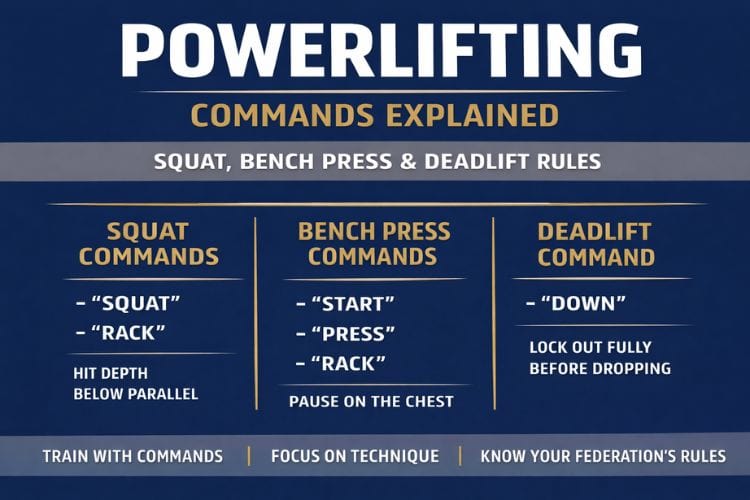
Powerlifting is a strength sport built around three core lifts: the squat, bench press, and deadlift. While raw strength is essential, following official Powerlifting Squat Bench Deadlift commands is equally important. Many lifters lose successful attempts not because they failed the lift, but because they ignored or misunderstood the referee’s commands. Understanding these commands is crucial whether you’re competing in your first meet or training with competition standards in mind.
This guide breaks down the official powerlifting commands for squat, bench press, and deadlift, explains why they matter, and shows how to train with competition rules so you never miss a lift due to technical mistakes.
Why Powerlifting Squat Bench Deadlift Commands Matter
In powerlifting competitions, referees use verbal and visual commands to ensure every lifter performs each lift safely and according to standardized rules. These commands help maintain fairness, reduce injury risk, and confirm that each lift meets depth, control, and lockout requirements.
Failing to follow a command—such as racking the bar too early or starting the lift before being told—results in a no lift, even if the weight was successfully lifted. This makes mastering commands just as important as building strength.
Training with commands also improves discipline, consistency, and competition readiness. Many serious lifters incorporate commands into training sessions so meet day feels familiar and stress-free.
Powerlifting Squat Commands
The squat is the first lift in a powerlifting meet and requires two official commands: “Squat” and “Rack.”
Squat Command: “Squat”
The squat begins with the lifter unracking the bar and standing upright. The referee will give the command “Squat” once the lifter is motionless, fully upright, and stable with knees and hips locked.
What You Must Do Before the “Squat” Command
The lifter must:
- Stand completely upright
- Lock knees and hips
- Show full control of the bar
- Wait motionless until the command is given
Starting the descent before the command results in an automatic failed attempt.
How to Train the Squat Command
Practicing paused starts is one of the best ways to master this. Unrack the bar, count two seconds, then begin the squat. This builds discipline and stability while reinforcing meet-day habits.
Depth Requirement in the Squat
Although not a verbal command, depth is one of the most commonly failed squat criteria. In competition, the top of the hip crease must go below the top of the knee.
Failing to reach depth results in a red light, even if the weight is lifted easily. Practicing controlled depth in training ensures you never lose a lift for being too shallow.
Squat Command: “Rack”
After completing the squat and standing back up with knees and hips locked, the referee will give the “Rack” command.
What You Must Do
- Fully stand up with the bar
- Lock knees and hips
- Show control
- Wait for the rack command before returning the bar
Racking the bar early—even if balanced—will result in a failed lift.
Common Squat Command Mistakes
Many lifters lose squats due to technical errors rather than lack of strength. Common mistakes include:
- Starting descent before “Squat”
- Failing to reach legal depth
- Not fully locking out at the top
- Racking before the command
- Excessive foot movement
Training with a mock referee calling commands can dramatically reduce these errors.
Powerlifting Bench Press Commands
The bench press has the most commands and the strictest technical rules. It requires three commands: “Start,” “Press,” and “Rack.”
Bench Press Command: “Start”
The bench press begins when the lifter has:
- Feet flat on the floor
- Shoulders and glutes on the bench
- Arms fully extended holding the bar
- The bar motionless over the chest
The referee will give the “Start” command to begin the descent.
Key Rules Before the Start Command
- Feet must remain planted (unless federation allows heels up)
- Butt must stay on the bench
- Head must stay on the bench
- Bar must be motionless
Lowering the bar before the start command results in a failed lift.
Bench Press Command: “Press”
Once the bar touches the chest and is motionless, the referee gives the “Press” command. This requires a pause on the chest, which varies slightly by federation but must be visibly controlled.
Why the Pause Matters
The pause eliminates bouncing the bar off the chest, ensuring true pressing strength. It also standardizes competition lifts worldwide.
How to Train the Press Command
Incorporate paused bench presses with a one- to three-second pause on the chest. This builds explosive strength off the chest and teaches discipline under heavy loads.
Bench Press Command: “Rack”
After pressing the bar to full arm extension and showing control, the referee gives the “Rack” command.
What You Must Do
- Fully lock out elbows
- Hold the bar motionless
- Wait for the command before racking
Racking early or soft elbows can result in a no lift.
Common Bench Press Command Mistakes
The bench press has the highest failure rate due to technical issues. Common mistakes include:
- Lowering the bar before “Start”
- Not pausing long enough on the chest
- Heaving or bouncing the bar
- Butt lifting off the bench
- Feet moving during the lift
- Not locking elbows fully
- Racking early
Practicing competition-style bench presses in training is essential for success.
Powerlifting Deadlift Commands
The deadlift is the final lift and has only one command: “Down.” However, it has strict lockout requirements that must be met before the command is given.
Deadlift Start Rules
Unlike squat and bench, there is no start command for the deadlift. The lifter may begin the pull at any time once the bar is loaded and the platform is clear.
Deadlift Lockout Requirements
Before the referee gives the “Down” command, the lifter must:
- Stand upright
- Lock knees and hips
- Hold the bar motionless
- Have shoulders back (depending on federation)
Hitching, downward movement, or failing to lock out fully will result in a failed lift.
Deadlift Command: “Down”
Once the lifter is fully locked out and motionless, the referee gives the “Down” command. Only after hearing this command may the lifter return the bar to the platform.
Important Rule
Dropping the bar before the command results in a failed lift. The bar must be lowered under control.
Common Deadlift Command Mistakes
Despite having only one command, many lifters fail deadlifts due to:
- Hitching the bar on the thighs
- Not locking knees or hips
- Leaning back excessively
- Dropping the bar before the command
- Downward movement during the pull
Practicing controlled lockouts and holds can help prevent these issues.
Visual Signals in Powerlifting Squat Bench Deadlift Commands
In addition to verbal commands, referees may use hand signals if the venue is loud. Lifters must be aware of both visual and verbal cues.
For example:
- A downward hand motion may signal “Squat” or “Press”
- A backward hand motion may signal “Rack”
- A downward hand motion may signal “Down” for deadlift
Understanding these signals is essential in large competitions with crowd noise.
Federation Differences in Powerlifting Squat Bench Deadlift Commands
While most federations follow similar command structures, there are minor differences between organizations such as IPF, USAPL, USPA, WRPF, and others.
Some variations include:
- Strictness of bench press pauses
- Foot placement rules on bench
- Deadlift lockout criteria
- Squat depth judging standards
Always review the specific rulebook for your federation before competing.
How to Train with Powerlifting Squat Bench Deadlift Commands
Training with commands should be part of any serious powerlifting program. This not only improves competition performance but also enhances technical consistency.
Use a Training Partner or Coach
Having a partner call commands during heavy sets simulates meet conditions. This improves reaction time and prevents premature movement.
Record Your Lifts Powerlifting Squat Bench Deadlift
Video analysis helps identify technical errors like soft lockouts, depth issues, or early movement. Reviewing footage allows you to correct mistakes before competition.
Practice Pauses and Holds
Paused squats, paused bench presses, and deadlift lockout holds are excellent for mastering command timing. These methods build strength in key positions and reinforce discipline.
Simulate Meet Conditions
Perform mock meets in training by following full competition rules, including commands, rest periods, and attempt selection. This builds confidence and reduces meet-day anxiety.
Psychological Benefits of Mastering Powerlifting Squat Bench Deadlift Commands
Understanding and practicing commands reduces mental stress during competitions. When lifters know exactly what to expect, they can focus solely on execution rather than worrying about mistakes.
This mental clarity often results in higher successful attempts and better total scores.
Common Powerlifting Squat Bench Deadlift Command FAQs
Do You Have to Wait for Commands in Training?
No, but practicing with commands improves technical proficiency and prepares you for competition. Many lifters use commands during heavy training cycles.
Can You Start the Deadlift Without a Command?
Yes. The deadlift has no start command. You may begin the pull at any time once ready.
What Happens If You Miss a Powerlifting Command for Squat Bench Deadlift?
Missing a command or moving early results in a failed attempt, regardless of how strong the lift looked.
How Long Is the Bench Press Pause?
The pause must be clearly visible and controlled. There is no fixed time, but the bar must be motionless on the chest before the “Press” command is given.
Powerlifting Commands Squat Bench Deadlift for Beginners
Beginners should prioritize learning commands early in their training. This prevents bad habits and builds competition-ready technique. Starting with lighter weights and practicing controlled pauses is the best approach.
Many beginners fail their first meet not because of weakness, but due to technical errors related to commands. Treat commands as part of the lift, not an afterthought.
Advanced Tips for Competitive Powerlifting Squat Bench Deadlift
Experienced lifters can gain an edge by mastering command timing. Staying motionless but ready to explode on command can save energy and improve performance.
Advanced lifters often:
- Train with competition-style pauses
- Practice holding lockouts for extra seconds
- Study federation-specific rules
- Work with experienced referees or coaches
These small details can significantly improve meet performance.
Powerlifting Commands Learning Squat Bench and Deadlift Cues
Powerlifting commands for squat, bench press, and deadlift are fundamental rules that every lifter must understand. Strength alone is not enough—technical precision and discipline determine whether a lift is successful.
By practicing commands in training, studying federation rules, and simulating meet conditions, lifters can maximize their chances of success on the platform. Whether you are a beginner preparing for your first meet or an advanced lifter chasing records, mastering commands is a critical step toward powerlifting excellence.
If you want to improve your squat, bench press, and deadlift technique while mastering powerlifting commands, check out our complete 5-Day Powerlifting Workout Routine for structured strength training and progression. You can also explore our Beginner Powerlifting Program to build a strong foundation before competing, or follow our 45-Minute Powerlifting Workout Plan for efficient strength gains. For technique and programming tips, read our guide on Barbell Back Squat Workouts For Strength And Muscle, and dive into our Best Strength Training Workouts Routine to enhance your overall power and performance.


Most Recommended

Subscribe to our Newsletter
Stay up to date on the latest men’s health, fitness and lifestyle trends and tips.
About Us
Men’s Fit Club was started with the goal of empowering men to get the most out of their lives. This meant going beyond exercise and diet tips to really address the broad range of issues that men face on a daily basis – topics like recreation, finding love, sexual health and even sound fashion advice.
Quick Links
© COPYRIGHT MEN'S FIT CLUB 2026. All Rights Reserved