
Strength Training After 50: Build Muscle and Stay Strong

How Many Hard Sets Per Muscle Group Per Week?
Training to Failure vs Reps in Reserve for Muscle Growth
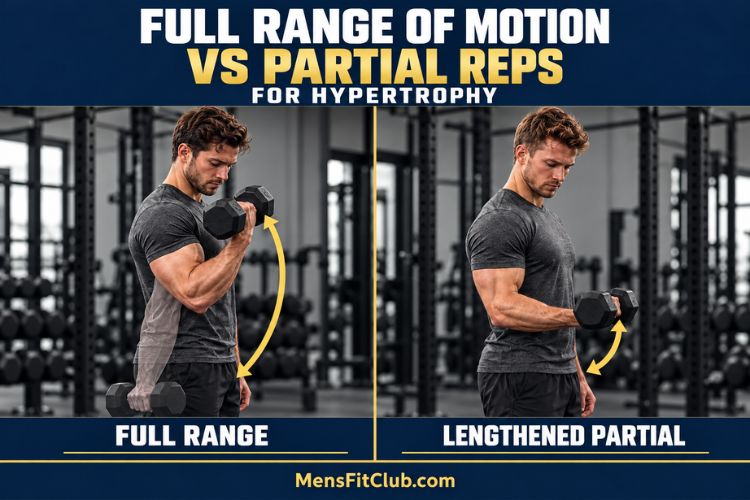
Full Range of Motion vs Partial Reps for Hypertrophy
Strength Training After 50: Build Muscle and Stay Strong
Strength training after 50 can help you build a body that handles everyday life with greater confidence. Whether you want to carry groceries comfortably, climb stairs without struggling, improve your physique, or return to activities you enjoy, resistance exercise gives you a practical way to work toward those goals. You do not need to train like a competitive bodybuilder to benefit. You need a manageable routine, appropriate resistance, and enough consistency to improve over time.
Turning 50 does not mean your ability to gain strength disappears. However, your starting point matters. Previous injuries, current fitness, sleep, work demands, and years away from exercise can influence how much training you can handle. A program that suits an experienced lifter may overwhelm someone returning after a long break.
The best strength training plan after 50 challenges your muscles while allowing you to recover. It includes exercises you can perform confidently, progresses in small steps, and fits your schedule. This guide explains how to build that plan, choose effective movements, and develop strength you can use both inside and outside the gym.
Why Strength Training After 50 Matters
Maintain the Strength You Use Every Day
Getting out of a low chair, lifting a suitcase, and carrying shopping bags all require muscular strength. When these tasks become harder, people sometimes begin avoiding them. That can gradually reduce their activity and make maintaining fitness more difficult.
Resistance training provides a deliberate opportunity to practice and strengthen related movements. Squats train your ability to stand up. Rows develop pulling strength. Carries challenge your grip and your ability to move while holding a load. The National Institute on Aging identifies muscle-strengthening exercise as a way to improve physical function and support everyday activities such as climbing stairs and carrying groceries.
For men over 50, these practical improvements can be as valuable as changes in appearance. A productive workout should help you perform better in the activities that matter to you.
Build a Strength Training After 50 Routine Around Your Current Ability
Your age provides context, but it does not determine your ideal dumbbell weight or exercise selection. Two men in their fifties can have very different training needs. One may have lifted consistently for decades, while another may be learning basic resistance exercises for the first time.
Begin with what you can perform today. Assess whether you can sit and stand comfortably, reach overhead, hinge at your hips, and maintain balance during a supported step-up. These observations help identify suitable starting exercises.
You do not need to pass a demanding fitness test before beginning. You need a starting point that allows controlled practice and gradual improvement.
How Often Should You Do Strength Training After 50?
Start With Two Full-Body Workouts Per Week
Two full-body sessions per week provide a useful starting schedule. They allow you to practice major movements regularly while leaving several days for recovery, walking, and other activities.
For example, train on Monday and Thursday. During each workout, include a squat or sit-to-stand exercise, a hip hinge, an upper-body push, an upper-body pull, and a manageable core exercise. Beginners can start with one working set per exercise and build toward two as their tolerance improves.
This schedule is also consistent with public health guidance recommending muscle-strengthening activity on at least two days per week. CDC guidance for adults 65 and older includes working all major muscle groups alongside aerobic and balance activities.
Add a Third Session When You Can Recover
Three weekly workouts can work well if two sessions feel manageable and you want more practice or training volume. A Monday, Wednesday, and Friday schedule leaves a day between lifting sessions.
Adding a third workout should not automatically mean repeating your hardest session three times. You can distribute exercises across different days or make one session lighter.
Consider your overall workload. Long workdays, recreational sports, physically demanding employment, and poor sleep can all affect readiness. The right frequency is the one you can sustain while maintaining performance and recovering between sessions.
Choosing the Best Strength Training Exercises After 50
Effective strength training covers several basic movement patterns. There is no single mandatory exercise within each pattern. Choose the variation that suits your equipment, experience, and comfortable range of motion.
Squats and Sit-to-Stand Exercises
Squatting movements train the legs and hips while practicing the action of lowering and raising your body. A chair squat is a practical beginner option. Sit back toward a sturdy chair, lightly touch the seat, and stand again with control.
If you need assistance, use a stable support. As the movement becomes easier, reduce the assistance or hold a light dumbbell at your chest.
A goblet squat is a useful progression. Keep the weight close to your torso and descend only as far as you can maintain balance and control. You do not need to force a deep squat before you have the mobility and confidence to perform it.
Hip Hinges and Romanian Deadlifts Strength Training After 50
A hip hinge teaches you to move through your hips while controlling your torso. This pattern is useful when lifting objects from an elevated surface or preparing for more demanding lower-body exercises.
Practice without weights first. Stand with slightly bent knees and push your hips backward while keeping your spine in a comfortable, steady position. Return to standing by bringing your hips forward.
Once the movement feels familiar, try a light dumbbell Romanian deadlift. Keep the dumbbells close to your legs and stop the descent when you reach the limit of your controlled hip movement. Reaching the floor is unnecessary.
Presses and Push-Ups
Upper-body pushing exercises develop the chest, shoulders, and triceps. Options include wall push-ups, elevated push-ups, dumbbell floor presses, bench presses, and chest press machines.
An elevated push-up lets you adjust difficulty by changing the height of the surface. A sturdy countertop is easier than a lower exercise bench. A dumbbell floor press offers another option, with the floor limiting how far your upper arms descend.
Choose a pressing movement that feels stable and comfortable. If one variation repeatedly irritates your shoulders, change the angle, grip, load, or exercise rather than repeatedly forcing it.
Rows and Pulldowns Strength Training After 50
Pulling exercises train the back and arms. A supported dumbbell row, seated cable row, resistance band row, or machine row can be easy to adjust.
For a supported dumbbell row, place one hand on a stable bench or support and pull the dumbbell toward your side. Keep your torso steady instead of rotating to lift the weight.
A lat pulldown provides a vertical pulling option. Pull toward your upper chest through a comfortable range without jerking or leaning excessively backward. Use a load that allows the same controlled movement on every repetition.
Step-Ups and Supported Split Squats
Single-leg exercises let you train each side individually and develop control during movements resembling stairs and changes in stance.
Start step-ups on a low, stable platform. Use a handrail or support when needed, and lower yourself carefully. Avoid selecting a platform so high that you must push strongly off the trailing leg or twist your body.
Supported split squats offer another option. Hold a stable support, position your feet comfortably, and lower through a modest range. Increase depth or resistance only when the movement remains steady.
Carries and Core Exercises Strength Training After 50
Farmer carries involve walking while holding weights at your sides. They challenge grip strength and trunk control, but require a clear walking space and loads you can manage without leaning.
For beginners, holding the weights while standing may be enough. Progress to short walks before attempting longer distances.
Core exercises can include dead bugs, bird dogs, short elevated planks, or cable anti-rotation presses. Select a variation that lets you breathe normally and maintain control. Long holds and exhausting abdominal circuits are unnecessary starting requirements.
How Much Weight Should You Use For Strength Training After 50?
Choose Resistance You Can Control
The appropriate weight makes the final repetitions challenging without changing how you perform the exercise. If you must swing, twist, shorten the movement unintentionally, or rush to finish, the load is probably too demanding for that set.
For many beginners, a range of eight to twelve repetitions is a practical starting point. However, it is a programming choice rather than a rule that every exercise must follow.
During your first workouts, prioritize learning. Use a weight that allows you to finish the set confidently and repeat the movement consistently. You can increase the challenge once technique becomes more familiar.
Leave Some Repetitions in Reserve
Repetitions in reserve describe how many additional good repetitions you believe you could perform before stopping.
For this beginner plan, aim to finish most sets with approximately two or three repetitions in reserve. If you complete ten repetitions and believe you could manage another two with the same technique, your effort is appropriate.
This estimate will be imperfect when you are new to lifting. That is fine. Use it alongside observable movement quality. Stop the set when control begins to deteriorate, even if your target repetition count is unfinished.
A Practical Strength Training Plan After 50
The following routine is a general starting template for someone who can perform basic exercise comfortably. Adjust it to your abilities, equipment, and any established medical or rehabilitation guidance.
Begin with two workouts per week, alternating Workout A and Workout B. Allow roughly 35–50 minutes, including warm-up and rest. Start with one working set per exercise if you are new or returning after a long break, then progress toward the listed two sets.
Workout A: Full-Body Fundamentals
Begin with a chair squat or goblet squat for two sets of eight to twelve repetitions. Select a depth that lets you maintain balance and stand without momentum.
Next, perform a dumbbell floor press or elevated push-up for two sets of eight to twelve repetitions. Follow with a supported dumbbell row for two sets of eight to twelve repetitions per side.
Complete a light dumbbell Romanian deadlift for two sets of eight to ten repetitions. Keep the movement controlled and stop before your torso position changes.
Finish with one or two short farmer carries and one or two sets of dead bugs. For dead bugs, start with five to eight controlled repetitions per side rather than chasing fatigue.
Workout B: Strength and Movement Control
Start with low step-ups for two sets of six to ten repetitions per leg. Use support when needed and choose a height you can manage smoothly.
Perform a chest press machine exercise or elevated push-up for two sets of eight to twelve repetitions. Follow with a seated row or lat pulldown for two sets of eight to twelve repetitions.
Next, complete two sets of ten to fifteen glute bridges. Raise your hips through a comfortable range without forcing your lower back into an exaggerated arch.
Finish with supported calf raises for two sets of ten to fifteen repetitions and an elevated plank for one or two brief holds. End each hold while you can still maintain position and breathe comfortably.
How to Organize Your Strength Training After 50 Week
A simple schedule places Workout A on Monday and Workout B on Thursday. Use other days for walking, light mobility, and activities you enjoy.
After several consistent weeks, you may move to three sessions. Alternate A, B, and A during the first week, then B, A, and B during the next.
Keep the sessions manageable when increasing frequency. You may need fewer sets per workout initially. Judge the change by how you feel and perform across the week, rather than assuming more sessions must produce faster results.
How to Progress Strength Training After 50 Without Rushing
Increase Repetitions Before Adding Weight
A straightforward progression method uses a repetition range. Suppose your goblet squat prescription is two sets of eight to twelve repetitions.
Begin with a weight you can lift for eight controlled repetitions per set. Over subsequent sessions, gradually add repetitions while maintaining your chosen effort level.
When both sets reach twelve repetitions comfortably and consistently, increase the weight by the smallest available increment. Your repetitions may return toward eight. Build upward again.
Progress does not need to occur every workout. Repeating a good performance is useful, especially while learning a movement.
Change One Training Variable at a Time
Avoid increasing weight, sets, repetitions, and weekly frequency together. If the program suddenly becomes much harder, it becomes difficult to identify what caused fatigue or discomfort.
Choose one adjustment. Add a repetition, make a small weight increase, or introduce an additional set to one exercise.
Equipment sometimes limits progression. If your next dumbbell is considerably heavier, continue practicing with the current load or use equipment with smaller increments. There is no need to force a jump simply because it is available.
Track More Than the Weight You Lift
Keep a brief training log with exercise names, loads, sets, and repetitions. Note whether the session felt comfortable, unusually difficult, or affected by poor sleep.
Also notice practical improvements. Perhaps you can stand from a chair more easily, carry bags with less effort, or complete your usual workout with better control.
These changes help you assess whether the routine is useful. A larger number on a dumbbell is only one measure of progress.
Warm-Ups, Rest Periods, and Exercise Technique
Prepare for the Movements Ahead
Begin with several minutes of comfortable walking, cycling, or another easy activity. Then practice the movements you will train.
Before squats, perform a few controlled sit-to-stand repetitions. Before rows, use light resistance. Before weighted hinges, rehearse the hip movement without load.
For a more demanding exercise, perform an additional lighter set before your working sets. The warm-up should leave you prepared, not tired. Its length can vary according to how you feel and what you are about to do.
Rest Until You Can Perform Well Again
For this routine, start with approximately 90 seconds to two minutes between working sets. Take longer after an exercise that leaves you breathing hard or affects your ability to maintain technique.
Shorter rests may suit easy accessory exercises, but there is no prize for rushing. If the next set becomes sloppy because you are still fatigued, allow more recovery.
You can alternate upper- and lower-body exercises to save time, provided you still feel ready before each set. Keep enough space between demanding movements to preserve performance.
Use a Comfortable Range and Steady Breathing
Move through the range you can control without forcing painful positions. Gradually explore more range as your ability improves, rather than treating depth as something you must achieve immediately.
Breathe steadily during each repetition. For beginners, exhaling during the lifting effort and inhaling during the return is a useful pattern. The National Institute on Aging advises avoiding breath-holding during strength exercises and using lighter resistance to warm up.
If technique remains confusing, a qualified trainer can help you establish positions and select appropriate variations.
Recovery Between Strength Workouts
Adjust Training to Your Readiness
Some days your normal workout will feel harder. A demanding workweek, disrupted sleep, or an unusually active weekend can influence performance.
Start with your warm-up and assess how familiar weights feel. If movement remains controlled but effort is unusually high, reduce the load slightly or perform fewer sets.
You can also replace a demanding variation with a more supported exercise. A machine row, for example, may be easier to manage than an unsupported bent-over row when you feel fatigued.
The goal is to preserve a useful training habit while matching the session to your current capacity.
Respond to Persistent Fatigue
One difficult workout does not automatically require a program change. Repeatedly declining performance, lingering exhaustion, or discomfort that worsens across sessions deserves attention.
First, examine whether you recently added too much training. Consider reducing sets or resistance for a week and reassessing your schedule.
Persistent or unexplained symptoms should not simply be labeled poor recovery. Seek appropriate professional guidance when problems continue, interfere with daily life, or do not improve with sensible adjustments.
Eating to Support Your Training
Include Protein in Regular Meals
Strength training is easier to support when you eat consistently. Include a protein source in your main meals, such as fish, eggs, poultry, lean meat, dairy, beans, lentils, tofu, or other foods you enjoy.
You do not need an elaborate supplement routine to begin. A practical first step is checking whether breakfast and lunch contain a meaningful protein source, rather than concentrating nearly all of it at dinner.
Individual nutrition needs vary. If you have a condition requiring dietary restrictions, use the guidance provided by your clinician or registered dietitian when planning meals.
Match Your Eating Habits to Your Goal
If your goal is fat loss, avoid making food intake so restrictive that training becomes consistently difficult. If your goal is gaining size, eating substantially more than you need is unlikely to improve the process proportionally.
Start with regular meals, adequate hydration, and a routine you can maintain. Monitor how your body weight, energy, and training performance change over several weeks.
Make modest adjustments based on those trends. Exercise and eating habits work best together when neither becomes an exhausting short-term project.
Common Strength Training Mistakes After 50
Returning to Your Previous Weights Immediately
Past experience is useful, but old training numbers may no longer match your current capacity. After a long break, begin below your previous workload.
Use the first several weeks to rebuild movement familiarity and establish how much exercise you can recover from. Your muscles may feel ready for heavier weights before you have regained consistent technique and tolerance.
A patient return gives you better information about what your present body can handle.
Making Every Set an All-Out Effort
Finishing every set exhausted can make it harder to maintain technique and complete the rest of your workout productively.
For the plan above, controlled sets with repetitions in reserve provide a manageable starting approach. More experienced lifters can make different programming choices, but maximal effort is unnecessary for every exercise.
Likewise, soreness should not determine whether a session was worthwhile. Evaluate training by consistency, movement quality, and improving performance.
Ignoring Pain or Changing Exercises Constantly
Sharp pain, new swelling, numbness, or symptoms that worsen as you continue are reasons to stop the exercise and assess the problem. Chest pain, fainting, or unusual severe breathlessness require prompt medical attention.
At the same time, changing your entire routine every week makes progress difficult to measure. Keep suitable exercises long enough to learn them.
Change a movement when there is a clear reason: discomfort, unsuitable equipment, a different goal, or an inability to progress with control.
Frequently Asked Questions About Strength Training After 50
Can Beginners Start With Machines?
Yes. Machines can make resistance easier to adjust and reduce the need to manage balance during certain exercises. Dumbbells, bands, and bodyweight movements also provide useful options.
Choose equipment that lets you practice confidently. A mixed routine is perfectly reasonable.
Can You Strength Train at Home?
A home routine can include chair squats, elevated push-ups, band rows, glute bridges, and dumbbell exercises. Secure resistance bands according to their instructions and use stable furniture or purpose-built equipment.
As exercises become easier, you will need a way to increase their challenge. Adjustable dumbbells or bands with different resistance levels can help.
How Long Should You Follow the Same Plan?
Use the basic routine for several weeks while tracking performance and recovery. Continue if the exercises remain comfortable and you are progressing.
You do not need a completely new program on a fixed deadline. Adjust individual exercises or workload when your results and goals justify it.
Build a Strength Training Plan After 50 You Can Keep
Strength training after 50 works best as a repeatable practice. Start with two manageable sessions, cover the major movement patterns, and select resistance you can control. Add repetitions and weight gradually while paying attention to how you recover.
Your routine should fit your life well enough that you can continue through busy weeks and ordinary setbacks. Some sessions will feel stronger than others. What matters is returning consistently, making thoughtful adjustments, and building capability over time.
Choose your first two training days, prepare a simple workout log, and begin at your current level. Each controlled session is an opportunity to become stronger for the activities, responsibilities, and experiences you want to keep enjoying.
To continue building strength after 50, explore our Dumbbell Strength Training Program For Over 50 for a structured routine, and review Strength Training After 50: Sets, Reps and Recovery to refine your training workload. On busy days, try the 10-Minute Dumbbell Workout for Men Over 50, or develop upper-body strength with our 30-Minute Upper Body Dumbbell Workout for Over 50. For a longer training roadmap, follow the 12-Week Full Body Workout Plan for Over 50.


Most Recommended

Subscribe to our Newsletter
Stay up to date on the latest men’s health, fitness and lifestyle trends and tips.
About Us
Men’s Fit Club was started with the goal of empowering men to get the most out of their lives. This meant going beyond exercise and diet tips to really address the broad range of issues that men face on a daily basis – topics like recreation, finding love, sexual health and even sound fashion advice.
Quick Links
© COPYRIGHT MEN'S FIT CLUB 2026. All Rights Reserved