

High Protein Beef and Pumpkin Chili: A Hearty Recipe
When to Reduce Sets Reps or Weight During a Workout
Dumbbell Posture Workout for Office Workers
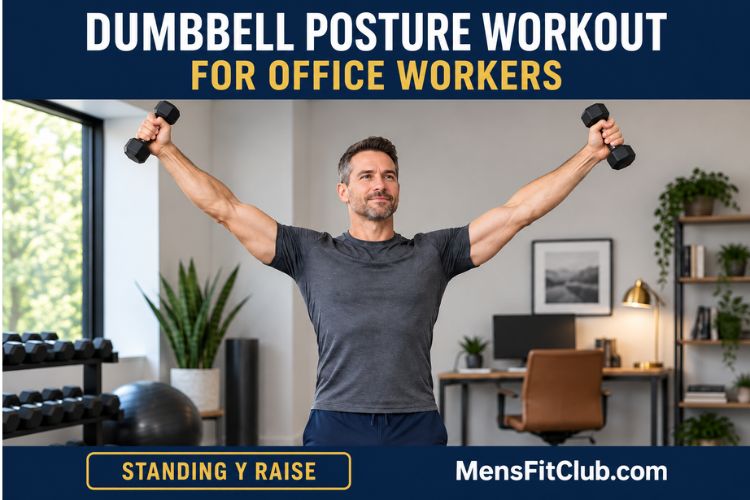
Long workdays can leave you feeling stiff through the neck, shoulders, back, and hips. You finish answering emails, stand up from your chair, and realize that your body has barely changed position for hours. A dumbbell posture workout for office workers gives you a practical way to build strength outside that repetitive routine. With a pair of weights and a little floor space, you can train the muscles involved in lifting, carrying, reaching, and maintaining comfortable positions throughout the day.
The goal is to become stronger and more comfortable moving through different positions. You do not need to hold your shoulders back every minute or force your spine into a rigid shape. Posture varies between people, and no single sitting position guarantees a pain-free back. Changing positions regularly matters, too. NHS musculoskeletal guidance notes that there is no strong evidence for one optimal posture that prevents low-back pain.[1]
This routine combines upper-back exercises with shoulder, hip, and trunk training. It is designed for generally healthy adults who want an approachable strength session before work, after work, or during a sufficiently long break. Expect approximately 30–40 minutes once you know the movements. Beginners can start with fewer sets and build gradually.
Why Office Workers Benefit From a Dumbbell Posture-Focused Strength Workout
Strength Gives You More Capacity for Everyday Movement
Working at a computer involves relatively little movement compared with walking, lifting, or recreational exercise. Your arms spend long periods near the keyboard, your eyes follow a screen, and your hips remain bent. These positions are normal parts of office life, but they provide limited variety. A strength workout introduces demands that a desk job rarely supplies.
Dumbbell rows train pulling strength. Squats and Romanian deadlifts challenge the legs and hips. Carries ask your trunk to control a load while you walk. Together, these exercises help develop physical capacity for tasks beyond typing, including carrying groceries, moving luggage, and participating in weekend activities. They also give you an opportunity to practice controlled movement under manageable resistance.
Dumbbell Posture Workout Training Should Include More Than Your Upper Back
A posture workout is often presented as a collection of shoulder-blade squeezes. Upper-back training is useful, but your body works as a connected system. Your hips contribute to standing and walking, your trunk helps manage forces, and your shoulders need to move freely when you reach.
This workout therefore includes pulling, pressing, squatting, hinging, and carrying. It places extra attention on the upper back without treating the rest of the body as irrelevant. NHS guidance recommends muscle-strengthening activities involving all major muscle groups on at least two days each week.[2] Use this routine as part of a broader activity plan that also includes walking or other aerobic exercise.
What This Dumbbell Posture Workout Can and Cannot Do
Consistent training can improve your strength, exercise technique, and tolerance for physical activity. You may also find that moving regularly makes the transition from sitting to standing feel easier. However, this routine cannot guarantee relief from neck pain, permanently straighten rounded shoulders, or diagnose why your back feels uncomfortable.
Pain has many possible contributors, and appearance alone does not tell you whether something is wrong. A rounded position during one task is not proof of injury. Avoid judging your progress only through mirror photos. Better markers include controlled repetitions, increasing strength, easier carries, and greater confidence with everyday movement.
If you already have persistent pain, seek individualized advice before treating a general workout as rehabilitation. Stop an exercise that causes sharp, radiating, or increasing pain. Neck symptoms accompanied by pins and needles or a cold arm warrant medical assessment, according to NHS guidance.[3] Ordinary muscular effort should feel different from symptoms that make you change or guard your movement.
Equipment, Frequency, and Dumbbell Posture Workout Selection
Choose Weights for Each Movement
You will need dumbbells, a clear floor area, and a stable support for the one-arm row. An adjustable pair is convenient because different movements require different loads. Most people can Romanian deadlift substantially more weight than they can reverse fly. Using the same heavy dumbbell for both exercises can undermine technique.
Select a load that lets you finish each set with approximately two or three good repetitions remaining. That means the final repetitions require attention, but you could still repeat them without swinging, twisting, or shortening the movement. Your starting weight depends on your experience and current capacity; there is no universal kilogram or pound target for office workers.
Train Twice Weekly Before Adding More
Begin with two sessions each week, separated by at least one day without this workout. Monday and Thursday work well, but any repeatable schedule is useful. Allow approximately 30–40 minutes for the full session, including the warm-up and rest periods. Equipment changes and longer rests may increase that time.
If you already follow a full-body program, replace overlapping exercises or add a small amount of upper-back work. Do not automatically stack this entire routine onto an already demanding schedule. The best plan is one you can recover from and repeat consistently.
A Five-Minute Warm-Up Before Dumbbell Posture Workout Lifting
Walk and Move Your Shoulders
Start with one minute of easy walking or marching. Let your arms swing naturally and breathe comfortably. Follow with six slow shoulder circles in each direction, using a range that feels smooth. This is preparation for movement, so there is no need to force a stretch or hold a rigid upright position.
Next, practice eight wall slides. Face a wall with your forearms resting against it, then slide your arms upward through a comfortable range. Let your shoulder blades move as your arms rise. Keep the movement controlled without forcing your ribs forward. If wall slides are uncomfortable, substitute gentle unweighted arm raises.
Rehearse the Squat and Hip Hinge
Perform eight bodyweight squats, lowering only as far as you can control comfortably. Then practice eight unloaded hip hinges. Soften your knees, move your hips backward, and return to standing. Keep your head following the angle of your torso instead of craning upward.
Finish with a light practice set of rows and Romanian deadlifts. These rehearsal sets help you check how the movements feel that day. If you need extra preparation, take it. A warm-up should make the work sets feel more familiar, not leave you tired before they begin.
The Dumbbell Posture Workout for Office Workers
Perform the exercises in the order below. Complete all prescribed sets of one exercise before moving to the next. Rest around 60–90 seconds between most sets and up to two minutes when a squat or deadlift set demands more recovery. Start with two sets per exercise; experienced lifters can use the progression described later.
1. Supported One-Arm Dumbbell Row: Two Sets of 8–12 Repetitions per Side
Place one hand on a stable bench or another fixed support that will not slide or tip. Use a staggered stance, hinge at the hips, and hold a dumbbell in the opposite hand. Allow the weighted arm to hang underneath the shoulder while keeping your torso steady.
Pull your elbow toward your hip until your upper arm approaches the side of your torso. Lower the weight slowly, allowing a comfortable reach at the bottom. Your shoulder blade should move with the arm; you do not need to keep it pinned backward throughout the repetition.
Avoid rotating your chest to lift the weight or pulling your elbow excessively behind your body. Keep your neck comfortable and your gaze directed toward the floor. Complete one side, switch sides, and then rest. If your grip or lower back fails before your pulling muscles, reduce the weight or improve your support position.
2. Dumbbell Romanian Deadlift: Two Sets of 8–10 Repetitions Posture Workout
Stand with your feet approximately hip-width apart and hold the dumbbells beside the front of your thighs. Maintain a small bend in your knees. Move your hips backward while lowering the weights close to your legs. Stop when you reach the limit of a controlled hinge.
The bottom position may be above or below your knees depending on your proportions and mobility. Reaching the floor is unnecessary. Keep the movement smooth, then press through your feet and bring your hips forward to stand. Finish tall without leaning backward.
The Romanian deadlift trains the hamstrings, glutes, and muscles that help control your torso during lifting. Common errors include turning it into a deep squat, letting the weights drift forward, and chasing extra depth after control has been lost. Start light enough to learn the movement before pursuing heavier loads.
3. Dumbbell Reverse Fly: Two Sets of 10–15 Repetitions
Use much lighter weights than you used for the row. Hinge forward with softly bent knees and let your arms hang below your shoulders. Maintain a slight elbow bend, then raise your arms outward through a comfortable range. Lower them slowly without swinging.
You can use a chest-supported version on an incline bench if available. This reduces the demand of holding a hinged position and may make it easier to concentrate on the shoulders. Whichever variation you choose, avoid throwing your chest upward to finish repetitions.
Reverse flies challenge the rear shoulders and upper back. Lift only as high as you can without shrugging forcefully or losing control. If even the lightest dumbbells are too challenging, perform the movement without weights initially. Good repetitions with a small load are more useful than repeated compensation with a larger one.
4. Goblet Squat: Two Sets of 8–12 Repetitions Dumbbell Posture Workout
Hold one dumbbell close to your chest with both hands. Set your feet in a comfortable squat stance, then bend your knees and hips together. Lower to a depth that lets you stay balanced over your feet and return to standing smoothly.
Your knees can move forward as needed, and your torso may lean somewhat depending on your body proportions. Avoid forcing an artificially vertical position. Think about keeping the dumbbell close and moving through a range you can repeat confidently.
For a beginner-friendly version, squat toward a stable chair, lightly touch the seat, and stand again. Use a chair that cannot roll or slide. The goblet squat brings lower-body work into the posture routine and gives you practice moving from sitting-height positions under a manageable load.
5. Dumbbell Floor Press: Two Sets of 8–12 Repetitions
Sit on the floor with the dumbbells close to your thighs, then carefully lower yourself onto your back. Bend your knees and place your feet flat. Hold the weights above your chest with your palms facing inward or slightly forward, whichever feels more comfortable.
Lower your upper arms until they gently touch the floor, keeping your elbows roughly 30–45 degrees from your torso. Press the dumbbells upward without bouncing your arms off the ground. Keep the movement controlled and continue breathing rather than holding your breath for prolonged periods.
A posture routine can include pressing. Training the chest does not automatically create rounded shoulders. The floor press adds a balanced upper-body strength movement while limiting how far the upper arms travel behind the torso. Use a load you can position and put down safely without a spotter.
6. Dumbbell Suitcase Carry: Two Sets of 20–30 Seconds per Side
Hold one dumbbell at your side and walk slowly across a clear area. Keep your steps natural and your torso reasonably level. Resist leaning toward the weight or exaggerating a lean in the opposite direction. Allow the free arm to move normally.
Switch hands and repeat before resting. Choose a weight that challenges your grip and trunk without forcing you to shuffle or hold your breath. The carry trains your ability to manage an uneven load, a useful pattern when carrying a bag or suitcase.
If walking space is limited, use a stationary suitcase hold for the same duration. A slow march is another option if you can remain balanced. Stop the set when your grip slips or your position changes substantially. Carrying longer only helps when the movement remains controlled.
How to Fit the Dumbbell Posture Workout Routine Into a Busy Workday
Before Work or After Work
A morning session can fit well when evenings are unpredictable. Keep the dumbbells ready, decide your training days in advance, and begin with the warm-up before checking messages. Having a clear sequence reduces the decisions needed to get started.
An after-work session can serve as a transition away from prolonged sitting. Walk briefly before you lift, especially after a long commute. If you feel unusually tired, keep the same exercises but lower the load or use one fewer set. Consistency does not require every workout to be your hardest.
A Shorter Lunch-Break Version
When you have only 15–20 minutes, perform two sets each of the supported row, goblet squat, and suitcase carry after a brief warm-up. Rest enough to preserve technique and allow time to change or return comfortably to work.
This shortened session is a practical option for a busy day, although it does not include every movement in the full routine. Return to the complete workout at your next available session. Do not rush a full program into a smaller window by eliminating all rest.
A Four-Week Progression for Office Workers
Week One: Learn the Movements
Use two sets per exercise and begin near the lower end of each repetition range. Keep carries around 20 seconds per side. Choose conservative loads and pay attention to the setup, breathing, and controlled lowering phase.
Write down the weights and repetitions you used. Also note whether an exercise felt awkward or whether your support setup needed adjustment. This information gives your next workout a clear starting point without requiring complicated tracking.
Week Two: Add Controlled Repetitions
Keep the same weights and add one repetition to sets that felt manageable. For carries, add up to five seconds per side if you can maintain your position. Leave the load unchanged if extra repetitions require swinging or strain.
You do not need to progress every exercise at once. Your squat may improve quickly while the reverse fly remains challenging. Let each movement progress according to its own technique and effort.
Week Three: Increase Selected Loads
When you reach the top of an exercise’s repetition range for both sets with good control, increase the weight by the smallest available increment. Return toward the lower end of the range after adding load.
For example, two comfortable sets of 12 rows may justify a small increase followed by sets of eight or nine. Keep reverse-fly increments especially modest. If the next available dumbbell is too heavy, continue using the current load rather than forcing progression.
Week Four: Consolidate Your Routine
Continue adding repetitions or small load increases where appropriate. If recovery is good and you have enough time, add a third set to the row and Romanian deadlift. Adding sets will lengthen the workout, so make that decision deliberately.
If you are sore for several days, your technique is deteriorating, or work stress is unusually high, maintain or reduce the workload. A useful four-week outcome is a repeatable routine with better movement control and a clear record of progress.
Common Mistakes in a Dumbbell Posture Workout
Forcing Your Shoulders Back All Day
Repeated reminders to squeeze your shoulder blades can encourage unnecessary tension. During daily tasks, your shoulders should be able to relax and move. During rows, the shoulder blades naturally travel with the arms.
Use exercise cues for the exercise they belong to. You do not need to carry a braced lifting position into every email, meeting, or conversation. Comfortable variation is more practical than trying to maintain one pose indefinitely.
Treating Every Exercise as a Heavy Lift
Rows, squats, and hinges usually tolerate more load than reverse flies. Selecting weight according to appearance or comparing yourself with another lifter can compromise a useful session.
Let the quality of the repetitions guide you. A set is too heavy when you repeatedly lose balance, swing the weights, or shorten the movement to finish. Reduce the load and rebuild from controlled repetitions.
Expecting Stretching Alone to Build Strength
Stretching may feel helpful after a long period at your desk, but it does not replace progressive resistance training. Similarly, strength training does not eliminate the need to move during work.
Keep both habits simple: train consistently and interrupt long periods of inactivity. Avoid making the plan so elaborate that it becomes another task you struggle to complete.
Desk Habits That Support Your Dumbbell Posture Workout
Change Position Regularly
Use a practical reminder to stand, walk, or change tasks throughout the day. A brief movement break every 30–60 minutes can be a useful personal starting point, although it is not a universal medical prescription.
Walk to refill your water, take a short call standing, or move between meetings. NHS guidance advises breaking up long periods of sitting with at least light activity.[4] Your workout and your workday movement habits serve complementary purposes.
Make Your Workstation Comfortable
Arrange frequently used items within easy reach and position your screen so that reading it does not require sustained craning. Support your feet and adjust your chair so you can work comfortably. An external keyboard and mouse may help when using a laptop for extended periods.
Allow yourself to change position rather than treating your setup as a fixed mold. Standing continuously can become tiring, too. Use available options to vary your day and reduce avoidable effort.
Frequently Asked Questions About Dumbbell Posture Workouts
Can Dumbbells Fix Rounded Shoulders?
Dumbbells can strengthen the upper back and shoulders, but no exercise guarantees a particular resting appearance. Rounded shoulders alone do not diagnose a problem. Focus on strength, comfortable movement, and function rather than forcing a cosmetic change.
Should I Perform This Workout Every Day?
Start with twice-weekly sessions and allow recovery between them. You can walk and perform comfortable mobility movements on other days. More frequent heavy training is unnecessary for beginning this routine.
How Soon Will I Notice Progress?
You may become more confident with the exercises within your first few sessions. Strength changes usually become clearer through consistent training over several weeks. Changes in discomfort or appearance are less predictable and should not be promised.
What If I Only Have One Dumbbell?
You can still perform the routine. Complete rows and floor presses one side at a time, use a single dumbbell for the goblet squat, and perform suitcase carries on both sides. Hold one dumbbell with both hands for the Romanian deadlift if you can grip it securely. Perform reverse flies one arm at a time with support and a suitably light weight.
Build a Stronger Routine Beyond Your Office Chair
A dumbbell posture workout for office workers works best when it becomes a regular strength habit. Begin with manageable weights, train twice weekly, and progress only when your repetitions remain controlled. Pair that routine with walking, varied work positions, and a comfortable workstation.
Start by scheduling your first two sessions. Record your weights, learn the six movements, and give yourself room to improve. The aim is a body that handles work, exercise, and everyday movement with greater strength and confidence.
To complement this dumbbell posture workout for office workers, explore our Dumbbell Bent Over Row Guide for upper-back training tips and Core Stability Guide For Men for additional trunk exercises. Add movement variety with our Full Body Stretch Routine, build a balanced weekly schedule using our Dumbbell Strength Workout, or try the 45 Minute One Dumbbell Full Body Workout when you have limited equipment. These resources offer practical ways to expand your training beyond the office chair.


Most Recommended

Subscribe to our Newsletter
Stay up to date on the latest men’s health, fitness and lifestyle trends and tips.
About Us
Men’s Fit Club was started with the goal of empowering men to get the most out of their lives. This meant going beyond exercise and diet tips to really address the broad range of issues that men face on a daily basis – topics like recreation, finding love, sexual health and even sound fashion advice.
Quick Links
© COPYRIGHT MEN'S FIT CLUB 2026. All Rights Reserved