
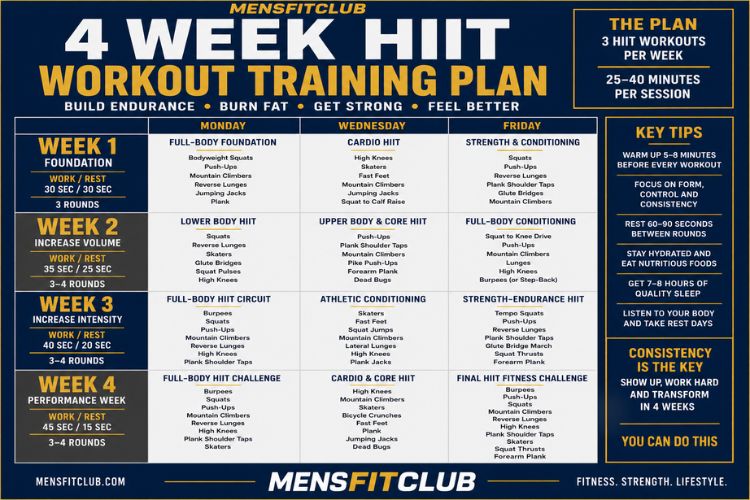
4 Week HIIT Workout Training Plan for Strength & Endurance
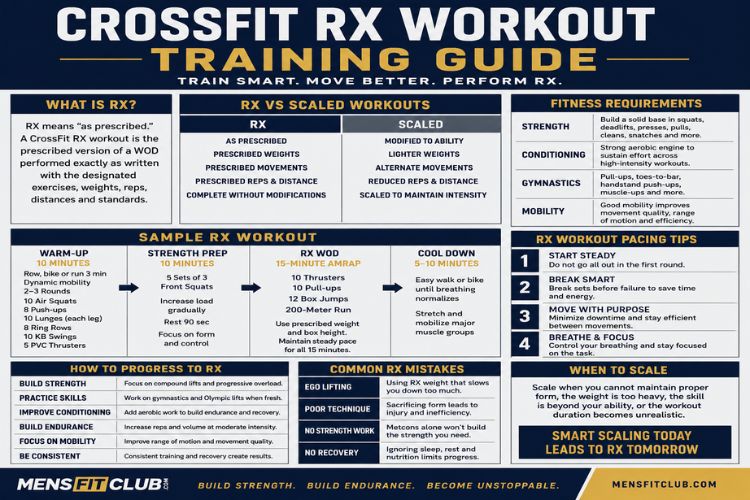
CrossFit RX Workout: Complete RX WOD Training Guide
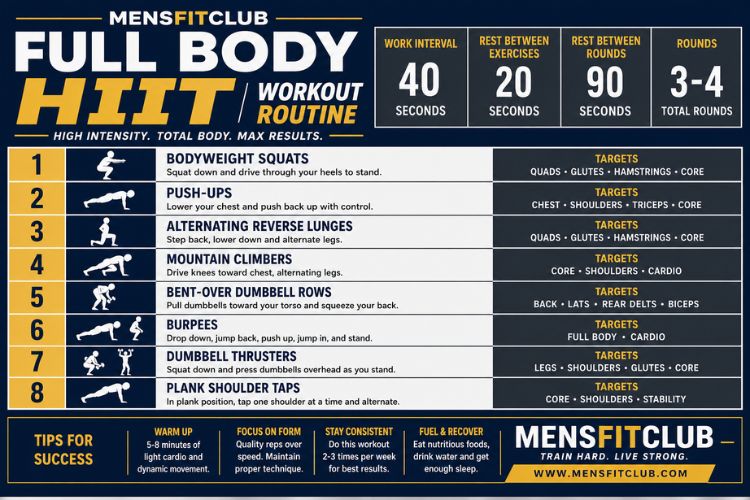
Best Full Body HIIT Workout Routine for Strength & Fat Loss
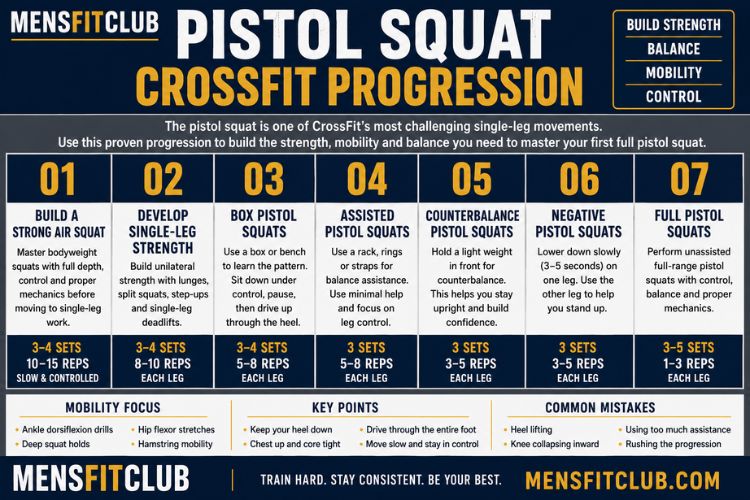
Pistol Squat CrossFit Progression From Beginner to Advanced
CrossFit RX Workout: Complete RX WOD Training Guide
A CrossFit RX workout represents the prescribed version of a CrossFit workout performed exactly as written, including the designated weights, movements, repetitions, distances, and standards. For many CrossFit athletes, reaching RX level is an important training milestone because it demonstrates a combination of strength, conditioning, mobility, gymnastics ability, and technical proficiency.
However, performing a workout RX is not simply about using heavier weights or refusing to scale. The real objective is to develop enough fitness and movement competency to complete prescribed workouts safely while maintaining the intended stimulus. An athlete who chooses an RX load but spends most of the workout resting may receive less benefit than an athlete who scales appropriately and keeps moving.
Whether you are currently completing scaled CrossFit workouts or already tackling RX WODs regularly, understanding how RX programming works can help you become stronger, faster, and more capable across a wide variety of movements.
This guide explains what RX means in CrossFit, common RX standards, sample workouts, progression strategies, training tips, and how to determine when you are ready to attempt a CrossFit workout as prescribed.
What Does RX Workout Mean in CrossFit?
In CrossFit, RX means “as prescribed.” When a workout is listed on a whiteboard or training program, it normally includes specific exercises, weights, repetition targets, distances, and sometimes time limits.
Completing the workout RX means performing those requirements without modifying them.
For example, a workout might prescribe five rounds of 10 pull-ups, 15 barbell thrusters at a designated weight, and a 200-meter run. An athlete who completes all five rounds with the prescribed thruster load, standard pull-ups, and full running distance has completed the workout RX.
If the athlete reduces the barbell weight, substitutes jumping pull-ups, or changes the running distance, the workout becomes scaled.
Scaling is not a failure. It is one of the most important tools in CrossFit because it allows athletes with different experience and fitness levels to perform similar workouts while maintaining an appropriate training stimulus.
What Is a CrossFit RX Workout?
A CrossFit RX workout is a WOD completed according to all of its prescribed standards. Depending on the workout, those standards can involve heavy barbell exercises, gymnastics movements, running, rowing, cycling, kettlebells, dumbbells, or combinations of several training styles.
An RX workout could involve movements such as deadlifts, cleans, snatches, thrusters, pull-ups, toes-to-bar, handstand push-ups, box jumps, burpees, rowing, and double-unders.
The difficulty comes from combining these movements under fatigue.
You might comfortably deadlift a particular weight during normal strength training, for example, but performing repeated deadlifts after running or completing burpees creates a completely different challenge.
This combination of strength, skill, endurance, and work capacity is one reason progressing toward RX CrossFit workouts takes time.
RX vs Scaled CrossFit Workouts
The primary difference between RX and scaled workouts is whether the athlete completes the prescribed movements and loads exactly as written.
An RX athlete might perform chest-to-bar pull-ups while a scaled athlete performs regular pull-ups or ring rows. An RX athlete might use the programmed barbell weight while another athlete reduces the load to maintain better technique and workout intensity.
The important consideration is the intended stimulus.
Imagine a workout designed to take approximately 10 minutes. If the prescribed barbell weight is so heavy that you need 30 minutes to finish, performing the workout RX may not actually provide the intended training effect.
Reducing the weight and completing the workout in 10 to 15 minutes could produce a much better conditioning session.
Scaling intelligently can therefore help athletes eventually become capable of RX performance.
Fitness Requirements for CrossFit RX Workouts
There is no single fitness standard that determines whether someone is an RX CrossFit athlete. CrossFit programming varies considerably, and an athlete may be able to RX one workout while needing to scale another.
A strong athlete might easily handle prescribed deadlifts but struggle with handstand push-ups. A gymnastically skilled athlete might dominate pull-ups and toes-to-bar while struggling with heavier barbell movements.
Developing RX capacity therefore requires balanced fitness.
Strength
Strength is essential because many RX workouts contain moderately heavy or heavy resistance exercises.
Important movements include squats, deadlifts, presses, cleans, snatches, thrusters, and various dumbbell or kettlebell exercises.
You don’t necessarily need elite strength, but prescribed weights should be manageable enough to perform with proper mechanics under fatigue.
Cardiovascular Conditioning
Running, rowing, cycling, skipping, and high-repetition bodyweight movements frequently appear in CrossFit programming.
Strong cardiovascular conditioning helps you recover between exercises and sustain a higher work rate throughout longer WODs.
Gymnastics Ability
Gymnastics movements often separate intermediate athletes from athletes capable of completing more workouts RX.
Common examples include pull-ups, chest-to-bar pull-ups, toes-to-bar, handstand push-ups, muscle-ups, and handstand walking.
These exercises require strength, coordination, body control, and considerable practice.
Mobility
Adequate mobility helps athletes achieve safe positions during movements such as overhead squats, front squats, snatches, cleans, and handstands.
An athlete may have sufficient strength for a movement but still struggle to complete it correctly because of restrictions in the ankles, hips, shoulders, or thoracic spine.
Sample CrossFit RX Workout
The following workout provides an example of how strength and conditioning movements can be combined into an RX-style training session.
Warm-Up – 10 Minutes
Begin with approximately three minutes of easy rowing, cycling, or jogging to increase your heart rate.
Follow this with dynamic mobility work targeting the hips, ankles, shoulders, and upper back.
Complete two or three controlled rounds of:
10 air squats
8 push-ups
10 alternating lunges
8 ring rows
10 light kettlebell swings
5 empty-bar thrusters
The purpose of the warm-up is preparation rather than fatigue. Gradually increase movement speed as your body becomes warmer.
Strength Preparation – 10 Minutes
Perform five sets of three front squats.
Start with a relatively light weight and gradually increase the load while maintaining an upright torso and controlled depth.
Rest approximately 90 seconds between sets.
The goal is to activate the legs and reinforce proper squat mechanics without creating excessive fatigue before the conditioning workout.
RX Conditioning WOD – 15-Minute AMRAP
Complete as many quality rounds as possible in 15 minutes:
10 thrusters
10 pull-ups
12 box jumps
200-meter run
Use the prescribed weight and box height appropriate to the RX standard of your specific program.
Your objective should be maintaining consistent movement throughout the entire 15 minutes rather than completing the opening rounds at maximum speed.
Cooldown – 5 to 10 Minutes
Walk slowly or perform very easy cycling until your breathing begins returning toward normal.
Finish with gentle mobility for the quadriceps, hamstrings, calves, hips, shoulders, and upper back.
How to Pace a CrossFit RX Workout
Pacing is one of the biggest differences between inexperienced athletes and experienced CrossFit competitors.
Beginners often attack the opening minute at maximum effort and quickly become exhausted.
A better strategy is selecting a pace that can be maintained for most of the workout.
Avoid Going Too Fast Early
The first round of a WOD should usually feel manageable.
If you are already struggling to breathe or experiencing significant muscular fatigue during the first few minutes of a 20-minute workout, your opening pace was probably too aggressive.
Start slightly slower than you think necessary and increase your effort later if you still have energy.
Break Repetitions Strategically
Do not wait until complete muscular failure before breaking a large set.
If you have 20 pull-ups and know you cannot comfortably complete all 20 unbroken, you might perform sets of 5-5-5-5 instead.
Short planned breaks are usually faster than reaching failure and requiring a long recovery.
Control Transitions
Transitions between exercises can quietly consume a significant amount of time.
After finishing one movement, move directly toward the next station and begin when you are ready.
You don’t need to sprint between exercises, but unnecessary standing around can dramatically reduce your final score.
How to Progress Toward CrossFit RX
Becoming capable of completing RX workouts consistently is usually a gradual process.
Instead of attempting to master everything simultaneously, identify the movements that most frequently force you to scale.
Build Your Strength Foundation
Prioritize basic strength exercises such as squats, deadlifts, presses, rows, pull-ups, and Olympic lifting variations.
Progressive overload can gradually increase the amount of resistance you can control.
Stronger athletes generally find prescribed workout weights more manageable, allowing them to move faster and take fewer breaks.
Practice CrossFit Skills Outside the WOD
A high-intensity workout is not always the best environment for learning difficult skills.
Practice double-unders, handstands, pull-ups, toes-to-bar, Olympic lifts, and other technical movements while relatively fresh.
Even 10 to 15 minutes of dedicated skill work several times per week can produce meaningful improvements.
Improve Aerobic Capacity
Not every conditioning session needs to be extremely intense.
Steady running, rowing, cycling, or swimming can improve your aerobic foundation and recovery between hard efforts.
Try adding one or two moderate aerobic sessions per week alongside your CrossFit training.
Develop Muscular Endurance
RX workouts often require repeated contractions rather than one maximal effort.
You might be strong enough to perform one heavy thruster but still struggle to perform 30 or 40 during a workout.
Higher-repetition accessory work can improve muscular endurance.
Useful exercises include goblet squats, dumbbell presses, walking lunges, push-ups, kettlebell swings, rows, and strict pull-ups.
CrossFit RX Workout Barbell Training
Barbell cycling is a valuable skill for athletes trying to improve their RX performance.
Traditional strength training frequently involves performing a repetition, resetting, and preparing for another repetition. CrossFit workouts often require multiple repetitions performed efficiently.
Movements such as power cleans, snatches, deadlifts, and thrusters must therefore be practiced both for strength and cycling efficiency.
Start with lighter weights and focus on consistent technique.
As your movement quality improves, gradually increase resistance.
Never sacrifice safe mechanics simply to move the bar faster.
CrossFit RX Workout Gymnastics Training
Gymnastics skills can take months or even years to develop, particularly movements such as muscle-ups and handstand walking.
Build the necessary foundation first.
For pull-ups, develop strict pulling strength before relying heavily on kipping.
Handstand push-ups, improve overhead pressing strength, shoulder stability, and inverted positioning.
For toes-to-bar, strengthen the core while practicing controlled hanging positions.
For muscle-ups, develop strong pull-ups, dips, transition mechanics, and body awareness.
Skill development is rarely linear. Consistent practice is more important than attempting advanced movements before you have adequate strength and control.
Example Weekly CrossFit RX Workout Training Schedule
A balanced weekly schedule could include four or five primary training sessions.
Monday – Squat Strength and Short Metcon
Focus on back squats or front squats followed by an 8- to 12-minute conditioning workout involving moderate loads and simple movements.
Tuesday – Gymnastics and Aerobic Conditioning
Practice pull-ups, toes-to-bar, handstands, or another gymnastics skill before completing moderate rowing, running, or cycling intervals.
Wednesday – Olympic Lifting and AMRAP
Practice cleans or snatches while fresh before performing a 12- to 20-minute AMRAP.
Thursday – Recovery
Use walking, easy cycling, mobility work, stretching, or complete rest depending on your recovery.
Friday – Deadlift or Press Strength and Metcon
Perform strength work followed by a conditioning workout combining resistance and cardiovascular movements.
Saturday – Longer CrossFit Workout
Complete a longer partner workout, chipper, endurance WOD, or mixed-modal conditioning session.
Sunday – Rest
Take a full rest day or perform very light active recovery.
Your exact training frequency should depend on your experience, workload, sleep, recovery, and overall fitness level.
Common CrossFit RX Workout Mistakes
Progressing to RX is exciting, but trying to reach that level too quickly can create unnecessary problems.
Choosing RX for Ego
The letters “RX” beside your score do not automatically mean you had a better workout.
If you cannot maintain proper technique or the prescribed weight dramatically changes the intended workout duration, scaling may be the better option.
Ignoring Movement Quality
Poor movement becomes even more problematic under fatigue.
Maintaining strong mechanics should remain a priority whether you are performing air squats or heavy cleans.
Skipping Strength Training
Metcons alone may not provide enough structured strength progression for every athlete.
Dedicated strength training can make RX weights feel progressively lighter.
Neglecting Recovery
More training is not automatically better training.
Repeated high-intensity sessions without sufficient recovery can reduce performance.
Sleep, nutrition, hydration, mobility, and scheduled rest all contribute to long-term improvement.
How Often Should You Do RX CrossFit Workouts?
The answer depends on your training background and recovery capacity.
A beginner might train CrossFit three days per week, while an experienced athlete may train four to six days depending on program structure.
However, every workout does not need to be maximal.
CrossFit programming can include strength sessions, skill practice, aerobic conditioning, high-intensity metcons, and recovery sessions.
Balancing intensity is essential.
If your performance continues declining across several workouts, your motivation drops, or normal soreness is not resolving, additional recovery may be appropriate.
When Should You Scale an RX Workout?
Scaling is appropriate whenever the prescribed version prevents you from performing the workout safely or achieving its intended training effect.
Consider scaling when you cannot perform the movement with consistent technique, the weight is close to your maximum capacity, the gymnastics movement is beyond your current ability, or the prescribed volume is substantially higher than you can tolerate.
You can scale weight, repetitions, distance, range of motion when appropriate, exercise complexity, or total workout duration.
The objective is to preserve the workout’s intended stimulus as closely as possible.
Can Beginners Do CrossFit RX Workouts?
Some beginners may be able to complete certain workouts RX, especially workouts built around accessible bodyweight movements or manageable loads.
However, beginners should not feel pressured to immediately perform RX standards.
Early CrossFit training should focus on learning movement mechanics, building basic strength, improving cardiovascular conditioning, and understanding pacing.
RX performance can develop naturally as those abilities improve.
Nutrition for CrossFit RX Training
Hard CrossFit training requires sufficient energy and nutrients to support performance and recovery.
Protein supports muscle repair and adaptation, while carbohydrates can help fuel demanding strength and conditioning sessions. Dietary fats also play an important role in overall nutrition.
Hydration is particularly important during longer or hotter workouts.
Rather than searching for a complicated “CrossFit diet,” focus on a sustainable eating pattern built around nutrient-dense foods, adequate protein, fruits and vegetables, appropriate carbohydrate intake, healthy fats, and sufficient total calories for your goals.
How to Know When You’re Ready for CrossFit RX Workout
Instead of asking whether you are officially an RX athlete, evaluate each workout individually.
Before starting, consider whether you can perform every prescribed movement with reliable technique, whether the weight is appropriate for repeated repetitions, and whether you can complete the expected volume within the intended timeframe.
You might RX Monday’s workout but scale Tuesday’s workout because it contains a gymnastics movement you have not yet mastered.
That is completely normal.
RX should describe how you performed a particular workout rather than define your ability as an athlete.
Final Thoughts on CrossFit RX Workouts
A CrossFit RX workout can provide an exciting benchmark for measuring improvements in strength, conditioning, gymnastics, mobility, and overall work capacity. Completing increasingly difficult workouts as prescribed can show that your training is moving in the right direction.
But RX should be the result of fitness development rather than the sole objective of every training session.
Build strength systematically, practice technical movements while fresh, improve your aerobic conditioning, develop gymnastics fundamentals, and learn how to pace different types of WODs. When a workout exceeds your current capabilities, scale it intelligently and preserve the intended stimulus.
Over time, weights that once seemed intimidating can become manageable, movements that once required modifications can become consistent, and workouts you previously scaled may eventually become realistic RX attempts.
The best CrossFit athletes aren’t simply those who choose the hardest version of every workout. They are athletes who understand their capabilities, train consistently, move efficiently, recover appropriately, and make intelligent decisions that allow them to keep progressing.
If you’re working toward completing more CrossFit RX workouts, building a broader foundation of strength, conditioning, and movement efficiency can make prescribed WODs much more manageable. Start with the MensFitClub CrossFit Workout Plan for a structured approach to strength and endurance training, then challenge yourself with the 45 Minute Full Body CrossFit Workout for a combination of functional strength and metabolic conditioning. You can also use CrossFit Kettlebell Workouts to improve explosive power and muscular endurance, explore these CrossFit Workouts at Home when you need adaptable WOD options, and follow the Best CrossFit Training Programs guide for additional ideas on progressing your overall CrossFit fitness.


Most Recommended

Subscribe to our Newsletter
Stay up to date on the latest men’s health, fitness and lifestyle trends and tips.
About Us
Men’s Fit Club was started with the goal of empowering men to get the most out of their lives. This meant going beyond exercise and diet tips to really address the broad range of issues that men face on a daily basis – topics like recreation, finding love, sexual health and even sound fashion advice.
Quick Links
© COPYRIGHT MEN'S FIT CLUB 2026. All Rights Reserved