

Sled-Free HYROX Workout Without Equipment at Home
Barbell Contrast Training Workout for Explosive Power
12-Minute Dumbbell HIIT Workout for Busy Men
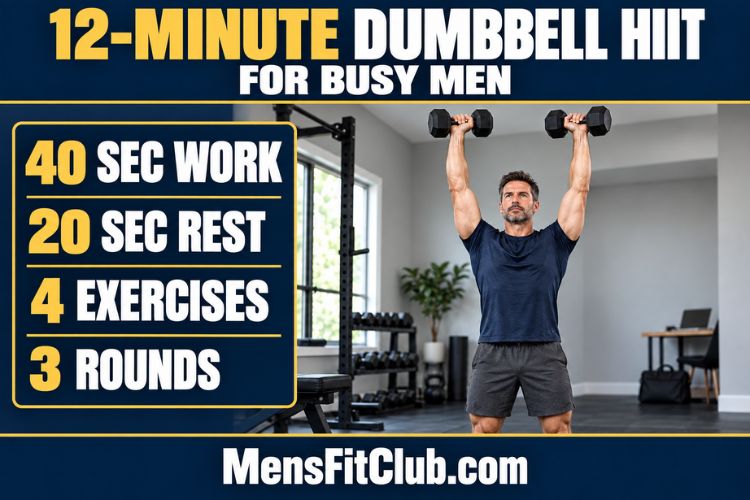
Finding time to exercise can feel difficult when your day is packed with work, family responsibilities, commuting, and everything else competing for your attention. A lengthy gym session may be unrealistic, but a short, structured workout can still help you maintain momentum. This 12-minute dumbbell HIIT workout for busy men gives you a practical way to combine resistance exercises with challenging intervals using minimal equipment and space.
The routine uses four exercises repeated three times. You will squat, press, hinge, row, and carry weight while alternating work with recovery. There are no complicated combinations to memorize, no jumping requirements, and no need to change equipment between every movement. The objective is to work hard with controlled technique, then recover enough to repeat that effort.
The twelve minutes refer to the main interval circuit. Add a short warm-up beforehand and an easy cooldown afterward, bringing the complete session to approximately seventeen to twenty minutes. That distinction matters: getting ready to move is part of training, especially when you have spent the morning sitting at a desk.
What Is a 12 Minute Dumbbell HIIT?
High-intensity interval training alternates demanding exercise with recovery periods. The American College of Sports Medicine describes HIIT using this basic work-and-recovery structure, with the specific interval lengths varying between programs. Dumbbells provide one way to add resistance, although the weight alone does not determine whether a workout qualifies as high intensity. acsm.org
For this routine, think of the session as a resistance-based interval workout with a HIIT emphasis. Your breathing and overall effort should increase during the working intervals. However, if your grip or shoulders tire before your cardiovascular system is challenged, you are mainly performing a resistance circuit. That remains useful exercise; you do not need to force faster repetitions to justify the HIIT label.
High Intensity Should Still Be Controlled
Use a perceived effort scale from one to ten. One represents very easy movement, while ten represents your absolute maximum. Experienced exercisers can aim for approximately seven to eight during most working intervals. Beginners should start closer to five or six while learning the exercises and understanding how they respond to the format.
You should breathe harder during work, but keep every repetition deliberate. Recovery should help you regain enough control to start the next exercise safely. If you cannot maintain posture, stop early. A timer organizes the session; it does not require you to keep lifting after your movement quality deteriorates.
Why This Short 12 Minute Dumbbell HIIT Fits a Busy Schedule
The strongest feature of a short workout is its practicality. You can prepare one training area, set a timer, and finish the circuit without traveling to a gym or waiting for equipment. Removing those barriers makes it easier to exercise on days when your schedule would otherwise push training aside.
The routine also distributes work across several movement patterns. Your lower body contributes during squats and hinges, your upper body works during presses and rows, and your trunk stabilizes the weights throughout. This gives the session a full-body structure without requiring a long list of exercises.
A Useful Session With Realistic Expectations
A twelve-minute circuit can contribute to your weekly activity and help you practice loaded movements. Repeating it consistently may improve your ability to tolerate this particular workout. However, it is not a complete replacement for progressive strength training, longer aerobic activity, or a balanced weekly exercise plan.
Avoid judging the session by exaggerated calorie estimates. Energy expenditure varies with body size, exercise selection, load, work rate, and conditioning. The more useful question is whether the routine gives you a repeatable challenge that fits your life and allows you to recover for your next training day.
Equipment and Setup Before You Start 12 Minute Dumbbell HIIT
You need one pair of dumbbells, an interval timer, and a clear area with enough room to squat, hinge, press overhead, and march in place. Wear stable footwear and check that the floor is secure. Position your timer where you can see or hear it without twisting your neck during an exercise.
A single pair keeps transitions simple. If you have several pairs, you may use a lighter set for the squat-to-press and a heavier set for the hinge and row. Place them within easy reach, with clear space around your feet. Do not create a setup that requires hurried weight changes during short rests.
How to Choose Your Dumbbell Weight
Choose your starting load according to the most demanding movement, usually the overhead press. Before setting the timer, perform several comfortable practice repetitions of each exercise. The weights should let you press without leaning backward, row without jerking your torso, and squat without losing balance.
Start lighter than you would for a traditional strength set. Repeated intervals create accumulating fatigue, and a weight that feels easy during the first minute may become challenging in the third round. Finish each working interval with the sense that you could still perform another couple of clean repetitions if needed.
Warm Up for Three to Five Minutes
Begin with approximately one minute of easy marching or walking. Gradually increase your pace while letting your arms move naturally. Follow with comfortable shoulder circles and several gentle overhead reaches, keeping the movement within a pain-free range rather than forcing extra mobility.
Next, rehearse six to eight bodyweight squats and six to eight unloaded hip hinges. During the squat, keep your feet firmly planted and sit down between your hips. During the hinge, soften your knees and move your hips backward while keeping your torso controlled. Finish with a few light rows and presses.
Use the Warm-Up to Check Readiness For 12 Minute Dumbbell HIIT
The warm-up should tell you whether the planned exercises feel suitable today. If overhead movement is uncomfortable, choose the squat-only alternative before the timer starts. If your lower back feels fatigued, arrange a supported row variation. Making these decisions early prevents rushed improvisation once your breathing increases.
You do not need an exhausting preparation sequence. The goal is to feel warmer, move more comfortably, and confirm that your working weight is manageable. After prolonged inactivity or in a cold environment, take an extra minute or two instead of treating the warm-up as something to finish as quickly as possible.
The 12-Minute Dumbbell HIIT Workout
Set your timer for forty seconds of work followed by twenty seconds of recovery, repeated twelve times. Perform four exercises in the same order for three rounds: dumbbell squat-to-press, dumbbell Romanian deadlift, dumbbell bent-over row, and dumbbell farmer march. Each exercise occupies one minute, including its recovery period.
Round one runs from 0:00 to 4:00, round two from 4:00 to 8:00, and round three from 8:00 to 12:00. The final twenty-second recovery is included in the twelve-minute total. You do not need an additional break between rounds unless your breathing or technique requires one.
Minute 1: Dumbbell Squat-to-Press
Hold the dumbbells near your shoulders with your palms facing inward or slightly forward. Stand with your feet in a comfortable squat stance. Bend your hips and knees together, lowering only as far as you can maintain balance and control. Keep your heels grounded and let your knees follow the direction of your toes.
Stand smoothly, then press the dumbbells overhead. Finish with your ribs controlled rather than arching your lower back to move the weights higher. Lower the dumbbells to your shoulders before beginning the next squat. Treat the movement as a squat followed by a press, giving yourself a brief moment to establish balance between them.
This exercise will often create the greatest breathing challenge in the circuit. Work at a steady pace and avoid rushing the lowering phase. If pressing becomes uncomfortable or your shoulders fatigue too quickly, perform a goblet squat with one dumbbell instead. You can still complete a demanding interval without overhead work.
Minute 2: Dumbbell Romanian Deadlift 12 Minute HIIT
Hold the dumbbells in front of your thighs, standing approximately hip-width apart. Soften your knees, brace your trunk, and move your hips backward. Lower the weights close to your legs while maintaining a comfortable, stable spinal position. Stop when you reach your available hamstring range without rounding or straining.
Push through your feet and bring your hips forward to stand. Finish tall without leaning backward or squeezing into excessive spinal extension. Your knees can remain slightly bent throughout the movement. This is a hip hinge, so your hips travel backward more than they travel downward.
Use a controlled lowering phase and a smooth return. The weights do not need to touch the floor. During this interval, prioritize a repeatable range of motion over speed. If you feel the movement mainly in your lower back, reduce the load and shorten the range while checking your hinge technique.
Minute 3: Dumbbell Bent-Over Row
With the dumbbells hanging below your shoulders, hinge your hips backward and bend your knees slightly. Choose a torso angle you can hold comfortably. Brace your trunk and pull the weights toward the sides of your waist, keeping your elbows reasonably close to your body. Lower the dumbbells under control.
Avoid lifting your chest sharply with each repetition or using a bouncing motion to move heavier weights. Keep your head aligned with your torso and direct your gaze toward the floor ahead of you. Your upper back should perform the rowing action while your trunk maintains the working position.
Because the previous exercise also uses a hinge, monitor your lower-back endurance. If holding the position becomes difficult, use a sturdy bench for a supported one-arm row. Row on one side for a full interval, switching sides in the next round and alternating the starting side next session. Equalize total intervals across sessions.
Minute 4: Dumbbell Farmer March 12 Minute HIIT
Stand tall with a dumbbell in each hand and your arms hanging naturally beside you. Brace your trunk lightly, keep your shoulders relaxed, and march in place with controlled alternating steps. Lift each foot only as high as you can without leaning, wobbling, or shifting your weight abruptly.
Continue breathing throughout the interval. Do not shrug the weights upward or hold your breath to make the march feel harder. Your goal is to maintain posture while the loaded steps challenge your grip and balance. A small, steady march is more useful than exaggerated knee lifts that disrupt control.
If marching feels unstable, use a lighter load or an unloaded march. If space permits, a slow farmer walk is another option, provided you can turn safely. Finish the interval by placing the dumbbells down with a controlled bend of your hips and knees rather than dropping them beside your feet.
How to Handle the Twenty-Second Recovery
Place the weights down when needed, take several steady breaths, and prepare for the next exercise. Check your stance and hand position before lifting again. Use the break to recover instead of adding push-ups, jumping jacks, or other movements that turn the session into uninterrupted exercise.
The later rounds should be challenging, but your technique should remain recognizable. Some reduction in repetitions is normal as fatigue accumulates. A large drop in performance, repeated loss of balance, or difficulty controlling the dumbbells suggests that the load, work duration, or overall effort needs to decrease.
Extend Rest When Necessary With 12 Minute Dumbbell HIIT
You can pause the timer and take additional recovery. The resulting workout will exceed twelve minutes, which is preferable to forcing poor-quality repetitions. Alternatively, keep the twelve-minute structure and reduce each working interval. The routine should adapt to your current capacity instead of requiring you to match someone else’s pace.
Beginner and Lower-Impact Modifications
Beginners can start with twenty seconds of work and forty seconds of recovery for the same twelve intervals. This preserves the exercise order and overall circuit length while providing more time to reset. Progress to thirty seconds of work and thirty seconds of recovery when the movements become familiar.
Use a goblet squat instead of the squat-to-press, a shorter-range Romanian deadlift, a supported row, and an unloaded march if necessary. You can also rehearse the entire circuit without weights before introducing resistance. Learning the movement pattern is a worthwhile first step, even when the effort remains moderate.
Adjustments 12 Minute Dumbbell HIIT for Men Over 40 or 50
Age alone does not determine your starting level. Recent training, balance, joint comfort, health, and recovery matter more than choosing a workout solely by your birthday. An experienced older lifter may handle the standard format comfortably, while a younger beginner may need the easier version.
Allow more warm-up time when you feel stiff and choose movement ranges you can control. If you have cardiovascular disease, uncontrolled blood pressure, or another condition affecting vigorous exercise, get individualized guidance before attempting high-intensity intervals. Stop exercising for chest pain, faintness, or unusual breathlessness and seek appropriate medical help.
Where This 12 Minute Dumbbell HIIT Fits in Your Week
Start with one or two sessions weekly on nonconsecutive days. Consider how much demanding exercise you already perform rather than automatically adding more. If your schedule includes hard running, heavy lifting, or sports, this dumbbell circuit contributes to that same recovery demand.
A practical week might include full-body strength training on Monday and Friday, this interval workout on Wednesday, and walking on the other days. Another option is using the circuit during a travel week or a particularly busy period when your usual training session is unavailable.
When Strength or Muscle Growth Is Your Priority
Keep dedicated strength sessions at the center of your plan if your primary goal is building muscle or increasing lifting performance. Those sessions allow heavier loads, more rest, and clearer progression. The twelve-minute workout can provide additional conditioning, but it should not consistently leave you too fatigued to perform your main lifts.
Avoid placing a hard circuit immediately before a demanding lower-body session. If combining both in one visit, perform your priority work first and shorten or simplify the conditioning afterward. On days when time is especially limited, choose the session that best supports your current goal.
A Simple Four-Week 12 Minute Dumbbell HIIT Progression
During week one, learn the routine with light weights and a conservative interval ratio. Record the dumbbells used, the work duration, and any substitutions. Focus on finishing with stable movement rather than chasing exhaustion. One or two practice sessions are enough to establish a useful baseline.
In week two, repeat the same setup and aim for more consistent repetitions across rounds. During week three, increase work time slightly if your current intervals remain controlled. In week four, consider a small weight increase only if you can maintain the same technique and recover well between sessions.
Change One Variable at a Time
Avoid increasing weight, extending work, shortening recovery, and adding sessions simultaneously. Those changes make it difficult to identify what caused excessive fatigue or discomfort. Choose one adjustment and observe how you respond. If performance worsens across several sessions, return to the previous setup or take an easier week.
Common Mistakes That Reduce Workout Quality
The first mistake is choosing weights based on what you can lift once rather than what you can control repeatedly. The second is treating every interval as a race. Fast repetitions may increase your count while reducing range, balance, and control. A slower, consistent pace is easier to assess and progress.
Another mistake is skipping warm-ups to preserve the twelve-minute label. The circuit’s duration is a planning tool, not a reason to begin loaded movement cold. Also avoid turning every busy day into a maximal workout. Sometimes moderate intervals or an easy walk fit your recovery needs better.
Keep a Simple Training Record
Write down your load, interval ratio, and approximate effort after each session. Add one brief note about movement quality or recovery. These details are more useful than tracking sweat or soreness, which do not reliably show whether the workout was productive. Look for smoother movement and repeatable performance over time.
Cool Down and Recover After the Circuit
After the final recovery interval, walk or march gently for two to three minutes. Let your breathing settle gradually. If comfortable, add brief, gentle stretches for your calves, hips, chest, or shoulders. Avoid forcing a stretch simply because a muscle feels tired.
Drink according to your needs and return to your usual balanced meals. There is no special supplement required for a twelve-minute workout. Adequate food, sleep, and manageable training volume support your ability to exercise consistently. If soreness disrupts ordinary movement or your next session, reduce the next workout’s difficulty.
Frequently Asked Questions
Can a 12-Minute Dumbbell Workout Help With Fat Loss?
It can contribute to an active routine, but fat loss depends on your overall energy balance over time. Pair training with sustainable eating habits and regular daily movement. Avoid expecting one short workout to compensate for the rest of your week or produce a predictable number of calories burned.
Can I Do This Dumbbell HIIT Workout Every Day?
Daily hard intervals are unnecessary for this plan. Begin with nonconsecutive sessions and assess your recovery. Walking, gentle mobility, or other easy activities can keep you moving between workouts. More frequent training is useful only when it fits your broader plan and does not undermine performance or recovery.
What If I Only Have One Dumbbell?
Use a goblet squat, a two-handed dumbbell Romanian deadlift, a supported one-arm row, and a suitcase march. For unilateral exercises, alternate the working side between rounds and switch the starting side in the next session to balance the total workload. Keep the twelve one-minute intervals unchanged.
Is This Workout Suitable Without Jumping?
Yes. The standard circuit contains no jumps, burpees, or rapid floor transitions. You can adjust the load, pace, and movement range to make the session manageable. Low impact still requires good judgment: choose exercises that feel comfortable and reduce the difficulty when balance or technique begins to decline.
Make Short 12 Minute Dumbbell HIIT Part of a Consistent Routine
This 12-minute dumbbell HIIT workout for busy men offers a clear plan for days when training time is limited. Warm up, complete three rounds of four exercises, and finish with easy movement. Use weights you can control and let recovery support the next interval.
Start with the version that matches your current fitness. Track a few useful details, progress gradually, and keep the routine alongside strength training and regular aerobic activity. A short session becomes valuable when you can repeat it consistently, recover from it comfortably, and fit it into a week that supports your goals.
Make your 12-minute dumbbell HIIT workout part of a balanced routine with our guide on How To Choose Dumbbell Weight For Every Exercise. Explore the Full Body HIIT Routine With Dumbbells for another interval-training option, or try the 30 Minute Full Body Dumbbell Complex Workout when you have more time. Complement your conditioning with a Full Body Dumbbell Workout For Men, and keep easier days gentle with our Rest Day Mobility Routine For Muscle Recovery.


Most Recommended

Subscribe to our Newsletter
Stay up to date on the latest men’s health, fitness and lifestyle trends and tips.
About Us
Men’s Fit Club was started with the goal of empowering men to get the most out of their lives. This meant going beyond exercise and diet tips to really address the broad range of issues that men face on a daily basis – topics like recreation, finding love, sexual health and even sound fashion advice.
Quick Links
© COPYRIGHT MEN'S FIT CLUB 2026. All Rights Reserved