

Sled-Free HYROX Workout Without Equipment at Home
Barbell Contrast Training Workout for Explosive Power

15-Minute Kettlebell HIIT Workout for Cardiovascular Fitness
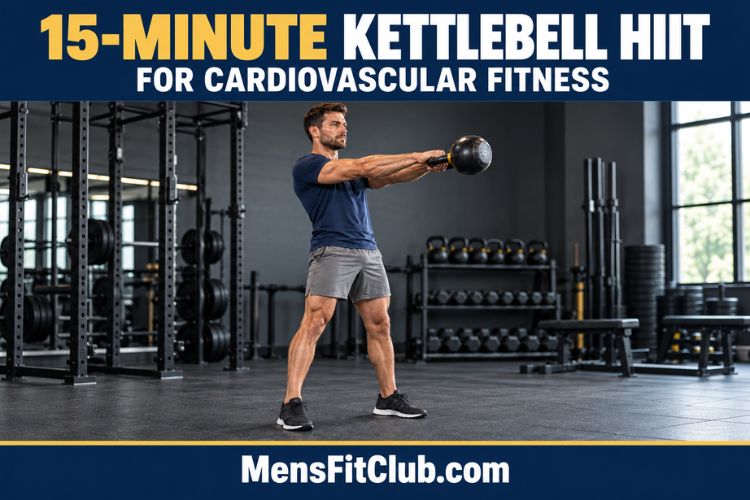
A 15 minute kettlebell HIIT workout can turn a short training window into a challenging cardiovascular session. With one kettlebell, a timer, and enough space to move safely, you can alternate purposeful effort with recovery while training your legs, hips, upper body, and core. The appeal is simple: you get a practical conditioning workout without needing a treadmill, complicated equipment, or a long list of exercises.
However, a short workout works best when it has a clear structure. Swinging a heavy kettlebell as fast as possible for fifteen minutes is difficult to control, and exhaustion alone does not prove that a session improved your fitness. Effective kettlebell conditioning combines appropriate exercise selection, manageable resistance, repeatable intervals, and enough recovery to preserve technique.
This workout takes fifteen minutes from start to finish: three minutes of warming up, ten minutes of intervals, and two minutes of cooling down. It is designed for generally healthy adults who already understand basic kettlebell movements. Beginners can use the lower-intensity version while developing the skills and conditioning needed for harder intervals.
What Is a 15 Minute Kettlebell HIIT Workout?
High-intensity interval training, commonly called HIIT, alternates demanding work periods with easier recovery periods. In a kettlebell HIIT workout, resistance exercises provide the work intervals. Your breathing increases as large muscle groups work together, then the recovery period gives you time to regain control before the next effort.
The equipment does not automatically make a workout HIIT. A kettlebell circuit performed at a comfortable pace may be moderate-intensity conditioning. The same exercise sequence can become high-intensity interval training when the work periods are sufficiently demanding for the person performing them. Your fitness, exercise technique, kettlebell weight, and interval length all affect that distinction.
High Intensity Should Still Be Repeatable
For this session, aim for roughly seven to eight out of ten on a perceived-effort scale during the harder intervals. You should be breathing strongly while remaining able to move deliberately. The last interval may feel challenging, but it should still resemble the first interval in posture and control.
You do not need all-out effort. Sprinting through every set, holding your breath, or forcing extra repetitions after technique deteriorates makes the session harder to manage. Set the kettlebell down early whenever your grip, balance, or body position becomes unreliable. The timer is a guide, not an obligation to continue poor repetitions.
How Kettlebell Training Supports Cardiovascular Fitness
Kettlebell exercises often recruit several muscle groups at once. Swings involve the hips and legs, squats require coordinated lower-body movement, and carries or marches challenge posture while you move. Performing these exercises in intervals can create a substantial cardiovascular demand alongside local muscular fatigue.
ACE-sponsored research has reported improvements in aerobic capacity following a structured kettlebell training program. That supports kettlebell training as a useful conditioning option, but it does not establish that this specific fifteen-minute routine produces identical results. Your response will depend on your starting fitness, effort, consistency, and overall activity.
Cardiovascular Effort and Muscle Fatigue Are Different
A burning grip does not necessarily mean your cardiovascular system received the intended training stimulus. If your forearms fail before your breathing becomes meaningfully elevated, the kettlebell may be too heavy or the exercise selection may need adjustment. Similarly, a difficult squat set can end because your legs fatigue while your overall conditioning remains relatively underchallenged.
Choose a load and pace that let you sustain coordinated movement. The aim is to challenge breathing through repeatable whole-body effort. If muscular fatigue consistently interrupts the session, lower the load, shorten the work periods, or use unloaded marching during one interval to keep moving without adding more grip fatigue.
Is Fifteen Minutes Enough for a Cardio Workout?
Fifteen minutes can be enough for a useful conditioning session, especially when it fits consistently into your schedule. Short workouts reduce the practical barrier of finding time, and an organized interval block gives you a clear task to complete. The benefit comes from accumulating appropriate training over weeks, rather than expecting one short session to transform your endurance.
The CDC recommends at least 150 minutes of moderate-intensity aerobic activity or 75 minutes of vigorous activity weekly, or an equivalent combination, alongside muscle-strengthening activity on at least two days. This routine can contribute to that broader schedule, but its full fifteen minutes should not automatically be counted as vigorous exercise. Warm-up, recovery, and cooldown periods have different intensities.
Use Short Sessions Within a Larger Weekly Plan
Two kettlebell interval workouts can fit alongside brisk walks, cycling, swimming, and strength training. Easier aerobic activity provides additional movement without requiring every workout to feel demanding. It also gives you a way to build conditioning when your hands, hips, or back need a break from loaded exercise.
Think of this workout as one useful part of your weekly activity. It offers variety and a time-efficient cardiovascular challenge, while longer easy sessions and dedicated resistance training serve complementary purposes. A sustainable schedule should leave you able to train again, carry out daily responsibilities, and recover between harder efforts.
Equipment and Space You Need For 15 Minute Kettlebell HIIT Workout
You need one kettlebell, an interval timer, and a stable surface with enough clearance around you. Remove nearby furniture, pets, and loose objects from the movement area. Wear footwear that feels secure and provides a stable base. Avoid slick floors or unstable surfaces that make your footing unpredictable.
Choose a kettlebell you can control in every exercise. Your strongest movement should not determine the weight for the entire circuit. A bell that feels manageable during deadlifts may be too demanding for goblet squats or suitcase marches. If necessary, use a lighter kettlebell throughout or use two different weights with safe transitions.
How to Choose Your Kettlebell Weight
Before starting the timer, rehearse a few controlled deadlifts, goblet squats, and suitcase marches. Experienced swing users should also perform several easy swings. You should be able to maintain position, breathe without prolonged straining, and place the bell down deliberately. If rehearsal feels close to maximal effort, reduce the load.
There is no universal starting weight for men. Training history, mobility, grip strength, body size, and familiarity with kettlebells vary considerably. A lighter bell that allows consistent intervals is more useful here than a heavier bell that forces you to stop after several strained repetitions.
The Complete 15 Minute Kettlebell HIIT Workout
The session uses a three-minute warm-up, two five-minute rounds, and a two-minute cooldown. During the main workout, each minute contains thirty seconds of work followed by thirty seconds of recovery. Five exercise intervals make one round. Complete the sequence twice, keeping the same exercise order.
The five intervals are two-handed kettlebell swings, goblet squats, suitcase marching on the right, suitcase marching on the left, and kettlebell deadlifts. This sequence balances a more demanding ballistic movement with controlled exercises. The marches may feel less cardiovascularly demanding than the swings, which is acceptable; the circuit does not need identical intensity in every interval.
Minutes 0–3: Warm Up
During the first minute, march comfortably and gradually increase your pace. Add gentle shoulder movements while keeping your breathing relaxed. The goal is to begin moving and feel more alert, rather than trying to reach your hardest effort before the workout starts.
During the second minute, perform several unloaded hip hinges followed by comfortable bodyweight squats. Push your hips backward during the hinges and bend your knees naturally. Move through a range you can control. Use this minute to notice stiffness, discomfort, or balance problems that might require a modification.
During the third minute, rehearse easy kettlebell deadlifts and a few goblet squats. If you are proficient with swings, add a small number of relaxed practice repetitions. Three minutes is the planned warm-up allowance, but take longer if you remain stiff or unprepared. In that case, the session will exceed fifteen minutes, which is preferable to rushing into intense exercise.
Minutes 3–8: Complete Round One
From 3:00 to 3:30, perform controlled two-handed swings, then recover until 4:00. From 4:00 to 4:30, perform goblet squats, then recover until 5:00. From 5:00 to 5:30, march with the kettlebell in your right hand, then recover until 6:00.
From 6:00 to 6:30, march with the kettlebell in your left hand, then recover until 7:00. From 7:00 to 7:30, perform kettlebell deadlifts, then recover until 8:00. Use the recovery periods to set the bell down safely, breathe, and prepare your next position.
Minutes 8–13: Complete Round Two
Repeat the same sequence starting at 8:00: swings, goblet squats, right-hand suitcase marching, left-hand suitcase marching, and deadlifts. Each exercise again receives thirty seconds of work and thirty seconds of recovery. The last deadlift work period ends at 12:30, followed by recovery until 13:00.
Keep the second round technically consistent. You may complete fewer repetitions as fatigue develops, and that is acceptable. Avoid racing to match an earlier number. If your breathing remains uncontrolled at the next interval, delay the start or use an easier movement instead.
Minutes 13–15: Cool Down
Set the kettlebell aside and walk slowly or march gently for the first cooldown minute. Gradually reduce your pace while allowing your breathing to settle. Avoid immediately collapsing onto the floor after a demanding interval block.
During the final minute, continue easy movement or add gentle, comfortable mobility for your shoulders and hips. Do not force deep stretches while fatigued. If you still need more time to recover, continue the cooldown beyond the planned two minutes.
Exercise Technique for Better 15 Minute Kettlebell HIIT Workout Conditioning
The exercises should feel familiar before you perform them in intervals. Learn each movement separately, then combine them once you can reproduce the technique reliably. Fatigue makes technical practice more difficult, so the interval session should reinforce skills you already possess.
Two-Handed Kettlebell Swing
The swing is driven by a hip hinge. Hike the kettlebell backward between your legs, then extend your hips to let it travel forward. Keep your arms relatively relaxed, your trunk controlled, and your shoulders away from your ears. Let the bell float to approximately chest height without pulling it upward.
Avoid turning the movement into a deep squat or leaning backward at the top. Finish standing tall with your ribs and pelvis aligned. If you have not learned the swing, use kettlebell deadlifts in this interval and practice swings separately with qualified instruction.
Goblet Squat 15 Minute Kettlebell HIIT Workout
Hold the kettlebell close to your chest and stand with a comfortable stance. Bend your knees and hips together, descending only as far as you can maintain balance and control. Keep your heels grounded and allow your knees to follow the direction of your toes.
Stand smoothly without bouncing out of the bottom or rushing the descent. Keep the bell close rather than extending it away from your body. If the loaded version feels awkward, place the kettlebell down and use bodyweight squats for the interval.
Suitcase March
Hold the kettlebell beside one thigh, keeping your wrist comfortable and your shoulder steady. Stand tall and march in place with small, controlled steps. Lift each foot only as high as you can without leaning or losing balance.
The challenge is resisting the pull of the weight while continuing to move. Avoid exaggerated knee lifts or shrugging the loaded shoulder. Use a lighter bell or unloaded marching if grip fatigue or balance becomes the limiting factor. Each side receives equal time across both rounds.
Kettlebell Deadlift 15 Minute Kettlebell HIIT Workout
Place the kettlebell between your feet. Push your hips backward, bend your knees enough to reach the handle, and grip it with both hands. Brace your trunk, stand by extending your hips and knees, then return the bell to the floor under control.
Keep the kettlebell close and reset your position between repetitions. The deadlift interval is not a speed contest. Stop if you cannot maintain a comfortable back position, and use an unloaded hinge if reaching the bell from the floor is unsuitable.
Beginner Modifications for the Same Fifteen-Minute Format
Beginners can keep the clock structure while changing the difficulty. Use twenty seconds of work and forty seconds of recovery during each main-workout minute. Replace swings with deadlifts, use bodyweight squats when needed, and perform unloaded marching if carrying the bell disrupts balance.
The resulting session may be moderate-intensity interval conditioning rather than HIIT. That is an appropriate starting point. Building confidence, movement quality, and consistency gives you a better foundation for harder exercise than forcing an intensity level you cannot yet control.
Progress Toward HIIT Gradually
Start with one or two sessions weekly, depending on your existing activity and recovery. When the movements feel familiar, increase work periods to twenty-five seconds while keeping thirty-five seconds for recovery. Later, progress to the standard thirty-second work periods.
Change one variable at a time. Increasing the weight, extending the intervals, and adding extra sessions simultaneously makes it difficult to identify what caused excessive fatigue. Stay with a manageable version long enough to judge how you feel during the workout and the following day.
How to Measure 15 Minute Kettlebell HIIT Workout Intensity
Use breathing, perceived effort, and movement quality together. The CDC describes the talk test as a practical intensity guide: during vigorous activity, speaking more than a few words without pausing for breath becomes difficult. Apply that idea to the harder intervals rather than expecting every second of the session to feel equally intense.
Technique remains the limiting rule. Strong breathing is acceptable; uncontrolled posture is a reason to reduce difficulty. You should finish feeling challenged while retaining enough coordination to place the kettlebell down safely and walk through your cooldown.
Use Heart Rate as Supporting Information
A heart-rate monitor can help you compare sessions, but a particular number does not guarantee an effective workout. Heart-rate response varies with fitness, medications, temperature, stress, and exercise type. Gripping a kettlebell and moving your wrists can also make wrist-based readings less reliable.
Avoid chasing a target by rushing repetitions or extending sets beyond your ability. Record how the workout felt, whether technique stayed consistent, and how quickly you regained comfortable breathing. These observations make heart-rate data more useful when considered together.
How Often Should You Do 15 Minute Kettlebell HIIT Workout?
For many recreational trainees, one or two sessions per week is a reasonable starting point. Place an easier day between demanding conditioning sessions when practical. Adjust frequency around your strength workouts, sports, sleep, and overall fatigue rather than treating HIIT as a daily requirement.
For example, you could strength train on Monday and Thursday, complete this kettlebell workout on Tuesday and Saturday, and use the other days for walking or easy cycling. If that schedule leaves your legs persistently tired, start with one interval session and reassess.
Combining the Workout With Strength Training
When improving strength is your main priority, perform important lifting before demanding conditioning or separate the sessions. Fatigue from swings and squats can affect subsequent lower-body training. This is especially relevant when your strength session includes challenging squats, deadlifts, or other technically demanding lifts.
You can also use the routine as a standalone workout on a busy day. Avoid adding it automatically after every lifting session. Extra conditioning is useful when it fits your recovery capacity and weekly goals, rather than simply increasing the amount of work you complete.
A Four-Week Progression for Cardiovascular Fitness
During week one, learn the sequence and establish a comfortable baseline. Beginners should use twenty-second work intervals. Experienced trainees can use thirty seconds while keeping effort conservative. Record the kettlebell weight and whether you completed both rounds with consistent technique.
During week two, repeat the same format and aim for smoother transitions and more controlled recovery. During week three, beginners who feel ready can add five seconds to their work intervals. Experienced users can maintain the format and slightly increase purposeful movement during suitable exercises without sacrificing control.
During week four, repeat an earlier session under similar conditions. Look for lower perceived effort, steadier movement, or improved breathing recovery at the same workload. Progress does not always require a heavier bell or more repetitions. Making an established session feel more manageable is useful evidence that your conditioning may be improving.
Common Mistakes That Reduce 15 Minute Kettlebell HIIT Workout Quality
The most common mistake is choosing a kettlebell that is too heavy for the entire circuit. When grip or strength fails immediately, the workout becomes fragmented. Use a weight that supports repeated controlled efforts, and remember that the march or squat may determine your selection.
Another mistake is skipping recovery because the workout feels short. Recovery helps you repeat demanding intervals while maintaining technique. Likewise, chasing a calorie estimate can distract from the actual goal. Calorie expenditure varies substantially, and no single number reliably represents the value of this session.
Adjust Before Fatigue Becomes a Problem
Watch for excessive leaning, a loosening grip, rushed squats, or swings that turn into arm raises. These changes indicate that the current workload exceeds what you can manage cleanly. Reduce the pace, shorten the work period, or choose the easier variation immediately.
Hard exercise should not involve sharp pain, dizziness, chest discomfort, or unusual breathlessness. Stop if these occur; seek urgent care for potentially serious symptoms. If you have a cardiovascular condition or have been inactive and plan to begin vigorous exercise, discuss an appropriate starting approach with your healthcare professional.
FAQ About 15 Minute Kettlebell HIIT Workout
Can This Workout Improve Cardio Without Running?
Yes, kettlebell intervals can provide a cardiovascular challenge without running. Whether your fitness improves depends on performing an appropriate workload consistently and recovering between sessions. Walking, cycling, and other aerobic activities can complement the routine.
Should You Do This Workout Every Day?
Daily HIIT is unnecessary for most people. Use easier activity between demanding sessions and adjust your schedule according to fatigue. Regular movement matters, but every workout does not need to involve hard intervals.
Does This Routine Replace Strength Training?
It provides resistance exercise, but a short conditioning circuit does not automatically replace a balanced strength program. Dedicated lifting allows more focused work across major muscle groups, with appropriate loads, rest periods, and progression.
What If You Cannot Complete Thirty Seconds?
Stop early and recover for the remainder of the minute. At your next session, use twenty seconds of work, a lighter kettlebell, or an easier movement. Completing controlled intervals is the priority.
Build Cardiovascular Fitness With Consistent 15 Minute Kettlebell HIIT Workout
A 15 minute kettlebell HIIT workout offers a practical way to add structured conditioning to a busy week. Prepare with a warm-up, complete two rounds of controlled intervals, and allow your breathing to settle afterward. Choose movements and resistance that match your current ability.
Repeat the session consistently, adjust one variable at a time, and support it with regular aerobic activity and strength training. The goal is a workout you can perform well, recover from, and gradually improve—not simply a difficult fifteen minutes.
For more ways to complement your 15-minute kettlebell HIIT workout, explore our Kettlebell HIIT Workout Guide for interval training ideas, or try the 10 Minute Kettlebell Workout when time is especially limited. When your fitness and recovery allow a longer session, consider our 20 Minute Full Body HIIT Kettlebell Workout, 25 Minute Full Body Kettlebell HIIT Workout, or 30 Minute Kettlebell Conditioning Workout for additional exercise variety and conditioning options.


Most Recommended

Subscribe to our Newsletter
Stay up to date on the latest men’s health, fitness and lifestyle trends and tips.
About Us
Men’s Fit Club was started with the goal of empowering men to get the most out of their lives. This meant going beyond exercise and diet tips to really address the broad range of issues that men face on a daily basis – topics like recreation, finding love, sexual health and even sound fashion advice.
Quick Links
© COPYRIGHT MEN'S FIT CLUB 2026. All Rights Reserved