
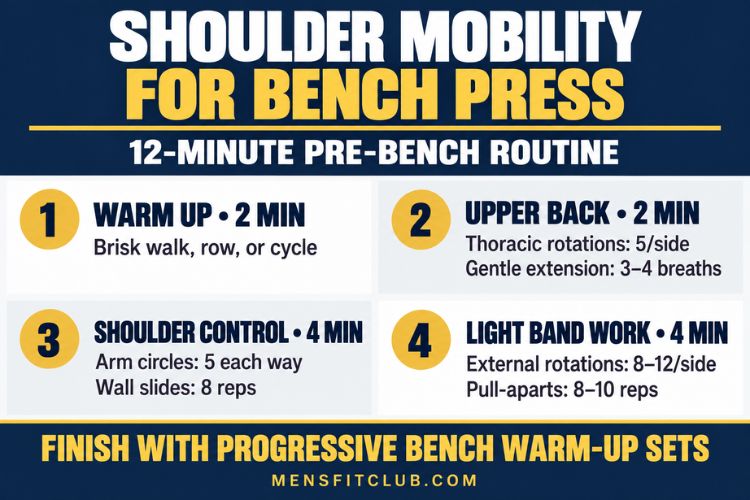
Shoulder Mobility Workout for Bench Press: A Practical Warm-Up
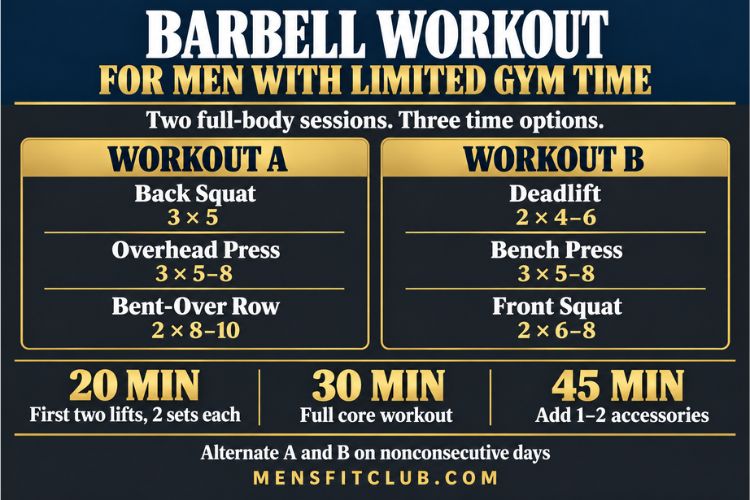
Barbell Workout for Men With Limited Gym Time | MensFitClub
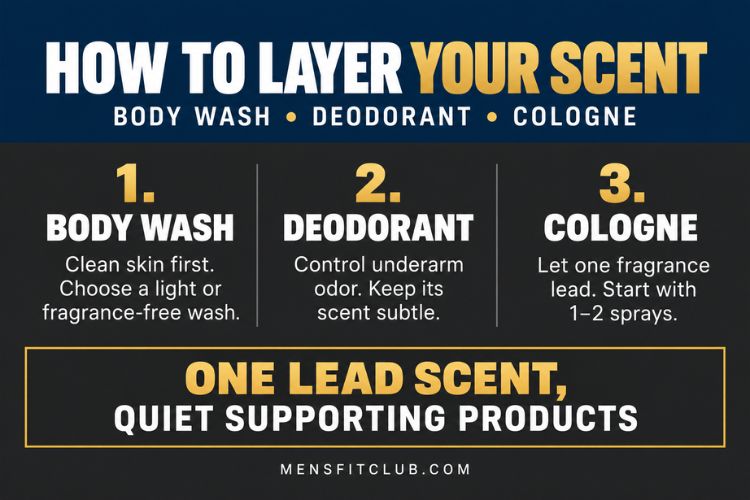
How Men Can Layer Cologne Deodorant and Body Wash
30-Minute Kettlebell Conditioning Workout to Build Strength Power

A 30-minute kettlebell conditioning workout is an efficient way to improve cardiovascular fitness, muscular endurance, strength, power, and overall work capacity without spending hours in the gym. Kettlebells allow you to combine resistance training with dynamic movements, making them especially effective for conditioning workouts that challenge your entire body.
Unlike traditional cardio sessions that focus primarily on endurance, kettlebell conditioning can train your legs, hips, back, shoulders, arms, and core while keeping your heart rate elevated. The result is a workout that can help you become stronger, fitter, more athletic, and better conditioned in a relatively short amount of time.
This 30-minute kettlebell workout is designed for intermediate exercisers who want a challenging full-body conditioning session. It combines explosive exercises, compound movements, strength-endurance work, and short recovery periods. You can perform it at home, in a garage gym, or at a commercial gym with just one or two kettlebells.
What Is a Kettlebell Conditioning Workout?
A kettlebell conditioning workout combines resistance exercises with cardiovascular demands. Instead of performing an exercise slowly with long rest periods, conditioning workouts typically use continuous movement, timed intervals, circuits, or rounds to challenge both your muscles and cardiovascular system.
Kettlebell exercises are particularly useful for conditioning because many of them involve multiple muscle groups simultaneously. Movements such as kettlebell swings, cleans, squats, snatches, and thrusters require your body to coordinate strength, stability, balance, and power.
The goal is not simply to move the kettlebell as quickly as possible. Effective conditioning requires maintaining good technique while working at an intensity that challenges your fitness level.
For this workout, you will alternate between powerful kettlebell movements and full-body exercises to create a balanced 30-minute training session.
Benefits of a 30-Minute Kettlebell Conditioning Workout
A well-designed kettlebell conditioning workout can provide several fitness benefits at the same time.
Improves Cardiovascular Fitness
Kettlebell circuits can keep your heart rate elevated throughout the workout. Repeated swings, squats, cleans, and other compound movements require your cardiovascular system to deliver oxygen and nutrients to working muscles.
Over time, consistent conditioning workouts can improve your ability to sustain physical activity without becoming exhausted as quickly.
Builds Muscular Endurance
Kettlebell conditioning is not focused solely on maximum strength. Performing multiple repetitions under fatigue teaches your muscles to continue producing force for longer periods.
This can improve muscular endurance in the legs, glutes, back, shoulders, and core.
Develops Full-Body Strength
Many kettlebell exercises are compound movements. A kettlebell clean, for example, involves the hips, legs, back, shoulders, arms, and core.
Because several muscle groups work together, you can train your entire body efficiently during a 30-minute workout.
Supports Fat Loss
A high-effort kettlebell circuit can burn a significant amount of energy while also providing resistance training. Combined with an appropriate nutrition plan and consistent training, kettlebell conditioning can support a fat-loss goal.
However, no workout can specifically target fat loss from one area of the body. Overall calorie balance, diet, activity level, sleep, and consistency all influence body composition.
Saves Time
One of the biggest advantages is efficiency. You do not need a long workout to create a meaningful training stimulus.
With a kettlebell and 30 minutes, you can warm up, perform a demanding full-body workout, and finish with a short cooldown.
Equipment You Need
For this 30-minute kettlebell conditioning workout, you need very little equipment.
The primary requirement is one kettlebell that you can control safely throughout the workout. Intermediate lifters may prefer to have two kettlebells available so they can adjust the resistance for different movements.
A workout mat is optional but can make floor-based exercises more comfortable.
Choose a kettlebell that allows you to complete the prescribed repetitions with good technique. If your form deteriorates significantly before the interval ends, the weight is probably too heavy for conditioning work.
30-Minute Kettlebell Conditioning Workout
The workout is divided into three sections:
- 5-minute warm-up
- 20-minute conditioning circuit
- 5-minute cooldown
The main circuit uses five exercises. You will work for 40 seconds and rest for 20 seconds before moving to the next exercise.
Complete four total rounds.
Exercise 1: Kettlebell Swings
Start the circuit with kettlebell swings.
Place the kettlebell slightly in front of you. Stand with your feet approximately shoulder-width apart and grip the handle with both hands. Hinge at your hips, allowing the kettlebell to move between your legs.
Drive your feet into the floor and explosively extend your hips to swing the kettlebell forward. The power should come primarily from your hips rather than your arms.
Allow the kettlebell to return between your legs and immediately move into the next repetition.
Perform controlled, powerful repetitions for 40 seconds.
The kettlebell swing is the foundation of this workout because it develops hip power while challenging your glutes, hamstrings, core, shoulders, and cardiovascular system.
Exercise 2: Goblet Squats
After the swings, move directly into kettlebell goblet squats.
Hold the kettlebell close to your chest with both hands. Stand with your feet approximately shoulder-width apart. Brace your core and lower your hips toward the floor while keeping your chest controlled.
Descend as far as you can comfortably while maintaining good posture. Drive through your feet to return to the starting position.
Keep your knees tracking in the same general direction as your toes and avoid allowing them to collapse inward.
Goblet squats strengthen the quadriceps, glutes, and core while adding a significant conditioning component when performed continuously.
Exercise 3: Kettlebell Clean
The third exercise is the kettlebell clean.
Begin with the kettlebell on the floor slightly in front of you. Hinge at your hips and grip the handle with one hand.
Drive through your legs and hips to bring the kettlebell upward. Keep the kettlebell relatively close to your body and allow it to rotate smoothly around your wrist before settling into the rack position.
Perform repetitions on one side before switching, or alternate sides according to your experience level.
The kettlebell clean develops explosive hip extension while training the upper back, shoulders, arms, and core.
If you are new to cleans, practice the movement separately before incorporating it into a timed conditioning circuit.
Exercise 4: Kettlebell Reverse Lunges
Hold the kettlebell in a comfortable position, such as at your chest or in one hand at your side.
Step backward with one leg and lower your body until both knees are comfortably bent. Push through the front foot to return to standing.
Alternate legs with every repetition.
Reverse lunges train the quadriceps, glutes, hamstrings, and stabilizing muscles while introducing a unilateral component to the workout.
Maintain control rather than rushing through each repetition. Conditioning should never come at the expense of movement quality.
Exercise 5: Kettlebell Push Press
Finish each round with the kettlebell push press.
Hold the kettlebell in the rack position with one hand. Slightly bend your knees and use your legs to help drive the kettlebell overhead.
Finish with your arm extended while maintaining a stable core. Lower the kettlebell under control and repeat.
Complete 20 seconds on one side before switching sides for the remaining 20 seconds, or divide the repetitions evenly between arms.
The push press combines lower-body drive with upper-body pressing, making it an effective full-body conditioning exercise.
The 20-Minute Conditioning Circuit
Your main workout looks like this:
Round Structure
40 seconds work + 20 seconds rest
- Kettlebell swings — 40 seconds
- Goblet squats — 40 seconds
- Kettlebell cleans — 40 seconds
- Reverse lunges — 40 seconds
- Kettlebell push press — 40 seconds
Rest for approximately 60 seconds after completing all five exercises if needed.
Repeat for 4 total rounds.
The active intervals total 13 minutes and 20 seconds, with the remaining time coming from the programmed recovery periods. If you need additional rest, take it. The goal is to complete quality work rather than force yourself to maintain an unsustainable pace.
5-Minute Kettlebell Warm-Up
Do not begin a demanding kettlebell conditioning workout with cold muscles.
Use approximately five minutes to gradually increase your body temperature and prepare your joints.
Start with light movement such as marching or jogging in place. Follow with bodyweight squats, hip hinges, alternating reverse lunges, arm circles, and controlled torso rotations.
You can then perform several light kettlebell deadlifts and practice a few slow swings.
The warm-up should prepare you for the movements without causing fatigue.
How Hard Should the Workout Feel?
Your conditioning workout should be challenging, but you should still be able to maintain proper technique.
For most people, an intensity around 7 to 8 out of 10 is appropriate for the main circuit. You should feel that you are working hard without reaching complete exhaustion during the early rounds.
The first round should feel controlled. As the workout progresses, your heart rate and fatigue will naturally increase.
If you are unable to maintain proper form, reduce the kettlebell weight, decrease your repetitions, or increase your rest period.
How to Choose the Right Kettlebell Weight
Choosing the correct kettlebell weight is critical.
For exercises such as swings and goblet squats, you may be able to use a heavier kettlebell. Cleans, push presses, and other technical movements may require a lighter weight.
Your kettlebell should be heavy enough to challenge you but light enough that you can perform every repetition with control.
For conditioning workouts, selecting a slightly lighter kettlebell than you would use for a traditional strength session is often appropriate because fatigue accumulates quickly.
If you are a beginner, prioritize technique and movement consistency over weight.
Kettlebell Conditioning Workout Modifications
The workout can be adjusted for different fitness levels.
Beginner Modification
Beginners can work for 30 seconds and rest for 30 seconds. Complete three rounds instead of four.
Use a lighter kettlebell and focus on mastering the swing, squat, lunge, clean, and press patterns.
Intermediate Modification
Use the prescribed 40-second work and 20-second rest intervals for four rounds.
Maintain a steady pace rather than trying to sprint through the first round.
Advanced Modification
Experienced athletes can increase the challenge by using a heavier kettlebell, reducing unnecessary rest, or increasing the work interval to 45 seconds.
However, advanced does not mean sacrificing technique. If your form breaks down, the workout is too demanding.
Common Mistakes to Avoid
One of the most common mistakes during kettlebell conditioning workouts is starting too fast.
It can be tempting to perform as many repetitions as possible during the first round. This often leads to excessive fatigue and poor technique later.
Another mistake is using the arms to generate kettlebell swing power. The swing should be driven primarily by the hips.
Rounding your back during swings or cleans is another issue to avoid. Maintain a strong, controlled torso throughout the movement.
Do not rush squats and lunges simply because the workout is timed. Quality repetitions are more valuable than sloppy repetitions.
Finally, avoid choosing a kettlebell that is too heavy. A conditioning workout should challenge your fitness without turning every movement into a struggle for survival.
How to Progress Your Kettlebell Conditioning
You do not need to increase the kettlebell weight every workout to make progress.
Start by improving your technique and consistency. Once you can complete all four rounds comfortably, gradually increase the number of quality repetitions completed during each interval.
You can then increase resistance.
Another progression strategy is to shorten the recovery period. For example, after several weeks of training, you might progress from 40 seconds of work and 20 seconds of rest to 45 seconds of work and 15 seconds of rest.
You can also add another round or introduce more technically demanding movements.
Progress gradually. Your cardiovascular system and muscles need time to adapt.
How Often Should You Do Kettlebell Conditioning?
For most people, two to three kettlebell conditioning workouts per week can be enough to improve fitness when combined with appropriate strength training and recovery.
Avoid performing hard conditioning sessions every day. Your muscles, connective tissues, and nervous system need time to recover.
If you also participate in running, cycling, CrossFit, sports, or heavy strength training, consider your total weekly workload before adding additional conditioning sessions.
A balanced training program should include strength, cardiovascular fitness, mobility, recovery, and appropriate rest.
30-Minute Kettlebell Conditioning for Fat Loss
Kettlebell conditioning can be a useful component of a fat-loss program because it combines resistance exercise and cardiovascular work.
However, the workout itself is only one part of the equation.
For sustainable fat loss, focus on maintaining an appropriate calorie deficit while consuming sufficient protein and nutrient-dense foods. Regular daily movement, adequate sleep, and consistent training also matter.
Do not judge the effectiveness of the workout solely by how much you sweat. A productive conditioning session is one that you can perform consistently while progressively improving your fitness.
Recovery After the Workout
Spend the final five minutes gradually bringing your heart rate down.
Walk slowly, breathe deeply, and perform gentle mobility movements for the hips, shoulders, and upper back.
Hydrate after training and eat a balanced meal containing protein, carbohydrates, and nutrient-dense foods.
Recovery becomes especially important when performing high-intensity conditioning workouts multiple times per week.
Getting enough sleep is also essential because many of the adaptations from training occur while your body is recovering between sessions.
Frequently Asked Questions
Is 30 minutes enough for a kettlebell workout?
Yes. A well-designed 30-minute kettlebell workout can provide an effective full-body training stimulus. The key is using your time efficiently and selecting exercises that train multiple muscle groups.
Can I do this kettlebell conditioning workout at home?
Yes. You need enough space to safely swing a kettlebell and perform lunges and squats. Make sure the floor is stable and there are no objects around you that could interfere with the movements.
Can kettlebell conditioning build muscle?
Kettlebell training can contribute to muscle development, particularly when you progressively increase resistance and training volume. For maximizing muscle growth, however, a dedicated resistance-training program with sufficient volume may be more appropriate.
Is kettlebell conditioning good for beginners?
Kettlebells can be used by beginners, but technical exercises such as cleans and snatches should be learned carefully. Beginners should start with simpler movements such as deadlifts, goblet squats, carries, and controlled swings before progressing to more technical exercises.
How many calories does a 30-minute kettlebell workout burn?
Calorie expenditure varies considerably depending on body size, workout intensity, conditioning level, exercise selection, and individual metabolism. Rather than relying on a specific calorie number, focus on workout quality and long-term consistency.
Final Thoughts
A 30-minute kettlebell conditioning workout can deliver a powerful combination of strength, endurance, cardiovascular fitness, and athletic conditioning without requiring a complicated gym setup. By combining kettlebell swings, goblet squats, cleans, reverse lunges, and push presses, you can challenge your entire body while keeping your training efficient.
The key is to work hard without allowing fatigue to destroy your technique. Start with an appropriate kettlebell, control your pace during the first round, and gradually increase the difficulty as your fitness improves.
Use this workout two or three times per week as part of a balanced training program, while giving your body enough time to recover. With consistent training, progressive overload, good nutrition, and adequate recovery, a simple kettlebell can become an extremely effective tool for developing strength, power, endurance, and overall fitness.
If you want to take your kettlebell conditioning to the next level, explore our 20-Minute Kettlebell Full Body Workout for another time-efficient strength and cardio session, or try our 20-Minute Full Body HIIT Kettlebell Workout to increase intensity and cardiovascular demand. For a functional approach, our 30-Minute Kettlebell Functional Workout combines strength, mobility, and real-world movement patterns. You can also challenge yourself with a Full Body Kettlebell Complex to improve conditioning and muscle endurance, or progress to our 45-Minute Full-Body Kettlebell Workout when you have more time for a complete training session.


Most Recommended

Subscribe to our Newsletter
Stay up to date on the latest men’s health, fitness and lifestyle trends and tips.
About Us
Men’s Fit Club was started with the goal of empowering men to get the most out of their lives. This meant going beyond exercise and diet tips to really address the broad range of issues that men face on a daily basis – topics like recreation, finding love, sexual health and even sound fashion advice.
Quick Links
© COPYRIGHT MEN'S FIT CLUB 2026. All Rights Reserved