


Shoulder Mobility Workout for Bench Press: A Practical Warm-Up

Barbell Workout for Men With Limited Gym Time | MensFitClub
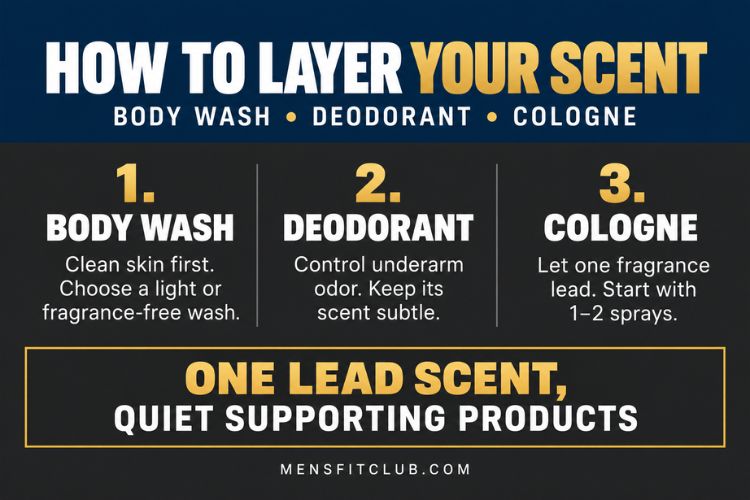
How Men Can Layer Cologne Deodorant and Body Wash
How Men Can Layer Cologne Deodorant and Body Wash
A good fragrance routine starts before you spray cologne. Your body wash leaves an impression in the shower, your deodorant stays close to the skin for hours, and your cologne adds the finishing touch. When those products work together, you smell clean and intentional. When every product competes for attention, even an expensive fragrance can feel too loud. Learning how men should layer cologne, deodorant, and body wash does not mean buying three bottles with identical names. It means deciding which scent should lead, which products should support it, and how much fragrance is right for the setting. The simplest approach takes only a few minutes and works whether you prefer crisp citrus, soft woods, warm amber, or barely noticeable skin scents.
This guide explains what each product does, how to choose compatible scents, the right order of application, and how to adjust the routine for the gym, office, date night, and sensitive skin.
What Men Layer Cologne Actually Means
Fragrance layering is the use of more than one scented product in a grooming routine. Some men use a matching body wash, deodorant, and cologne from one line. Others pair a neutral wash and deodorant with a favorite cologne. Both approaches can work. The goal is a coherent overall smell, not the strongest possible combination.
Think of the three products as different parts of a conversation. Body wash speaks first but usually fades after you rinse and dry. Deodorant sits under your arms and may remain noticeable at close range. Cologne is designed to be the main fragrance. If all three are bold, sweet, and long lasting, they can crowd one another. If the first two are quiet, the cologne has room to develop.
Layering also involves timing and placement. A shower cleans the skin; deodorant goes where its label directs; cologne belongs on suitable skin away from the underarms. You do not need to spray cologne over deodorant or mix products together in your hands. These products are made for different jobs.
Why a Clean Base Matters More Than a Strong Scent
Cologne does not replace washing, fresh clothes, or deodorant. A fragrance can mingle with sweat and fabric odors, making the result less pleasant than either smell on its own. Begin with a normal shower or appropriate wash after exercise, dry thoroughly, and change into clean clothing. This gives any fragrance a better starting point.
Your laundry can affect the result, too. A strongly perfumed detergent, scent beads, and dryer sheets become another layer, especially on shirts close to the nose. If your cologne seems to clash no matter which deodorant you choose, try a less scented laundry routine before replacing your fragrance.
The Role of Body Wash, Deodorant, and Cologne
Body Wash: The Clean Starting Point on How Men Can Layer Cologne
Body wash removes everyday grime and sweat from the skin. A scented formula can make the shower enjoyable and leave a light impression afterward, but rinse-off products are usually the least reliable way to create an all-day fragrance. Choose one for how it cleans and feels on your skin first. Treat any lingering scent as a bonus.
A mild citrus, fresh, or lightly woody wash is versatile because it is less likely to fight with a different cologne later. If you want the cologne to be the only clear fragrance, use a fragrance-free body wash. “Fragrance-free” is a useful label to look for when avoiding added scent; “unscented” does not always mean that a product contains no fragrance-related ingredients.
Deodorant: Everyday Odor Control
Deodorant addresses underarm odor. It may have a fragrance, but its primary place in this routine is practical: helping you feel fresh where odor develops. An antiperspirant also aims to reduce sweat; many products combine antiperspirant and deodorant functions. Check the package if managing wetness is important to you, since a deodorant alone may not provide the result you expect.
Deodorant scents can linger longer than body-wash scents. A heavily scented stick with a powdery or sweet profile can change the way your cologne smells at close range. A fragrance-free or low-scent option is an easy default when you rotate among different colognes. Apply it according to its label and let it settle before dressing.
Cologne: The Finishing Scent How Men Can Layer
Cologne gives the routine its identity. It might smell bright and airy, dry and woody, or rich and spicy. Its opening can change as it dries down, so do not judge compatibility only from the first few seconds after spraying. Test the full routine on a normal day and notice it after half an hour and again later in the day.
The word “cologne” is often used casually for any men’s fragrance. Strength varies among products, and two fragrances with the same concentration label may still project differently. Start with a small amount, especially with a new bottle, then adjust based on how it wears in your usual environment.
How Men Layer Cologne, Deodorant, and Body Wash: The Right Order
Step 1: Shower and Rinse Thoroughly
Use your body wash as directed and rinse it off well. A stronger scent in the shower does not necessarily mean a stronger or better scent several hours later. If the wash makes your skin feel tight, itchy, or irritated, switch to a gentler formula. A comfortable, clean base matters more than forcing a particular fragrance combination.
After a workout, give special attention to washing the areas where you sweat, then put on a fresh shirt. Spraying over a shirt worn through a workout often makes the odor problem more complicated. There is no need to scrub aggressively or use unusually hot water to prepare for cologne.
Step 2: Dry Skin and Apply Deodorant: How Men Can Layer Cologne
Pat dry before applying deodorant to the underarms, following the product directions. Give the product a moment to dry or settle so it is less likely to transfer to clothing. If you use an antiperspirant with different timing instructions, follow those instructions rather than assuming every product belongs at the same moment after a shower.
Keep deodorant in its intended area. Applying a heavily perfumed underarm product over the chest and neck turns a supporting scent into a second cologne and may irritate skin. Whole-body products also have their own directions and limitations; do not assume an underarm stick is suitable for every part of the body.
Step 3: Moisturize if Your Skin Needs It
If your skin feels dry after showering, apply a fragrance-free moisturizer to the areas where you plan to wear cologne and let it absorb. This is optional, but a comfortable skin-care routine can make fragrance application more pleasant. A matching scented lotion is another possible layer, though it can increase the total intensity. Start with the simpler fragrance-free option when testing a new cologne.
Do not spray fragrance onto broken, inflamed, or freshly irritated skin. If a product repeatedly stings or causes a rash, stop using it and consider advice from a dermatologist. Fragrance should never be the reason to put up with skin discomfort.
Step 4: Apply Cologne Sparingly
Spray cologne onto suitable skin such as the sides of the neck or a wrist, following the fragrance maker’s directions. One or two sprays is a reasonable starting experiment, not a universal rule. Atomizers, formulas, and personal preference vary widely. Avoid spraying directly into the face or onto irritated skin, and allow the scent to settle before deciding whether you need more.
Try not to rub your wrists together after applying fragrance. Let it dry naturally so you can assess how the scent develops. Also remember that cologne on fabric can linger differently from cologne on skin and may mark delicate materials. If you choose to spray clothing, test an inconspicuous area and consult the product guidance.
Step 5: Check the Result in Real Life: How Men Can Layer Cologne
Leave the bathroom and give the products time to settle. The scent of a freshly sprayed cologne in a small room is a poor guide to how it will smell in an office an hour later. Ask someone whose judgment you trust whether the fragrance is noticeable at conversational distance. If they smell you across the room before you arrive, use less next time.
You may stop noticing your own cologne as you wear it. That does not automatically mean it has disappeared for everyone else. Before adding another spray, step into fresh air and check your clothing and skin at close range, or ask for a second opinion.
How to Choose Scents That Work Together
Start With One Dominant Scent: How Men Can Layer Cologne
The easiest formula is fragrance-free body wash, fragrance-free deodorant, and one cologne you enjoy. It removes nearly all guesswork. If that feels too plain, add a lightly scented wash or deodorant that supports the cologne. Make one change at a time so you can tell what improved or worsened the result.
Another approach is a matching product range. Using a body wash and deodorant made to accompany the same cologne can be convenient, especially if you love that scent. Still, use each product lightly. Matching scents can compound in strength even when they do not clash.
Match the General Mood, Not Every Note
Products do not need identical ingredient lists to feel compatible. A fresh, clean wash can support a citrus or aquatic fragrance; a restrained woody deodorant can sit comfortably beneath a dry cedar cologne. Look for a shared mood such as fresh, warm, or understated. Smell the products together, because words on packaging are only a starting clue.
Be cautious when combining two attention-grabbing profiles. A sugary deodorant, intensely minty wash, and smoky vanilla cologne may each be enjoyable alone but crowded together. If you like a bold fragrance, let the supporting products fade into the background.
Use Unscented Supporting Products for a Fragrance Wardrobe
Men who wear different colognes across the week benefit from a neutral base. A fragrance-free wash and deodorant can work with a crisp daytime scent on Monday and a warm evening fragrance on Friday. You do not need a separate shower kit for every bottle on the shelf.
This approach can also help you learn what a new cologne actually smells like on you. Test it over a quiet base for several wears before experimenting with scented grooming products. Otherwise, you may blame the fragrance for a clash caused by your deodorant or detergent.
Practical Pairings for Common Fragrance Styles
Fresh Citrus or Aquatic Cologne Men Layer
A citrus, marine, or clean aromatic cologne usually pairs well with a gentle, low-scent body wash and a fragrance-free deodorant. If you want a scented wash, choose something in a similarly fresh family rather than a dense vanilla or heavy smoke scent. Fresh fragrances can feel especially appropriate for daytime and warm weather, but the deciding factor is how they wear on you.
Woody or Earthy Cologne
Woody scents can feel grounded and versatile. Pair a cedar, vetiver, or sandalwood-style cologne with a neutral wash or a subtly woody wash. Keep the deodorant understated so the underarm fragrance does not add an unrelated candy-like note. A little warmth in the supporting products can work, but there is no need to make every layer smell like a forest.
Amber, Spice, or Sweet Cologne
Warm fragrances often have plenty of character on their own. Use a lightly scented or fragrance-free body wash and deodorant, then start with fewer sprays than you might use for a sheer fragrance. In close indoor spaces, rich amber, spice, and sweet notes can feel more noticeable than they did outdoors. Give them time to settle before adding more.
Skin Scent or Soft Musk: How Men Can Layer Cologne
A subtle musk or skin scent can disappear under a forceful deodorant. Keep the rest of the routine as quiet as possible and pay attention to laundry fragrance. The appeal of this style is that someone notices it when they are near you, not when you enter the building. Apply modestly, then judge it at close range after it develops.
Adjust the Routine for Your Day: How Men Can Layer Cologne
For the Office or Other Shared Spaces
Aim for a fragrance that stays close enough to the body to let colleagues choose their own distance. A clean wash, functional low-scent deodorant, and a restrained amount of cologne is usually an easy formula. Shared desks, elevators, and meeting rooms make a heavy application more obvious. If your workplace has a fragrance policy, follow it.
For the Gym and After a Workout: How Men Can Layer Cologne
Deodorant and clean workout clothes do more useful work at the gym than a generous spray of cologne. Skip the heavy fragrance before training, particularly in crowded indoor spaces. After exercise, shower if possible, dry off, change clothes, reapply deodorant as directed, and use a small amount of cologne only if you are heading somewhere it makes sense.
If you cannot shower immediately, change out of damp clothing and clean up as best you can. Cologne may make you smell perfumed for a moment, but it cannot do the job of washing. Keep a fresh shirt and your preferred deodorant in a gym bag for a more reliable reset.
For Date Night or an Evening Out
An evening setting may give you room for a warmer fragrance, but intimacy still favors moderation. Choose a cologne you have worn before and know how it develops. A neutral deodorant is especially helpful if the cologne has spice, amber, leather, or sweet notes. Apply before getting dressed so you can avoid accidentally saturating a collar.
For Travel and Hot Weather: How Men Can Layer Cologne
Heat, close seating, and repeated application can make a fragrance feel stronger than expected. Pack a familiar deodorant and consider a quieter cologne for flights or long rides. If you need to refresh after hours of travel, first address sweat and clothing; then use the smallest amount of fragrance that achieves the effect you want.
Mistakes That Make Fragrance Layering Go Wrong
Treating Cologne as Deodorant
Cologne adds scent but is not an underarm odor-control product. Spraying it where you sweat can sting and create an uncomfortable mix of fragrance and odor. Use products for their intended purposes and keep fragrance application separate from deodorant application.
Assuming More Layers Mean Better Longevity
Adding a scented scrub, wash, lotion, deodorant, hair product, laundry booster, and cologne may create more noise than staying power. If you want your fragrance to last longer, first check whether the specific cologne suits your needs, whether your skin is comfortable, and whether you are simply becoming used to its smell. A larger number of scented products is not a reliable fix.
Pairing by Label Alone
“Fresh,” “sport,” and “wood” are broad marketing descriptions. Two products with the same word on their packages can smell very different. Try them together on a normal day rather than buying an entire matching routine based on the label. Notice what you smell after the opening of the cologne has faded.
Spraying Immediately After Shaving
Freshly shaved skin can be more reactive. If the neck feels irritated, avoid spraying cologne there. Use another suitable area of intact skin, or skip fragrance that day. A stinging sensation is not proof that a product is working.
Ignoring Clothing and Hair Products
Pomade, beard oil, detergent, and fabric spray may all contribute noticeable scent. You do not need to eliminate everything, but count them when assessing your routine. If your hair product already smells strongly of coconut and your cologne smells smoky, use a neutral body wash and deodorant or switch one of the competing products.
What If You Have Sensitive Skin?
If your skin is easily irritated, build the routine around tolerance rather than scent matching. Choose a gentle fragrance-free cleanser and a deodorant your skin handles well. Test new products separately so you can identify a problem. The American Academy of Dermatology recommends caution with fragranced products for people prone to irritation and advises testing skin-care products before regular use.
Fragrance-free and unscented are not interchangeable labels. An unscented product may contain ingredients used to mask an odor, while fragrance-free is the clearer choice if you are trying to avoid added scent. Read the ingredient list and watch how your skin responds. Do not apply fragranced products to the groin or other sensitive areas in an attempt to extend your cologne routine.
If a deodorant or cologne causes persistent redness, itching, or burning, stop using it. A dermatologist can help identify what is causing a reaction, especially when several products are involved. You can still have an effective grooming routine with a neutral wash and deodorant and no cologne at all.
A Simple One-Week Test to Find Your Best Combination
On the first two days, use a fragrance-free or low-scent wash and deodorant with your chosen cologne. Note how much cologne you applied and where. Pay attention to the scent after thirty minutes, around midday, and before you head home. Avoid changing laundry products during the test if you can.
On the next two days, swap only the body wash. If the overall scent improves, you have a useful pairing. If it clashes or disappears under the wash, return to the neutral option. Then test a different deodorant on another day, again leaving the other products the same. You do not need a complicated fragrance chart; a few notes in your phone can show a pattern.
At the end of the week, choose the combination that feels comfortable, works in your daily setting, and earns a positive response from someone close enough to smell it. Your ideal routine might be three matching products or two neutral products and a single standout cologne. Both are valid outcomes.
Frequently Asked Questions About How Men Can Layer Cologne
Should body wash and deodorant match my cologne?
They can, but they do not have to. A matching set is convenient, while fragrance-free supporting products make almost any cologne easier to wear. Compatibility and overall strength matter more than matching labels.
Should I put on deodorant before or after cologne?
After showering and drying, apply deodorant according to its directions, then apply cologne to a separate suitable area. If your antiperspirant label specifies a different schedule, follow that schedule. The products do not need to touch or be mixed.
Can I wear two colognes with a scented deodorant?
You can experiment, but begin with a simpler routine until you know how each product develops. Two colognes plus a prominent deodorant create more opportunities for clashing. Try one spray of each fragrance in separate areas on a day when you can assess the result, and keep the deodorant neutral.
How many sprays of cologne should I use?
Start conservatively, perhaps with one or two sprays, and adjust after wearing that fragrance in your usual setting. There is no spray count that fits every formula, atomizer, room, or person. The aim is an appropriate scent at the distance where people normally interact with you.
Will scented body wash make cologne last all day?
Usually, a rinse-off wash is not the main source of lasting fragrance. Its scent may support the first part of your routine, but cologne, deodorant, clothing, and other scented products will shape what others notice later. Choose body wash for effective, comfortable cleansing first.
The best way to layer cologne, deodorant, and body wash is to give each one a clear job. Wash for a clean base, use deodorant for underarm freshness, and let cologne define the scent. Start with quiet supporting products, add only what improves the result, and adjust the amount for your skin and setting. A balanced routine should feel effortless to wear and pleasant to notice nearby.
Explore More Men’s Grooming Guides
If you are choosing a cologne to anchor this routine, start with our guide to Building a Fragrance Wardrobe for different settings and seasons. For a faster daily routine, see the 10-Minute Grooming Routine. Men who train regularly can pair fragrance with a clean base using our Post-Workout Skincare Guide. If scented products leave your skin uncomfortable, read these Sensitive Skin Grooming Tips. For a broader look at hygiene, deodorant, and presentation, explore the Men’s Grooming Guide.


Most Recommended

Subscribe to our Newsletter
Stay up to date on the latest men’s health, fitness and lifestyle trends and tips.
About Us
Men’s Fit Club was started with the goal of empowering men to get the most out of their lives. This meant going beyond exercise and diet tips to really address the broad range of issues that men face on a daily basis – topics like recreation, finding love, sexual health and even sound fashion advice.
Quick Links
© COPYRIGHT MEN'S FIT CLUB 2026. All Rights Reserved