

Rucking Workout for Men Over 50: Beginner Plan

Progressive Overload Calisthenics Without Weights
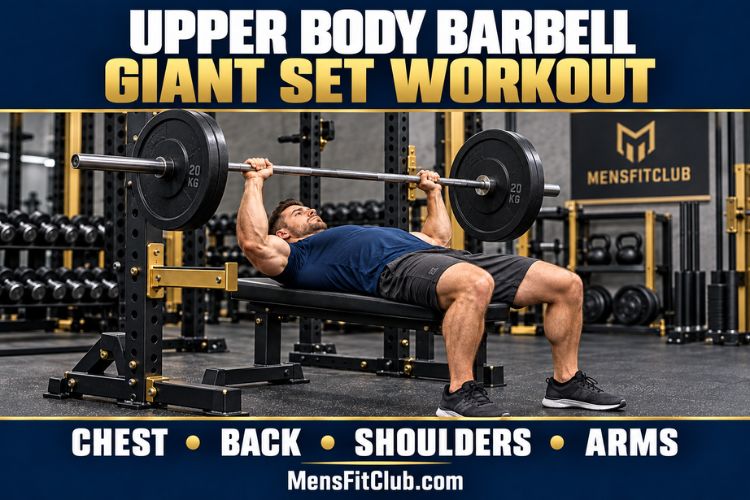
Upper Body Barbell Giant Set Workout for Muscle Growth
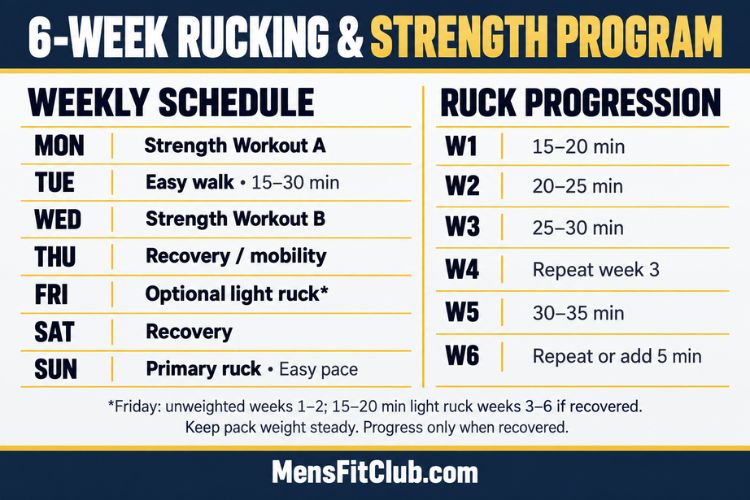
Barbell and Bodyweight Contrast Workout for Strength
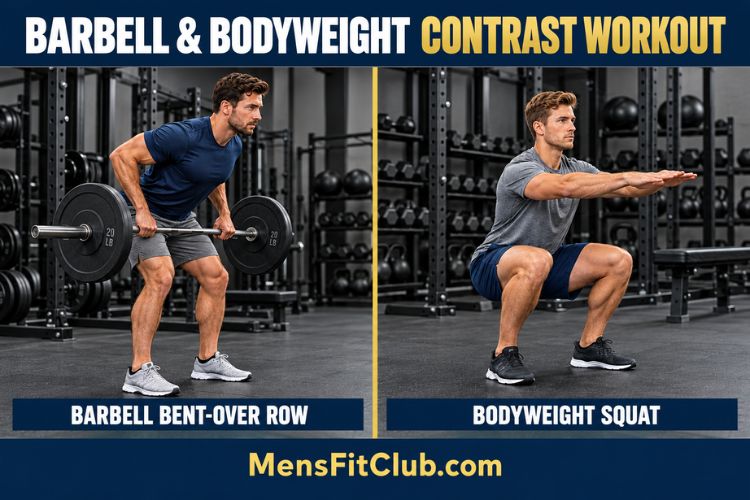
A barbell and bodyweight contrast workout combines two useful training qualities: the ability to produce force against resistance and the ability to move quickly. You perform a controlled barbell exercise, recover, and then complete a small number of explosive bodyweight repetitions using a similar movement pattern. A squat followed by a vertical jump is the clearest example. The squat challenges strength, while the jump emphasizes applying force quickly.
This approach gives experienced lifters a way to train beyond simply adding weight or chasing a muscle pump. It can also make familiar workouts more engaging without requiring an extensive equipment collection. With a barbell, appropriate plates, a rack, a bench, and a clear landing area, you can build a focused session that develops strength and practices athletic movement.
The key is understanding what contrast training requires. Heavy lifting and explosive movement both demand attention, sound technique, and adequate recovery. Rushing through the exercises turns the workout into a fatigue challenge and usually reduces the quality of the power work. The following guide explains how to organize the pairings, choose suitable loads, modify demanding exercises, and progress without sacrificing control.
What Is a Barbell and Bodyweight Contrast Workout?
A barbell and bodyweight contrast workout pairs a relatively heavy resistance exercise with a lighter, faster exercise. The movements usually share a broad pattern, such as squatting, pushing, or extending the hips. You alternate them set by set, allowing recovery between exercises rather than treating the pairing as a continuous circuit.
For example, you might perform three barbell back squats, rest several minutes, and then complete three controlled vertical jumps. After another recovery period, you repeat the pairing. The barbell supplies external resistance, while your bodyweight provides the load for the explosive movement. Both exercises contribute to the session, but they serve different purposes.
Contrast Workout Training Versus Traditional Supersets
A traditional superset often places two exercises together with minimal rest to save time or increase local muscular fatigue. Contrast training uses a different priority: maintain enough freshness to perform the second movement quickly and accurately. The exercises may be paired on paper, but that does not mean they should be performed immediately back to back.
A bench press followed by twenty slow push-ups is a strength and muscular endurance superset. A bench press followed, after recovery, by three crisp explosive push-ups fits the intent of contrast training more closely. Exercise selection, repetition count, and rest all determine whether the session emphasizes power or simply adds fatigue.
How Post-Activation Performance Enhancement Fits In
A demanding resistance exercise can sometimes temporarily improve performance in a subsequent explosive task after sufficient recovery. This effect is commonly called post-activation performance enhancement, or PAPE. However, the same lifting set also creates fatigue, and the balance between those responses varies between people and sessions.
Research on complex-contrast training uses varied protocols, and an immediate performance boost should not be assumed. You do not need to feel unusually explosive after every barbell set for the session to be useful. The practical objective is to train strength and fast movement with consistently good execution, rather than chase a guaranteed physiological effect.
Who Should Use This Contrast Workout?
This workout is best suited to lifters who already perform the selected barbell exercises confidently and can control the corresponding bodyweight movements. You should understand how to brace, use rack safeties, select manageable loads, and stop a set before technique deteriorates. Jumping variations also require enough balance and coordination to land consistently.
Beginners can develop those skills through ordinary strength sessions and separate movement practice before combining them. There is no need to rush into loaded squats and jumps just because the pairing looks athletic. A reliable squat, a strong push-up, and controlled landing mechanics provide a better foundation than enthusiasm alone.
Considerations for Men Over 40 and Over 50
Age alone does not determine whether contrast training is appropriate. Training history, joint tolerance, recovery, and familiarity with explosive exercise matter more for selecting an entry point. A man who has lifted and played sports consistently may tolerate a different session from someone returning after several inactive years.
Start with modest volume and choose movements that suit your current ability. Rapid calf raises, fast squat-to-toe raises, and forceful incline push-ups can introduce faster movement with less impact. These are useful modifications, although they do not reproduce the demands of jumping or airborne push-ups exactly. Progress based on performance and comfort rather than age-related expectations.
Equipment and Setup for Contrast Workout Training
You need a barbell with appropriate plates and a secure space for the selected lifts. Squatting requires a suitable rack with correctly positioned safeties. Bench pressing requires a stable bench and either correctly set safety arms or a capable spotter. Collars should secure the plates during working sets.
Reserve a separate, unobstructed area for bodyweight exercises. Do not jump inside a crowded rack, toward a loaded bar, or beside loose plates. Use a stable, nonslip floor and footwear appropriate for both lifting and landing. Organize the space before starting so moving between exercises does not involve navigating hazards.
Choosing Your Barbell Working Weight
Choose a load you can lift for the prescribed repetitions while leaving approximately two or three additional clean repetitions available. For experienced lifters, this may fall around 70–80 percent of a current one-repetition maximum, but percentages are only a rough starting point. You do not need to test a maximum before using the workout.
The final repetition should remain controlled without prolonged grinding. If you lose your brace, change your range of motion, or struggle to finish, reduce the weight. The purpose of the strength set is to provide a meaningful stimulus while preserving enough readiness for the following power exercise.
Warm Up Before a Barbell and Bodyweight Contrast Workout
Begin with three to five minutes of comfortable movement, such as brisk walking, cycling, or easy rowing. Follow with bodyweight squats, hip hinges, controlled reverse lunges, and gentle shoulder movements. Choose a few drills that prepare the patterns you will use rather than stretching every body part extensively.
Next, rehearse landing with a shallow athletic stance and controlled knee bend. If jumping is appropriate, perform two or three small jumps with a complete reset between repetitions. Practice your selected push-up variation at an easy level. The warm-up should help you feel coordinated and ready without causing a muscle burn or heavy breathing.
Use Progressive Barbell Warm-Up Sets
Before the squat, complete several gradually heavier sets while lowering the repetition count as the load increases. You might perform eight repetitions with an empty bar, five with a light load, and three with a moderate load before reaching your working weight. Adjust the sequence to your strength and experience.
Use the same principle before bench pressing and Romanian deadlifting, even though you are already generally warm. Each lift has different positioning and bracing requirements. Take enough time to establish those positions before asking your body to produce force under a challenging load.
The Full Barbell and Bodyweight Contrast Workout
This session uses three pairings: a squat and vertical jump, a bench press and explosive push-up, and a Romanian deadlift and standing broad jump. It is designed for an experienced lifter who already tolerates these movements. The broad jump is optional for your first sessions because it adds another landing demand.
Begin with two rounds of each pairing. Allow roughly 60–75 minutes including preparation and recovery; longer rest may extend the session. If you have less time, perform the first two pairings well and omit the third. Compressing recovery to complete every exercise undermines the purpose of the workout.
Pairing One: Barbell Back Squat and Vertical Jump
Perform three barbell back squats using a load that leaves two or three repetitions in reserve. Brace before each repetition, maintain your usual stable stance, and lower through a comfortable, repeatable range. Stand with strong intent while keeping the bar path and body position controlled.
Rest approximately three to five minutes, then perform three vertical jumps. Use a small countermovement, drive upward, and land with controlled knee and hip flexion. Reset fully between jumps so each repetition begins from a balanced position. Jump only as high as you can land reliably; maximum effort is unnecessary during introductory sessions.
After the jumps, rest two to three minutes before returning to the barbell. Start with two rounds. Add a third round only when strength repetitions remain consistent and the final jumps look as controlled as the first. If your knees collapse inward or landings become unstable, stop the jumping component.
Pairing Two: Barbell Bench Press and Explosive Push-Up Contrast Workout
Perform three barbell bench presses with a secure setup and two or three repetitions in reserve. Maintain stable contact with the bench, control the lowering phase, and press without bouncing the bar. Use your usual comfortable grip and keep the repetition path consistent.
Rest three to five minutes before completing three explosive push-ups. Choose a variation that allows a rigid trunk and reliable hand placement. Experienced trainees may briefly leave the floor, but clapping is unnecessary. Land with elbows able to bend and absorb the return rather than locking your arms straight.
For a gentler option, use a stable elevated surface and push upward forcefully while keeping your hands in contact. This emphasizes fast pressing intent with less landing stress. Rest two to three minutes after the bodyweight movement and repeat for two rounds. Stop if wrist, elbow, or shoulder discomfort develops.
Pairing Three: Barbell Romanian Deadlift and Standing Broad Jump
Perform four Romanian deadlifts with a moderate load and approximately three repetitions in reserve. Keep the bar close, soften your knees, and move your hips backward. Lower only as far as you can maintain a controlled spine and feel the movement through your hips and hamstrings.
Rest three to five minutes, then perform two standing broad jumps if you already have experience with this exercise. Jump forward a manageable distance and land with balance and controlled knee bend. Reset after each repetition. Prioritize the quality of the landing over distance and avoid repeatedly reaching for a personal best.
Rest two to three minutes before repeating the pairing. Two rounds are sufficient initially. The Romanian deadlift and broad jump both involve hip extension, although their mechanics are not identical. If horizontal jumping is unfamiliar or your landing area is limited, omit this pairing until you can practice it safely.
How Long Should You Rest Between Contrast Workout Exercises?
Use three to five minutes between the barbell set and its explosive partner as a practical starting point. Some lifters need longer, particularly after heavier loading. Recovery requirements vary, so there is no universal interval that guarantees better jumping or pushing performance.
Check readiness instead of relying only on the clock. Your breathing should settle, your muscles should feel capable of producing force, and your movement should remain coordinated. If the explosive exercise feels sluggish, try more rest or less barbell weight. If quality still declines, finish that pairing for the day.
Why Short Rest Can Reduce Workout Quality
Power exercise depends on producing force quickly. Accumulated fatigue can reduce speed even while you remain capable of completing additional repetitions. A jump that barely leaves the floor or a push-up that turns into a slow press does not provide the same practice as a crisp repetition.
Avoid filling recovery periods with burpees, hard rowing, or extra leg work. Light walking and equipment adjustments are reasonable, but the break should remain restorative. If conditioning is a separate goal, train it elsewhere in the week or after a shortened strength session when appropriate.
Lower-Impact Bodyweight Alternatives
You can modify the session when jumping is unsuitable, provided you understand the change in training emphasis. Replace vertical jumps with quick squat-to-toe raises: lower into a shallow squat, stand rapidly, and rise onto the balls of your feet without leaving the floor. Reset between repetitions.
For the upper body, use fast incline push-ups against a stable bench or rail. For hip extension, a controlled bodyweight glute bridge with a brisk lifting phase offers a simpler option. These choices preserve movement practice and intent, but they should not be described as equivalent substitutes for plyometric performance training.
Build Landing Skill Before Adding Jump Volume
If you are new to jumping, practice a small number of low jumps separately from demanding lifting. Learn to absorb the landing without collapsing, losing balance, or immediately bouncing into the next repetition. Consistency matters more than height or distance at this stage.
Increase only one demand at a time. A higher jump, a longer jump, and more total jumps all change the workload. Do not introduce all three simultaneously. Persistent joint discomfort is a reason to change the exercise and seek individual guidance, rather than assume you simply need tougher conditioning.
A Six-Week Contrast Workout Progression
Use this workout once weekly initially. Keep another strength day in your schedule if it fits your recovery, but avoid placing demanding lower-body sessions on consecutive days. The following progression is a coaching framework, not a requirement to increase difficulty every week.
Track the barbell load, completed repetitions, rest periods, and the quality of the bodyweight movement. Record whether landings stayed stable and whether explosive repetitions maintained speed. These observations help you make a better decision than relying on soreness or how exhausted you felt afterward.
Weeks One and Two: Establish Consistent Technique
Perform two rounds of the squat pairing and two rounds of the bench pairing. Include the Romanian deadlift pairing only if both exercises are already familiar and the additional volume does not reduce quality. Keep loads conservative and explosive repetitions comfortably within your ability.
Repeat the same session in week two if your first exposure went well. There is no need to add weight immediately. Use the second session to make your setup, recovery, and execution more consistent. Finishing with some capacity left is appropriate for this phase.
Weeks Three and Four: Increase One Variable
If all repetitions remain controlled, add either a small amount of barbell weight or one additional round to the first pairing. Keep the explosive repetition count unchanged. Repeat that structure in week four before considering another increase.
If you have introduced the Romanian deadlift pairing, keep it at two rounds while adapting to the total workload. Avoid increasing barbell weight and jump volume together. Small, observable changes make it easier to identify what helps and what creates excessive fatigue.
Weeks Five and Six: Consolidate and Review
In week five, use two or three rounds per pairing according to your established tolerance. Maintain the same quality standards and avoid maximum attempts. Improved speed, cleaner landings, or better control at the same load all count as useful progress.
For week six, reduce the session to two rounds per pairing and use slightly lighter barbell loads if fatigue has accumulated. Compare your performance with the opening weeks. Decide whether another block is worthwhile, whether to change one exercise, or whether ordinary strength training better matches your next goal.
Fitting Contrast Workout Training Into Your Weekly Routine
A workable schedule places the contrast workout on Monday, a conventional strength session on Thursday, and comfortable aerobic activity on other days. This gives you recovery between demanding lifting sessions. Adjust the arrangement around sports, physically demanding work, and your existing training rather than adding the workout automatically.
If you already lift three or four times weekly, replace one session with contrast training instead of stacking it on top. Count the barbell sets toward your weekly strength volume. Count jumps and explosive push-ups as additional physical demands, even though their repetition totals appear small.
Supporting Muscle Growth Alongside Power
Contrast training can contribute useful resistance work, but its low-repetition structure may not supply all the volume you want for muscle growth. Add conventional rows, pull-ups, split squats, or other accessories elsewhere in your week according to your goals and recovery.
Keep accessory work separate from the rest periods within contrast pairings. If you include it afterward, use a modest amount and avoid turning the session into an exhausting full-body marathon. A focused power session works best when its central purpose remains clear.
Common Contrast Training Mistakes
The most common mistake is making the barbell exercise too heavy. A grinding squat may feel impressive, but it can leave you poorly prepared for the jump. Another mistake is extending explosive sets until they become conditioning work. Three good repetitions usually serve this session better than ten increasingly slow ones.
Poor exercise matching also reduces clarity. Choose partners that share a useful movement pattern rather than combining exercises simply because they are available. Finally, avoid treating every workout as a test. Repeated practice with manageable demands creates a more sustainable plan than constantly chasing heavier lifts and longer jumps.
Frequently Asked Questions
Can Beginners Do a Barbell and Bodyweight Contrast Workout?
Beginners should first build confidence with basic strength exercises and bodyweight control. They can practice easy jumps or fast movements separately when appropriate. Combining challenging barbell loading with explosive exercises becomes more useful once technique and recovery habits are established.
Does Contrast Training Build Muscle?
The barbell portion can support muscle growth when it contributes sufficient challenging work to your overall program. However, this workout prioritizes strength and power practice. If hypertrophy is your main objective, maintain suitable conventional training volume rather than expecting low-repetition jumps to replace it.
Should Every Bodyweight Repetition Be Maximum Effort?
Use strong, fast intent while staying within your ability to control the movement. During early sessions, leave room below your maximum jump height or distance. Stop when speed noticeably drops or your landing changes, even if you could complete more repetitions.
How Often Should You Perform Contrast Training?
Once weekly is a sensible starting point for this template. Experienced trainees may eventually use two appropriately adjusted sessions, but that requires attention to their other lifting and sport demands. Increase frequency only when you consistently recover and maintain exercise quality.
Build Strength and Power With Consistent Practice
A barbell and bodyweight contrast workout offers a structured way to combine challenging lifting with faster movement. Keep the barbell sets controlled, the explosive sets brief, and the recovery periods long enough to support good performance. Choose variations that match your experience and available space.
Start with two pairings, record how they feel, and progress one variable at a time. Over the following weeks, look for steadier technique, reliable landings, and better movement at manageable loads. Those repeatable improvements provide a stronger foundation for long-term training than a single exhausting workout.
To complement your barbell and bodyweight contrast workout, refine your lifting form with our 4-Week Barbell Technique Program and explore foundational movement patterns in our Full Body Barbell Compound Lifts Workout. Develop your bodyweight exercise base with our Full Body Weight Workout for Men, review pressing variations in our 35-Minute Bodyweight Chest Workout, and strengthen your understanding of the hip hinge with our Romanian Deadlifts Workout Guide. These guides provide supporting exercise ideas while you retain the contrast workout’s low repetitions and generous recovery periods.


Most Recommended

Subscribe to our Newsletter
Stay up to date on the latest men’s health, fitness and lifestyle trends and tips.
About Us
Men’s Fit Club was started with the goal of empowering men to get the most out of their lives. This meant going beyond exercise and diet tips to really address the broad range of issues that men face on a daily basis – topics like recreation, finding love, sexual health and even sound fashion advice.
Quick Links
© COPYRIGHT MEN'S FIT CLUB 2026. All Rights Reserved