

Rucking Workout for Men Over 50: Beginner Plan

Progressive Overload Calisthenics Without Weights

Upper Body Barbell Giant Set Workout for Muscle Growth
Rucking Workout for Men Over 50: Beginner Plan
Rucking is walking while carrying weight in a backpack. For men over 50, it offers a practical way to make familiar walks more challenging without turning every cardio session into a run. You can begin with a short neighborhood route, a comfortable backpack, and a modest load, then gradually build your ability to walk farther while carrying it. The best rucking workout for men over 50 starts with your current fitness rather than your age alone. A regular hiker and a man returning to exercise after several inactive years need different starting points. Your walking tolerance, balance, joint comfort, and recovery should guide the plan. Carrying more weight is optional; moving consistently and comfortably is the foundation.
This guide explains how to choose equipment, select a sensible starting load, complete a beginner workout, and follow a six-week progression. The sample program is a conservative training template, not a clinically validated prescription or a requirement to reach a particular pack weight.
What Is Rucking, and How Does It Work For Men Over 50?
Rucking takes ordinary walking and adds external resistance. The backpack creates extra work as you move your body and its contents along the route. Depending on the load, pace, terrain, and your fitness, a familiar walk may feel noticeably more demanding.
For recreational fitness, rucking does not require military distances, heavy packs, timed marches, or running. Walking at a manageable pace with a small, secure load is enough to introduce the activity. The goal is to finish feeling that you trained, while retaining enough energy and comfort for the rest of your day.
Rucking Versus Regular Walking
Regular walking is the best starting point if you cannot yet walk comfortably without added weight. A backpack should increase the challenge of an established habit, rather than make an already difficult activity harder. Build confidence on an unloaded route before introducing resistance.
Rucking also changes what limits a session. Your breathing may remain comfortable while your feet, shoulders, or lower back become tired. Pay attention to those areas instead of judging the workout only by heart rate. A load that feels light for five minutes may feel excessive after twenty.
Rucking Versus Strength Training For Over 50
Rucking develops the ability to sustain walking under load. It can challenge your legs and the muscles that help support the pack, but it does not provide the same controlled resistance or movement variety as a strength workout.
Keep squats, hinges, pushing, and pulling exercises in your routine. Treat rucking as a useful cardio and carrying activity alongside strength training. You do not need to replace productive gym sessions simply because carrying a backpack makes walking harder.
Why Men Over 50 May Enjoy Rucking
One advantage of rucking is its simplicity. There is no complicated choreography, and the workout can fit into time you already spend walking. You can train alone, walk with a friend, or follow a familiar loop near home.
Its flexibility also helps with consistency. On a well-rested day, a light pack can add challenge. On a tired day, you can shorten the route or leave the weight at home. This makes the routine easier to adapt around work, travel, and other training.
A Practical Way to Build Aerobic Activity With Rucking For Over 50
Rucking can contribute to your aerobic activity when it raises your breathing to an appropriate intensity. The backpack itself does not guarantee a cardiovascular workout; the effort you experience matters. A slow stroll with a light load may remain light activity, while a brisk loaded walk may be moderate or harder.
The CDC recommends at least 150 minutes of moderate aerobic activity per week, or an equivalent amount of vigorous activity, alongside muscle-strengthening work. For adults 65 and older, its guidance also includes balance activity. These are overall activity goals, not instructions to complete every minute with a weighted backpack.
Carrying Capacity for Everyday Life
Walking with a manageable pack provides practice for tasks such as carrying a daypack on a trip or transporting supplies across a park. It gives you a concrete training goal: cover a familiar route while staying comfortable and maintaining your stride.
Avoid treating rucking as a guaranteed solution for posture, bone density, or muscle loss. Those outcomes depend on more than carrying a backpack, and evidence from walking or resistance training cannot automatically establish the same benefits for a specific rucking routine.
Who Should Start With Unloaded Walking?
Begin without a pack if you are rebuilding basic fitness, feel unsteady, or develop symptoms during ordinary walking. Establish a comfortable baseline before adding another demand. Even ten minutes of unloaded walking can be a useful first step.
If you have known heart disease, uncontrolled blood pressure, osteoporosis with fracture risk, a recent operation, significant back or joint problems, or unexplained exercise symptoms, discuss loaded walking with your clinician or physical therapist. The appropriate route, load, and progression may need individual adjustment.
Recognize Symptoms That Require Stopping Rucking For Over 50
Stop the session for sharp or increasing pain, numbness, new weakness, dizziness, or a change in gait. Do not continue simply because you are close to completing the route. Remove the pack and reassess rather than using discomfort as a measure of effort.
Chest pressure, fainting, or severe or unusual shortness of breath require prompt medical attention. These are different from the expected increase in breathing during exercise. Choose early routes where you can stop easily and get help if needed.
How Much Weight Should Men Over 50 Carry?
There is no universal starting weight for men over 50. Your body size matters, but it does not fully describe your conditioning, injury history, or tolerance for carrying a pack. A body-weight percentage should never override comfortable movement.
For an already comfortable walker who is new to rucking, approximately five pounds of total carried load can serve as a cautious trial. That is an example, not a minimum or a proven safe threshold. Some men should use less, including only an empty pack, while experienced hikers may already tolerate more.
Count the Entire Pack Rucking For Over 50
Weigh the backpack with its contents, including water. A five-pound weight plus a heavy bag and a full bottle produces more than five pounds of carried load. Keeping the calculation honest makes it easier to compare sessions and understand what changed.
Choose a load that allows your usual stride, comfortable shoulders, and steady breathing. If you lean forward noticeably, shorten your steps because of discomfort, or keep adjusting the straps, reduce the weight. The first sessions should feel deliberately manageable.
Increase Time Before Increasing Weight Rucking For Over 50
Keep the starting load stable while learning how your body responds. Completing a slightly longer walk with comfortable movement is often a more useful progression than adding another weight immediately.
Change only one training variable at a time. You might add five minutes, introduce a small increase in load, or try a gentle hill. Combining all three makes it harder to identify what caused excessive fatigue. There is no deadline for reaching a heavier pack.
Equipment for a Comfortable Rucking Workout After 50
You do not need an expensive setup to begin, but the backpack must fit securely and hold its contents in place. Wide, padded shoulder straps and a stable shape are useful. A suitable hip belt may improve comfort by sharing some load, depending on the pack design and fit.
Try the loaded bag at home before taking it outdoors. Walk around, turn, and step over a low threshold. The contents should remain stable, and the straps should not dig into your neck or restrict breathing.
Pack the Weight Securely
Use a padded, secured load that stays close to your back. Avoid loose metal weights or hard edges pressing against your spine. Follow the backpack manufacturer’s loading guidance, especially when using a dedicated weight compartment.
Do not stack the weight so high that the pack becomes unstable. Water containers can provide adjustable resistance, but secure them against movement and leakage. Check the bag’s condition, seams, and closures before each session.
Choose Familiar Footwear and Routes: Rucking For Over 50
Wear shoes that already work well for your walks. Comfort, traction, and fit matter more than a particular style. Leave enough room for your toes, and use socks that minimize rubbing. Test new footwear on unloaded walks first.
Start on flat, predictable ground. Smooth park paths and neighborhood loops make it easier to assess the pack without also managing rocks, steep descents, or slippery surfaces. A short loop offers the option to finish early without a long walk home.
The Beginner Rucking Workout for Men Over 50
This introductory session takes approximately twenty to twenty-five minutes, including unloaded walking before and after the ruck. If that exceeds your current comfortable walking duration, shorten it. The suggested times are starting examples rather than targets you must complete.
Use the same flat route for your first few sessions. Familiar conditions make it easier to notice how load affects your breathing, stride, and recovery. Check your shoes, secure the pack, and choose a time when heat and weather are manageable.
Warm Up for Five Minutes Without the Pack
Walk slowly for five minutes, gradually approaching your normal pace. Let your arms swing naturally and keep your shoulders relaxed. You can add a few comfortable ankle movements or gentle standing marches before putting on the bag.
The warm-up also serves as a readiness check. If unloaded walking already produces unusual pain or fatigue, skip the pack that day. You can complete a short easy walk or stop, depending on how you feel.
Ruck for Ten to Fifteen Minutes Rucking For Over 50
Put on your light pack and walk at a comfortable pace. Begin easier than you think necessary. After several minutes, reassess your feet, shoulders, breathing, and posture before deciding whether to continue the full planned duration.
Use the talk test to monitor intensity. During moderate activity, you can generally talk but would find singing difficult; needing frequent pauses to finish a sentence suggests a harder effort. Beginner sessions can remain easier than moderate while you establish tolerance.
Cool Down and Check Your Response
Remove the backpack and finish with five minutes of easy walking. Notice whether any discomfort remains once the load is gone. Check your feet for rubbing and make a quick note of the duration, total pack weight, and overall effort.
Reassess later that day and the following morning. Mild muscular fatigue can occur, but persistent pain, limping, or symptoms that interfere with normal activities call for reducing the training demand and seeking assessment if they continue.
Six-Week Rucking Plan for Men Over 50
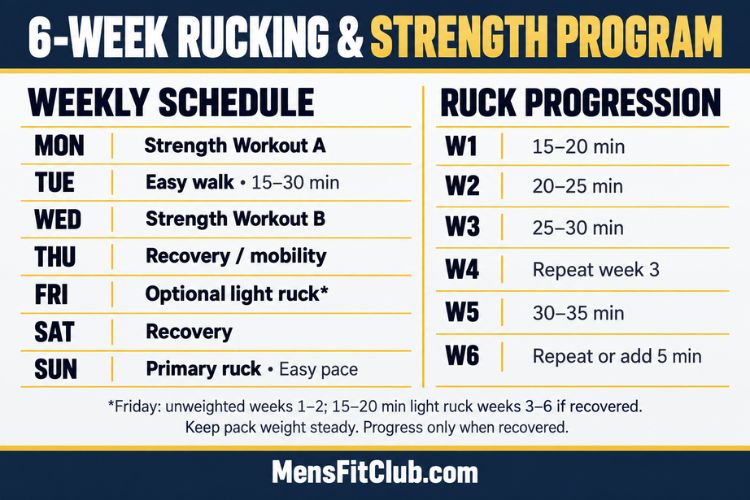
This sample progression uses two weekly rucking sessions, with an optional third session later. Leave at least one day between loaded walks initially. All times below refer to the loaded portion; add your unloaded warm-up and cooldown separately.
Only progress when the previous sessions and next-day response were comfortable. Repeat a week, shorten a session, or return to unloaded walking whenever needed. The calendar organizes the plan; your response determines the pace.
Week 1: Learn How the Pack Feels
Complete two loaded walks of ten to fifteen minutes using your light trial load. Keep the route flat and the pace easy. Concentrate on a stable pack, natural steps, and relaxed breathing.
Do not add weight between these first sessions. Your main task is to learn whether the bag fits and whether your body tolerates the added demand. Adjust the straps or contents before extending the distance.
Week 2: Add a Little Walking Time Rucking For Over 50
If week one was comfortable, complete two loaded walks of fifteen to twenty minutes with the same weight. Keep the pace and route similar. Adding time is enough of a change for this week.
If your feet or shoulders become uncomfortable before the planned finish, end the loaded portion early. Record when the discomfort started. That information helps you choose a better duration for the next session.
Week 3: Build Repeatable Sessions
Aim for two loaded walks of twenty to twenty-five minutes if recovery remains good. An optional third outing can be an easy unloaded walk. You do not need to increase both frequency and loaded duration.
Consistency matters more than a single impressive session. Finishing both planned rucks comfortably offers a better foundation than completing one long walk that leaves you too sore to train again.
Week 4: Choose One Small Progression Rucking For Over 50
Keep two sessions at approximately twenty-five minutes. Choose either a small duration increase or a modest load increase for one session, provided earlier training felt easy. For example, add a few minutes or one to two pounds if your setup permits.
You can also keep everything unchanged. Maintaining a useful routine is progress when it fits well alongside strength training and daily life. Avoid adding hills during the same week you increase pack weight.
Week 5: Extend One Comfortable Walk
Complete one shorter session of twenty to twenty-five minutes and one longer session of approximately thirty minutes. Keep the longer walk at a conversational pace and use a route with easy stopping points.
An optional third loaded session should remain short and easy, and only makes sense if two sessions feel well tolerated. Additional unloaded walking is an equally useful choice for increasing overall activity.
Week 6: Consolidate Your Routine
Aim for two or three sessions of twenty to thirty-five minutes, adjusting each to your recovery. You might retain one longer outing and one shorter walk. Continue using a comfortable load rather than testing a maximum.
Review what improved: easier breathing on the same route, fewer pack adjustments, better consistency, or more comfortable walking time. Choose a repeatable weekly routine for the next month instead of automatically escalating the challenge.
Combine Rucking For Over 50 With Two Strength Workouts
An example schedule places full-body strength training on Monday and Thursday, with rucking on Tuesday and Saturday. Use Wednesday and Friday for easy walking, brief mobility work, or rest, and keep Sunday flexible.
Move the sessions when needed. If Tuesday’s ruck repeatedly feels difficult after Monday’s leg work, use an unloaded walk or rearrange the week. Your schedule should support good sessions rather than force you to carry fatigue into every workout.
Strength Session A
After warming up, perform a chair squat or goblet squat for two sets of eight to twelve repetitions. Follow with two sets each of a dumbbell row, an incline push-up, and a light hip hinge. Finish with comfortable calf raises and a short core exercise.
Use controlled repetitions and stop with approximately two or three good repetitions still available. Select variations you can perform confidently. Rest enough between sets to maintain technique rather than turning the session into a race.
Strength Session B
Use a low step-up or supported split squat, a glute bridge or suitable deadlift variation, a row, and a comfortable pressing movement. Begin with one or two sets of each exercise for approximately eight to twelve repetitions, adjusted to your ability.
Add brief balance practice near a stable support if appropriate. Keep balance work unloaded and separate from the ruck. The strength sessions should complement walking without producing soreness that changes your gait for several days.
Technique, Recovery, and Common Mistakes
Walk with your eyes ahead, shoulders relaxed, and steps close to your usual length. Let your arms move naturally. A small adjustment under load can occur, but pronounced bending, constant shrugging, or painful stiffness suggests the setup needs attention.
Shorten your steps slightly on slopes and slow down on descents. Downhill walking can feel mechanically demanding even when breathing is easy. Introduce hills only after flat routes feel comfortable, and reduce another variable when terrain becomes harder.
Avoid Turning Every Ruck Into a Test
The most common mistake is making the pack heavier because the first few minutes feel easy. Another is increasing speed, duration, and terrain difficulty together. Both can produce more fatigue than expected by the end of the route.
Avoid running with the backpack during this beginner program. Loaded running adds demands that are unnecessary for the goals here. Also resist comparison with military standards or another walker’s load; neither establishes the right dose for you.
Support Recovery Between Sessions
Maintain regular meals, adequate fluids, and a consistent sleep routine. Hot weather, poor sleep, and demanding strength workouts can change how a familiar ruck feels. Respond by adjusting the session rather than insisting on your usual numbers.
Keep a simple log of weight, loaded minutes, effort, and next-day comfort. If two sessions in a row leave you unusually tired or sore, reduce duration or load and reassess. Persistent or worsening symptoms deserve professional evaluation.
Frequently Asked Questions About Rucking After 50
Is Rucking Better Than Walking for Weight Loss?
Carrying weight may increase the energy demand of a comparable walk, but it does not guarantee greater long-term weight loss. Eating habits, total activity, and consistency still matter. Choose the version of walking you can sustain comfortably without undermining recovery.
Can Over 50 Do Rucking Every Day?
Daily loaded walking is unnecessary for beginners. Start with two separated sessions and use unloaded walks between them if comfortable. Consider more frequent rucking only after you understand your recovery and have a clear reason to add it.
Is a Weighted Vest the Same as a Backpack?
A vest distributes weight differently, while a backpack places its load mainly behind you. Comfort and suitability depend on fit and individual tolerance. Either adds resistance, but you should test a different carrying setup with a short, light session.
What If You Miss a Week?
Resume with an easier session rather than doubling your workload. After illness or an extended break, begin with unloaded walking and rebuild as needed. Consistent training over months matters more than completing every scheduled session in six weeks.
Make Rucking a Sustainable Habit After 50
A productive rucking workout for men over 50 is one you can repeat with comfortable movement and reliable recovery. Start with a light, secure pack, choose a familiar route, and build time gradually. Keep strength training and unloaded walking in the weekly routine.
For your first outing, make the task simple: warm up, walk briefly with a manageable load, and assess how you feel afterward. Let that response guide the next session. Small, repeatable improvements can build a routine that supports an active life well beyond the initial program.
To complement your rucking workout for men over 50, explore our Beginner Rucking Workout Plan for guidance on getting started, and review Strength Training After 50: Sets Reps And Recovery to structure your resistance sessions. Add dedicated stability work with our 3-Day Strength And Balance Program For Older Men, use the 10-Minute Dumbbell Workout For Men Over 50 when time is limited, and explore our Strength Training Workout For Longevity for a broader approach to staying active and capable.


Most Recommended

Subscribe to our Newsletter
Stay up to date on the latest men’s health, fitness and lifestyle trends and tips.
About Us
Men’s Fit Club was started with the goal of empowering men to get the most out of their lives. This meant going beyond exercise and diet tips to really address the broad range of issues that men face on a daily basis – topics like recreation, finding love, sexual health and even sound fashion advice.
Quick Links
© COPYRIGHT MEN'S FIT CLUB 2026. All Rights Reserved