

High Protein Beef and Pumpkin Chili: A Hearty Recipe
When to Reduce Sets Reps or Weight During a Workout
3 Day Strength Plan for Men With Desk Jobs | MensFitClub
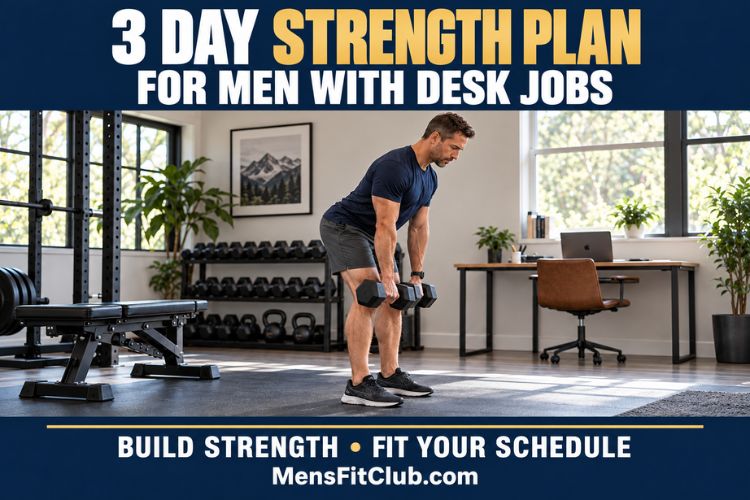
A desk job can make exercise feel like another appointment you cannot fit into your calendar. You spend the morning answering messages, work through lunch, and finish the day with little motivation to train. Yet building strength does not require daily gym visits or complicated workouts. A well-organized three-day routine gives you a realistic way to train your entire body while leaving room for work, family, and recovery. This 3 day strength plan for men with desk jobs combines fundamental lifting patterns with manageable training volume. You will squat, hinge, push, pull, and train your trunk across three nonconsecutive sessions. Upper-back exercises, single-leg movements, and controlled mobility drills receive particular attention because they complement a routine that involves many hours seated at a computer.
The goal is to become stronger through repeatable workouts. This is not a promise to reverse every effect of sitting, correct your posture permanently, or eliminate discomfort. It is a practical training framework that helps you develop physical capacity while building a more active week. Start with suitable loads, keep your technique consistent, and let progress accumulate over time.
How the 3-Day Strength Plan Schedule Works
Train on Monday, Wednesday, and Friday, or choose any three days that usually allow at least one day between sessions. Tuesday, Thursday, and Saturday work equally well. Each workout trains the full body, so you do not need a separate chest day, back day, or leg day to cover the major movement patterns.
Allow approximately 45–60 minutes per session, including your warm-up. Your exact workout length depends on equipment availability and rest periods. When your schedule is tighter, use the shortened version later in this article instead of rushing every exercise or sacrificing technique.
Equipment You Need 3 Day Strength Plan
The main version uses dumbbells, a bench, and access to a cable machine or resistance band. A leg press or goblet squat can cover the squat pattern, while dumbbell Romanian deadlifts provide the hinge. Most exercises also have straightforward home substitutions, making this a flexible strength workout for office workers rather than a program tied to one gym setup.
Choose equipment that is available consistently. Repeating familiar exercises makes it easier to measure progress. Changing every movement each week can turn training into a collection of unrelated workouts, making it harder to tell whether your strength and control are improving.
Effort, Rest, and Repetitions
For most working sets, finish with about two or three good repetitions remaining. That means you could perform a few more reps without shortening your range of motion or changing your technique. New lifters can begin with an even larger margin while learning the exercises.
Rest about two minutes after demanding squat, hinge, and pressing sets. Take 60–90 seconds after smaller accessory movements and trunk exercises. Add more rest when needed to repeat a set with control. Breathlessness alone should not decide whether a strength workout is effective; the quality of your repetitions matters more.
Warm Up Before Every 3 Day Strength Workout Plan
Use the first six to eight minutes to transition from sitting to lifting. Begin with two minutes of comfortable walking, cycling, or marching. Then perform six to eight controlled bodyweight squats, eight unloaded hip hinges, and six gentle upper-back rotations per side. Finish with a light set of rows and a few easy repetitions of your first exercise.
The warm-up should leave you ready to train, not exhausted. Choose comfortable ranges of motion and avoid forcing stretches. If a movement feels awkward initially, reduce its depth or load and build gradually. A warm-up is preparation for the session, not a test of how flexible you can become in five minutes.
Use Ramp-Up Sets for Your First Lift
Before your first demanding lift, perform one or two progressively heavier practice sets. For example, start your goblet squat with a light dumbbell for eight reps, then use a moderate dumbbell for five reps before beginning your working sets. These sets help you check your technique and assess how the movement feels that day.
Practice sets do not count toward the prescribed working sets. Their purpose is to bridge the gap between general movement and loaded training. Keep them easy enough that they do not reduce your performance once the actual workout begins.
Day 1: Full-Body Strength Foundations
The first session establishes the main patterns: a squat, horizontal press, row, hip hinge, and controlled trunk exercise. Perform the movements in the order below. Begin with two working sets per exercise if you are new to lifting; work toward the full prescription as your recovery and confidence improve.
Goblet Squat: 3 Sets of 6–10 Reps Strength Plan
Hold one dumbbell close to your chest and stand with your feet in a comfortable position. Bend your knees and hips together, lowering between your legs while keeping your feet grounded. Stand by pushing through the floor. Use a depth that you can control without pain or losing balance.
The goblet squat is useful because it is relatively simple to set up and easy to adjust. If holding the dumbbell becomes the limiting factor, use a leg press or another familiar squat variation. Progress should come from stronger, cleaner repetitions rather than forcing a heavier weight into an unstable position.
Dumbbell Bench Press: 3 Sets of 6–10 Reps
Lie on a bench with your feet supported on the floor. Lower the dumbbells with control, keeping your elbows at a comfortable angle to your torso. Press upward without bouncing at the bottom. Stop the descent before your shoulders move into a position you cannot control comfortably.
If you train at home without a bench, use a dumbbell floor press. An incline push-up is another option, especially for beginners. Pick one pressing movement and keep it consistent for several weeks so improvements in repetitions and load are easier to track.
Chest-Supported Dumbbell Row: 3 Sets of 8–12 Reps Strength Plan
Set an adjustable bench at a moderate incline and rest your chest against it. Pull the dumbbells toward your sides, pause briefly, and lower them without swinging. Let your shoulder blades move naturally rather than holding them tightly together throughout the entire set.
Chest support reduces the need to maintain a bent-over position while rowing. If that setup is unavailable, use a one-arm row with one hand supported on a bench. Complete equal repetitions on both sides, and keep your torso steady instead of twisting to lift the weight.
Dumbbell Romanian Deadlift: 2 Sets of 8–10 Reps
Hold the dumbbells in front of your thighs and soften your knees. Push your hips backward while keeping the weights close to your legs. Lower only as far as you can maintain control, then stand by bringing your hips forward. The movement should come mainly from the hips rather than repeated knee bending.
You do not need to reach the floor. Your range depends on your proportions, mobility, and technique. Start light, especially if you have spent little time practicing hip hinges. A controlled, shorter movement is a better starting point than reaching farther by rounding or straining.
Dead Bug: 2 Sets of 6–8 Reps Per Side 3 Day Strength Plan
Lie on your back with your arms raised and your hips and knees bent. Slowly extend one leg and the opposite arm while keeping your trunk steady. Return to the starting position and switch sides. Shorten the movement if you cannot control it comfortably.
Move deliberately and breathe throughout the set. This exercise is not about touching the floor with your heel at any cost. It is about maintaining control as your limbs move, a useful complement to the larger loaded exercises in this session.
Day 2: Hinge Strength and Single-Leg Control
The second workout emphasizes the back of your legs, a vertical pull, and unilateral lower-body training. It also includes a press and a carry, keeping the session balanced. Use the same effort guidelines as Day 1 and avoid increasing loads simply because the exercises are different.
Dumbbell Romanian Deadlift: 3 Sets of 6–10 Reps Strength Plan
Repeat the hinge pattern from the first workout, this time as your opening exercise. Because you are less fatigued, you may be able to use slightly more weight, but only if your movement remains consistent. Keep a soft knee bend and avoid leaning backward at the top.
Beginners can repeat the same weight used on Day 1. More experienced lifters can record each day’s performance separately. The goal is gradual improvement within the session’s assigned repetition range, not an obligation to lift heavier every time you touch a dumbbell.
Lat Pulldown: 3 Sets of 8–12 Reps
Take a comfortable grip and pull the handle toward your upper chest while keeping your torso mostly steady. Return it upward under control. Avoid jerking the handle down or leaning far backward to finish a repetition. Use a load that allows a smooth pull through your available range.
At home, substitute a securely anchored resistance-band pulldown. Check the anchor and band before use. If a safe overhead setup is unavailable, perform another supported row. It is better to use a reliable pulling movement than improvise with an unstable attachment.
Supported Split Squat: 2 Sets of 8–10 Reps Per Side 3 Day Strength Plan
Stand in a staggered stance and hold a stable support lightly with one hand. Bend both knees to lower your body, then push through the front foot to rise. Adjust your stance until the movement feels balanced and comfortable. Start with body weight before adding a dumbbell.
Support is a practical training tool. It allows you to focus on your legs instead of spending the entire set trying to stay upright. Complete both sides before resting, and use the same manageable range of motion on each side rather than forcing identical depth.
Dumbbell Overhead Press: 2 Sets of 8–10 Reps
Press the dumbbells overhead from a standing or seated position. Keep your ribs and pelvis reasonably stacked, and avoid leaning backward to complete the lift. A neutral grip, with palms facing inward, may feel more comfortable for some lifters.
If overhead pressing is uncomfortable, substitute an incline dumbbell press or incline push-up. Overhead work is not mandatory for this plan to be useful. Choose a pressing variation that you can perform steadily and progressively rather than repeatedly testing a position that bothers you.
Suitcase Carry: 2 Sets of 20–30 Seconds Per Side 3 Day Strength Plan
Hold one dumbbell at your side and walk slowly with a tall, comfortable stance. Resist leaning toward or away from the weight. Switch hands and repeat. Choose a clear path and a load that allows steady steps without excessive gripping or shrugging.
If you lack space, perform a stationary suitcase hold for the same duration. Breathe normally and set the weight down before your position deteriorates. Increase the load gradually once both sides feel controlled for the full time.
Day 3: Balanced Strength and Upper-Back Work
The third session returns to a squat pattern and horizontal pressing while including another row, a glute-focused movement, and side-plank work. This structure gives you repeated practice without making every workout identical. Keep the final session challenging but manageable enough to recover before the next week.
Leg Press or Goblet Squat: 3 Sets of 8–12 Reps Strength Plan
For the leg press, keep your back supported and use a comfortable foot position. Lower the platform only as far as you can maintain control and keep your pelvis stable. Press smoothly without bouncing at the bottom or forcefully locking your knees at the top.
If you prefer the goblet squat, repeat Day 1’s technique with the slightly higher repetition range. Using the same squat twice weekly is perfectly reasonable. You do not need additional complexity to make the program effective or suitable for a busy work schedule.
Incline Dumbbell Press: 3 Sets of 8–12 Reps
Use a modest bench incline and lower the dumbbells with control. Keep your feet planted and press without shrugging or lifting your torso away from the bench. Choose a load that lets the final repetition look similar to the first.
A dumbbell floor press or incline push-up can replace this movement at home. If your pressing performance is lower after a demanding workweek, maintain your usual weight or reduce it slightly. Consistent execution matters more than forcing a personal best on Friday evening.
Seated Cable Row: 3 Sets of 8–12 Reps Strength Plan
Sit with your feet supported and pull the handle toward your torso. Keep the movement smooth and avoid repeatedly rocking backward. Allow your arms to extend during the return without collapsing into an uncontrolled position. Use a grip that feels comfortable for your shoulders and wrists.
A supported dumbbell row is a suitable substitution. This second weekly horizontal-row session provides additional pulling practice, but it should not be described as a guaranteed posture correction. Stronger pulling muscles expand what you can do; your work habits and movement variety still matter.
Glute Bridge: 2 Sets of 10–15 Reps
Lie on your back with your knees bent and feet planted. Raise your hips until your torso and thighs form a comfortable line, then lower slowly. Avoid lifting higher by excessively arching your lower back. Begin with body weight and add resistance only when the movement feels controlled.
If using a dumbbell, position it securely across your hips with padding as needed. The bridge adds lower-body work without another demanding standing lift. Keep the repetitions steady and stop before fatigue changes the exercise into repeated back extension.
Side Plank: 2 Sets of 15–30 Seconds Per Side 3 Day Strength Plan
Support yourself on one forearm and lift your hips, keeping your body aligned. Start with your knees bent if the full version is too difficult. Hold a position that allows normal breathing and stop when you can no longer maintain it.
Quality matters more than a long hold. Once both sides are comfortable for 30 seconds, make a small progression, such as extending your legs or adding a third set. Avoid turning the exercise into a prolonged endurance challenge that leaves your form uncontrolled.
How to Progress Over Eight Weeks With 3 Day Strength Plan
During weeks one and two, focus on learning the exercises and choosing appropriate weights. Use two working sets for each movement if necessary. Finish sets with several repetitions available and note how you feel between sessions. Mild soreness may occur, but soreness is not a requirement for progress.
From weeks three through six, build toward the listed working sets and use double progression. First add repetitions within the prescribed range. When you reach the top of the range on every set with consistent technique and about two repetitions remaining, increase the weight by the smallest practical increment.
Record Performance Without Overcomplicating It
For a goblet squat prescribed at three sets of 6–10, your log might show 8, 8, and 7 reps. Gradually work toward 10, 10, and 10. After increasing the load, returning to seven or eight repetitions is normal. Use a phone note or notebook to record weights and reps.
In weeks seven and eight, continue progressing if recovery is good. If performance falls across several sessions or fatigue accumulates, reduce sets or loads for a week. A demanding deadline, poor sleep, or travel may justify a lighter session. Adaptation is more sustainable when your training reflects your actual circumstances.
Make Your Workday More Active
Three weekly strength sessions are valuable, but they do not make movement during the workday irrelevant. Use natural breaks to stand, walk, or change position. Walk while taking a suitable phone call, refill your water away from your desk, or take a brief stroll after lunch.
You do not need to hold a rigid posture all day. Arrange your workstation so you can work comfortably, then vary your position when practical. A reminder every 30–60 minutes can help you notice long uninterrupted sitting periods, although the exact interval should fit your work responsibilities.
Keep Desk Mobility Simple
A short movement break might include five sit-to-stands, several comfortable shoulder circles, and a few standing hip hinges. Keep the effort low so you return to work refreshed. These breaks complement the program; they are not additional workouts that require recovery or special clothing.
Recovery, Nutrition, and Busy-Week Adjustments
Leave room for regular meals, adequate sleep, and manageable activity on rest days. Include a protein source in meals and enough total food to support your goals. Hydration and a consistent bedtime are practical habits, but no supplement or recovery product is required to start this program.
When time is limited, complete the warm-up and the first three exercises, using two working sets each. This shortened session still covers meaningful training. Resume the full plan when your schedule allows. If you miss a workout, continue with the next session in order rather than cramming multiple demanding workouts into consecutive days.
Common Questions About 3 Day Strength Plan With a Desk Job
Can Beginners Follow This Three-Day Plan?
Yes, with conservative loads and reduced sets initially. Learn the movements before pursuing heavier weights. If you cannot confidently perform an exercise, ask a qualified trainer for instruction or choose its simpler substitution. The written prescription is a starting framework, not a requirement to exceed your current ability.
Should You Train Before or After Work?
Choose the time you can repeat consistently. Morning training may protect the session from late meetings, while evening training may fit your energy and commute better. Neither choice guarantees better results. Prepare your equipment or gym bag ahead of time and use a realistic appointment on your calendar.
What If an Exercise Causes Pain?
Stop the movement and adjust or substitute it. Do not treat sharp pain, radiating symptoms, or persistent discomfort as ordinary workout effort. If symptoms continue or you have an existing condition that affects exercise, seek individualized guidance. This general plan does not diagnose or treat desk-related pain.
Build Strength Around Your Working Life
The best 3 day strength plan for men with desk jobs is one you can perform repeatedly with sensible effort and clear progression. Start with the appropriate version of each exercise, record your sessions, and add repetitions or weight when your technique supports it. Combine those workouts with brief movement breaks and recovery habits that fit your week. Over time, the routine can become a dependable part of your working life rather than another task competing for your attention.
To complement this 3 day strength plan for men with desk jobs, explore our Dumbbell Strength Workout for more full-body exercise guidance and learn How to Choose Dumbbell Weight for Every Exercise to select manageable loads. Prepare for pressing sessions with our Shoulder Mobility Workout for Bench Press, build a clear progression strategy with the 4 Week Dumbbell Progressive Overload Plan, and keep moving between lifting days with our Rest Day Mobility Routine for Muscle Recovery.


Most Recommended

Subscribe to our Newsletter
Stay up to date on the latest men’s health, fitness and lifestyle trends and tips.
About Us
Men’s Fit Club was started with the goal of empowering men to get the most out of their lives. This meant going beyond exercise and diet tips to really address the broad range of issues that men face on a daily basis – topics like recreation, finding love, sexual health and even sound fashion advice.
Quick Links
© COPYRIGHT MEN'S FIT CLUB 2026. All Rights Reserved