
Beginner Rucking Workout Plan for Strength and Fat Loss
3 Day Strength and Balance Program for Older Men
Best Hair and Beard Routine for Men Who Work Out Daily
Best Hair and Beard Routine for Men Who Work Out Daily
Training every day can improve strength, conditioning, mood, and body composition, but it also creates a grooming problem that rest-day routines do not solve. Sweat reaches the scalp, settles under facial hair, mixes with skin oil and styling products, and stays trapped beneath hats or headbands. If you ignore it, your hair may look greasy, your beard may smell stale, and the skin underneath can become itchy or irritated. If you attack it with harsh shampoo and aggressive scrubbing after every session, you can create a different problem: dry hair, a tight scalp, beard frizz, and damaged skin. The best hair and beard routine for men who work out daily is based on one principle: clean the skin and remove sweat without stripping more oil than your hair type can tolerate. That means rinsing or cleansing promptly after training, shampooing according to scalp condition rather than a rigid rule, conditioning the hair where it needs moisture, and washing the beard and the skin beneath it every day with a gentle product. A simple system works better than a shelf full of heavily scented products.
A Daily Hair and Beard Routine
Sweat is mostly water and salt. It does not automatically damage hair, but once it dries it can leave salt, oil, dead skin, and product residue on the scalp and beard. Daily lifters and runners also create extra heat and friction by wearing caps, helmets, earbuds, lifting straps near the face, or towels around the neck. Touching the hair and beard between sets transfers oil and gym-surface residue to the skin.
This combination can make an oily scalp feel dirtier and a dry scalp feel more irritated. It may also contribute to clogged or inflamed follicles in men who are already prone to bumps. Cleveland Clinic notes that excess sweating from exercise can be associated with folliculitis, while the Mayo Clinic advises careful shaving when facial follicles are inflamed. A routine should therefore manage both cleanliness and irritation instead of treating every post-workout problem as simple dirt.
The Best Post Workout Beard Hair Routine
Rinse or Clean Soon After Training
Do not sit for hours in a sweat-soaked hat or let dried sweat remain on the scalp all afternoon. Remove headwear, loosen the hair, and shower as soon as your schedule allows. A lukewarm-water rinse is often enough after a light session if the scalp does not feel oily and you did not use heavy styling products. Massage the scalp gently with your fingertips while rinsing. Do not scratch with your nails, because small abrasions can worsen tenderness and irritation.
After a hard cardio session, hot outdoor workout, or long lifting session, use shampoo when the scalp feels oily, smells stale, or has visible buildup. Apply shampoo mainly to the scalp, where sweat and oil collect. Let the foam run through the lengths as you rinse instead of piling long hair on top of the head and scrubbing it. This reduces tangling and unnecessary friction.
Match Shampoo Frequency to Your Scalp and Hair Type
A man with straight, fine hair and an oily scalp may need shampoo every day or every other day. The American Academy of Dermatology states that people with straight hair and an oily scalp may want to shampoo daily. Men with dry, thick, curly, coily, bleached, or color-treated hair usually need less frequent shampooing because repeated cleansing can remove too much protective oil and increase dryness or breakage.
If you train every day but have dry or textured hair, separate sweat removal from shampooing. Rinse the scalp after lower-sweat sessions, use a gentle shampoo on planned wash days, and use a clarifying wash only when product buildup demands it. Your scalp should feel clean and comfortable, not squeaky, tight, or itchy. Grease and odor suggest you may need more cleansing; brittleness and a tight scalp suggest you may need less shampoo or a gentler formula.
Condition the Hair Not the Scalp: Hair and Beard Routine
Conditioner restores slip and makes wet hair easier to handle. Apply it mainly from the mid-lengths to the ends, especially if your hair is longer than a close crop. Putting a rich conditioner directly on an oily scalp can make fine hair look flat and may add to buildup. Leave the product on for the time stated on the label, rinse well, and avoid using more than necessary.
Pat wet hair with a clean towel rather than rubbing hard. Hair is more vulnerable to stretching and breakage when wet. If you use a dryer, choose low or medium heat, keep it moving, and stop when the hair is dry rather than baking the scalp. Clean combs, brushes, caps, helmet liners, and pillowcases regularly so yesterday’s oil and product do not go straight back onto clean hair.
Manage Dandruff Without Overcorrecting
White flakes after training do not always mean the scalp is dry. Dandruff and seborrheic dermatitis can occur on an oily scalp, while harsh washing can cause dryness and irritation that also flakes. If you have persistent flakes, consider an over-the-counter dandruff shampoo and follow its label exactly. Some formulas need contact time before rinsing. Alternate with a gentle regular shampoo if the medicated product is drying.
Seek a dermatologist’s advice when scaling is severe, painful, spreading beyond the scalp, associated with pus-filled bumps, or accompanied by noticeable hair loss. A professional can distinguish dandruff from eczema, psoriasis, fungal infection, allergic contact dermatitis, and other conditions that require different treatment.
The Best Post Workout Hair And Beard Routine
Wash the Beard and the Skin Beneath It
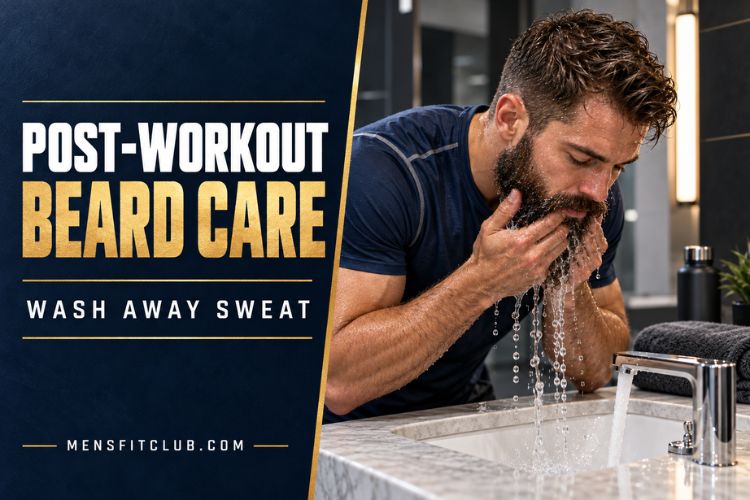
A beard can trap sweat, oil, food residue, sunscreen, and dead skin close to the face. After training, wet the beard thoroughly and work a mild facial cleanser or gentle beard wash through the hair to the skin. Use the pads of your fingers, rinse completely, and pat dry with a clean towel. Concentrating only on the visible beard hair leaves the skin underneath neglected.
Most men who train daily can wash the beard area once a day. A second full cleanse may be unnecessary after a low-sweat session; a thorough water rinse can be enough. If a cleanser leaves the skin tight, stinging, or flaky, switch to a milder fragrance-free option and reduce the amount. Strong fragrance may cover odor temporarily, but it does not remove sweat or buildup.
Moisturize While the Beard Is Slightly Damp
After washing, apply a light, non-comedogenic facial moisturizer to the skin under short facial hair. For a longer beard, use a small amount of beard oil or lightweight leave-in product, then distribute it with your fingers and a clean comb. Start with less than you think you need. Too much oil can leave the beard shiny, collect dust, and worsen the greasy feeling after the next workout.
Beard oil softens hair and reduces friction, but it does not replace moisturizer for every skin type. Men with acne-prone skin may do better with a fragrance-free facial moisturizer and very little oil. Patch-test new products on a small area for several days, especially if your skin reacts to essential oils or fragrance.
Comb and Shape Without Pulling: Hair and Beard Routine
Comb only after the beard has been gently towel-dried and detangled with your fingers. Start at the ends of a longer beard and work toward the roots. A wide-tooth comb or soft beard brush can distribute product and guide the beard into shape without aggressive pulling. Wash the tool regularly because a dirty comb can transfer oil and residue back to the face.
Trimming and Shaving for Men Who Sweat Daily
Schedule detailed beard trimming when the face is clean, dry, and calm, not immediately after a hard session when the skin is hot and flushed. Use clean, sharp tools and trim in good light. For an even result, comb the beard into its natural position before setting the guard length. Trim gradually; taking off a little more is easy, while correcting an accidental bare patch takes weeks.
If you shave the neck or cheek line, soften the hair with warm water and use a lubricating shave gel or cream. Shave with the direction of growth and avoid repeated passes over the same spot. Rinse the blade often, do not press hard, and replace a dull blade. A very close shave may look sharp for a few hours but can aggravate ingrown hairs and razor bumps, especially in men with coarse or curly facial hair.
Persistent tender bumps, pustules, spreading redness, crusting, or scarring deserve medical attention. Folliculitis can have several causes, and shaving over active bumps may worsen irritation or spread infection. Avoid sharing razors, trimmers, towels, or beard tools.
Simple Daily Hair and Beard Schedule Routine
Before the Workout
Keep pre-workout styling light. Heavy wax, pomade, dry shampoo, and beard balm can mix with sweat and create sticky buildup. Tie longer hair loosely with a smooth band. If you wear a cap or headband, start with a clean one. Apply sunscreen to exposed skin when training outdoors, including the scalp part, ears, neck, and skin around the beard.
Immediately After the Workout
Remove sweaty headwear, wash your hands, and avoid repeatedly touching your scalp or beard. Shower promptly. Rinse or shampoo the scalp according to oil and buildup, cleanse the beard area gently, and rinse both thoroughly. Use a separate clean towel for the face if possible, and do not scrub.
After the Shower: Hair and Beard Routine
Condition the hair lengths as needed, pat everything dry, and apply moisturizer to the face and skin beneath the beard. Add a minimal amount of beard oil only if the hair needs it. Let the scalp and beard dry before putting on another cap, helmet, or tight face covering.
Once or Twice Each Week
Wash brushes, combs, guards, and trimmer attachments. Launder caps, headbands, pillowcases, and face towels. Check the scalp and beard line for persistent redness, scaling, or bumps. Trim stray beard hairs and clean the neckline when the skin is calm. Use a clarifying shampoo only when buildup is present rather than automatically adding it to every week.
Common Grooming Hair and Beard Routine Mistakes Active Men Make
The first mistake is using strong shampoo after every workout regardless of hair type. Sweat needs attention, but shampoo frequency should follow scalp oil, hair texture, styling products, and irritation. The second mistake is applying conditioner, beard oil, and pomade too heavily. More product does not produce healthier hair; it often creates more residue to remove.
Another mistake is masking odor with fragrance instead of washing. Cologne and scented beard balm cannot clean sweat. Men also reuse damp towels, caps, and pillowcases longer than they should. Those fabrics touch the scalp and face for extended periods, so they belong inside the grooming routine.
Finally, many men shave against the grain or press hard to create the closest possible line. That can increase irritation and ingrown hairs. Clean tools, adequate lubrication, light pressure, and fewer passes usually produce a better long-term result than chasing absolute smoothness every day.
How to Choose Products Without Overcomplicating the Routine
A complete gym grooming kit can be small: one gentle shampoo, one conditioner suited to the hair type, one mild facial or beard cleanser, one fragrance-free moisturizer, a comb, and clean trimming tools. Add a dandruff shampoo only when you need it. Add beard oil only when the beard length and texture benefit from it. Product labels such as natural, detox, or gym formula matter less than how the scalp and skin respond.
Introduce one new product at a time. That makes irritation easier to trace. Stop using a product if it causes burning, swelling, a persistent rash, or worsening bumps. Men with diagnosed eczema, psoriasis, acne, or seborrheic dermatitis should build the routine around their clinician’s treatment plan instead of layering cosmetic products over active inflammation.
Final Takeaway
The best hair and beard routine for men who work out daily is consistent, gentle, and adjusted to the individual. Remove sweaty headwear, clean up soon after training, shampoo according to scalp condition, condition the hair where it is dry, and wash the skin beneath the beard. Keep tools and fabrics clean, moisturize without overloading the face, and shave with the grain using sharp equipment.
Your routine is working when the scalp feels comfortable, the hair stays manageable, the beard smells clean, and the skin remains calm between workouts. If redness, painful bumps, severe flaking, or hair loss continues despite sensible care, see a board-certified dermatologist rather than adding
For more practical grooming advice, explore our complete Grooming Tips For Men covering hair, skincare, beard care, and hygiene. You can also build a more complete self-care regimen with the Good Life Grooming Guide, choose a manageable look from these Best Beard Styles For Men, and learn how to style Straight Fine Men’s Hair without weighing it down. Men who regularly clean up their cheek and neckline can also use this guide to Affordable Shaving Products for help managing razor bumps, ingrown hairs, and post-shave irritation.


Most Recommended

Subscribe to our Newsletter
Stay up to date on the latest men’s health, fitness and lifestyle trends and tips.
About Us
Men’s Fit Club was started with the goal of empowering men to get the most out of their lives. This meant going beyond exercise and diet tips to really address the broad range of issues that men face on a daily basis – topics like recreation, finding love, sexual health and even sound fashion advice.
Quick Links
© COPYRIGHT MEN'S FIT CLUB 2026. All Rights Reserved