

Rucking Workout for Men Over 50: Beginner Plan
Progressive Overload Calisthenics Without Weights
Upper Body Barbell Giant Set Workout for Muscle Growth
Low Testosterone and Strength Training: What Can You Do?
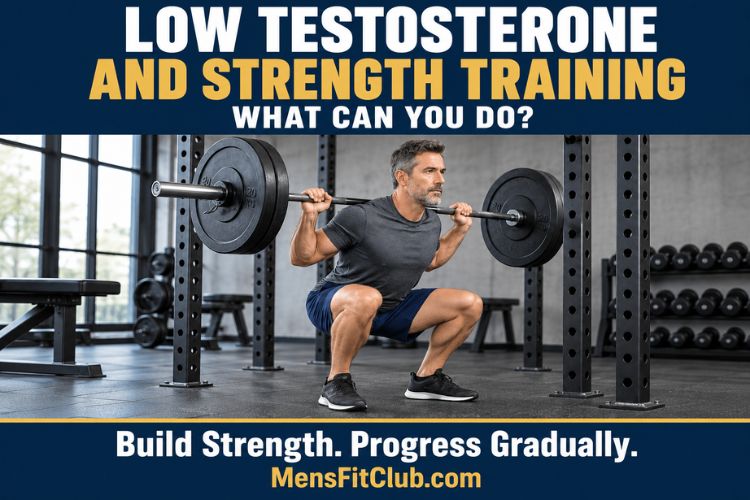
Low testosterone can make a familiar workout feel unusually demanding. You may notice less motivation, slower progress, or difficulty recovering between sessions. When those changes happen, it is tempting to stop lifting altogether or search for a special workout that promises to boost testosterone quickly. A more useful approach is to understand your symptoms, get appropriate medical evaluation, and build an exercise routine you can recover from consistently. Many men with low testosterone can still perform strength training, walking, cycling, and other forms of physical activity. The right choices depend on your fitness, medical history, symptoms, and joint health. Low testosterone alone does not identify a particular exercise you must avoid. However, significant weakness, known osteoporosis, or an underlying illness may require adjustments before you begin.
This guide explains what low testosterone and strength training mean for your workouts, which movements to consider, and how to organize a realistic weekly routine. The goal is to develop strength and physical capacity while supporting your overall health. Exercise belongs alongside appropriate care; it is not a guaranteed treatment for testosterone deficiency.
Understanding Low Testosterone Before Start Strength Training Workout
Testosterone helps regulate male reproductive function and contributes to muscle and bone health. A diagnosis of testosterone deficiency involves more than feeling tired or seeing one disappointing laboratory result. Symptoms, repeated testing, and the reason for the low reading all matter when deciding what to do next.
Symptoms Need Proper Assessment
Reduced sex drive, fewer spontaneous erections, and changes in sexual function can occur with testosterone deficiency. Changes in muscle mass, mood, and energy may also appear, but these symptoms overlap with many other conditions. The Endocrine Society recommends diagnosing hypogonadism only when compatible symptoms or signs accompany consistently low testosterone, confirmed with repeat morning testing. [1]
Tell your clinician about your sleep, medication use, recent illness, diet, and exercise schedule. Those details help put the results in context. A man recovering from illness or eating too little while training hard may need a different approach from someone with a testicular or pituitary condition. Avoid assuming that every difficult workout proves your testosterone is low.
Your Starting Point Matters More Than a Generic Label
Two men with the same reported testosterone level can have very different exercise needs. One may already lift regularly, while another has been inactive for years. The first may need a temporary reduction in training volume. The second may benefit from learning basic movement patterns with light resistance and gradually building confidence.
If you have persistent symptoms, arrange evaluation rather than waiting for a workout plan to solve them. Discuss exercise restrictions if you have cardiovascular disease, significant bone loss, or another condition that affects training. Meanwhile, familiar, comfortable activity can often remain part of your routine when your medical circumstances allow it.
Can Strength Training Increase Testosterone?
Strength training is frequently marketed as a natural testosterone booster. That description oversimplifies the evidence. A temporary hormonal response after exercise is different from a meaningful, lasting improvement in resting testosterone or treatment of a diagnosed deficiency.
Set Realistic Expectations About Hormonal Changes
A systematic review and meta-analysis of randomized trials found a negligible overall effect of exercise training on resting testosterone in insufficiently active, apparently healthy men. Those findings should not be treated as a direct prediction for every man with diagnosed hypogonadism, but they challenge the idea that lifting reliably raises baseline testosterone. [2]
Choose exercises because they train your muscles effectively and suit your current abilities. There is no established requirement to use heavy squats, deadlifts, or short rest periods to correct low testosterone. A well-controlled machine workout can be a better starting point than a demanding barbell session if you are fatigued or unfamiliar with lifting.
Measure Benefits Beyond a Blood Test
Useful training outcomes include better technique, more repetitions with the same weight, and greater confidence during everyday tasks. You may also notice improved walking tolerance or an easier time getting out of a chair. Those changes matter even if your testosterone result remains similar.
Some causes of low testosterone, including obesity-associated cases, may improve when the underlying condition is addressed. However, that does not mean exercise alone reverses every deficiency. The Endocrine Society emphasizes identifying the cause and considering appropriate treatment rather than assuming one solution fits all men. [3]
What Strength Training Can You Do With Low Testosterone?
A practical program covers the major movement patterns: squatting, hinging, pushing, pulling, and stabilizing your trunk. You can train these patterns with machines, dumbbells, resistance bands, or body weight. Select versions that let you move comfortably and repeat the movement with control.
Squats and Sit-to-Stand Exercises
The squat pattern trains your legs through a movement you use when sitting and standing. Beginners can start with a sit-to-stand from a sturdy chair. Use a chair that will not slide, place your feet securely, and stand without rushing. Choose a seat height that allows comfortable movement.
When that becomes manageable, consider a goblet squat holding a light dumbbell close to your chest. A leg press is another option, especially if balance makes free-weight squats difficult. Start with one or two sets of eight to twelve repetitions. Use a comfortable range of motion and avoid forcing deeper positions through pain.
Hip Hinges and Glute Bridges Testosterone and Strength Training
A hip hinge develops the pattern used to bend and lift while moving primarily through your hips. Learn it without weight first: soften your knees, move your hips backward, and keep the movement controlled. A light dumbbell Romanian deadlift can follow once you understand the pattern.
Glute bridges offer a simpler alternative when standing hinges feel difficult. Lie on your back with your knees bent, press through your feet, and lift your hips without aggressively arching your lower back. Choose the version you can perform comfortably. You do not need a heavy deadlift to include useful posterior-chain work.
Push-Ups and Chest Presses
Pushing exercises train the chest, shoulders, and triceps. A wall push-up is a reasonable starting point. As you improve, move to a stable elevated surface, such as a firmly secured workout bench. Keep your body aligned and lower yourself only as far as you can control.
A machine chest press or dumbbell floor press also works well. For floor presses, use weights you can get into position safely. Begin with one or two sets of eight to twelve controlled repetitions. If shoulder pain appears, stop and reassess the movement rather than assuming discomfort is part of making progress.
Rows and Pulldowns Testosterone and Strength Training
Rows and pulldowns train your upper back and arms. A seated cable row, chest-supported dumbbell row, or resistance-band row can provide stable options. Keep your torso controlled and avoid jerking the resistance just to complete another repetition.
For vertical pulling, consider a lat pulldown instead of immediately attempting pull-ups. Choose a grip and range that feel comfortable. One or two sets of eight to twelve repetitions are enough for an initial routine. Stability and repeatable technique are more useful than selecting an exercise that looks impressive but exceeds your current strength.
Core Exercises and Loaded Carries
Dead bugs, bird dogs, and short elevated planks can help you practice trunk control. Start with brief sets and normal breathing. Stop before your position breaks down. Core work should complement the main lifts without leaving you exhausted before the rest of the session.
A light suitcase carry is another option if your balance and grip allow it. Walk through a clear area while holding one weight at your side, then change hands. Use short distances and remain upright. If carrying feels unstable, stick with supported core exercises until your confidence improves.
A Two-Day Strength Training Plan for Low Testosterone
For a beginner or someone returning after a break, two nonconsecutive sessions can provide a manageable starting schedule. The following routine is an example, not a medically validated treatment for low testosterone. Adjust it to your experience and any advice from your healthcare team.
Workout A: Basic Full-Body Strength
Begin with five to eight minutes of comfortable walking or easy cycling. Practice your first exercise with little or no resistance. Then perform a chair squat or goblet squat for two sets of eight to twelve repetitions, followed by a machine chest press or elevated push-up for two sets of eight to twelve.
Continue with a seated row for two sets of eight to twelve repetitions and a glute bridge for two sets of ten to fifteen. Finish with a dead bug for one or two sets of five to eight controlled repetitions per side. Take roughly one to two minutes between sets, extending rest whenever your breathing or technique needs more time.
Workout B: Alternate Full-Body Movements
Use the same gentle warm-up. Start with a leg press or supported split squat for two sets of eight to twelve repetitions; for split squats, perform the repetitions on each side. Follow with a light dumbbell Romanian deadlift for two sets of eight to ten, provided you can perform the hinge comfortably.
Next, complete a dumbbell floor press for two sets of eight to twelve and a lat pulldown for two sets of eight to twelve. Finish with one or two brief carries per side or a bird dog. If any movement is unsuitable, replace it with a comfortable exercise that trains a similar pattern.
Start Smaller When Necessary: Testosterone and Strength Training
If the full workout feels overwhelming, perform one set of each exercise or select three movements. A squat variation, a push, and a row can make a useful short session. Expand the routine only when your energy and recovery support it. Completing a smaller workout consistently is a valid starting point.
Keep two or three possible repetitions in reserve on most sets. You should finish feeling that you worked, without repeatedly grinding through failed repetitions. This effort level is a practical programming choice for managing fatigue; it is not a special hormonal formula or a promise that testosterone will increase.
How to Progress Strength Training And Testosterone Without Doing Too Much
Progressive overload means gradually increasing the training challenge. It does not require adding weight every time you exercise. Better movement control, an extra repetition, or a slightly longer comfortable range of motion can represent progress before you increase resistance.
Use a Simple Repetition Range
Suppose your chest press target is eight to twelve repetitions. Choose a load that lets you complete eight with good technique and some effort remaining. Over subsequent sessions, work toward twelve. When both sets reach the upper end comfortably, increase the load by the smallest practical amount and return toward eight repetitions.
Keep the movement quality consistent when comparing sessions. Twelve shortened, rushed repetitions are not necessarily progress over ten controlled ones. Avoid increasing weight and adding multiple sets at the same time. Changing one variable makes it easier to judge whether the new workload suits you.
Adjust Training to Your Recovery: Testosterone and Strength Training
If you feel unusually drained, reduce the load, remove a set, or choose a simpler movement. One poor session does not justify abandoning the entire program. It may reflect a difficult workday, disrupted sleep, or inadequate food rather than a new hormone problem.
If performance keeps declining over several sessions, review your workload and seek medical advice for persistent symptoms. A lighter week may help with accumulated training fatigue, but it cannot diagnose why you feel unwell. Use your training log to describe the pattern clearly instead of repeatedly testing your limits.
Add Walking and Moderate Cardio: Testosterone and Strength Training
Strength training can fit alongside aerobic exercise. You do not need to eliminate walking or cycling because you are concerned about testosterone. The practical question is how much total activity you can perform while eating adequately, sleeping well, and recovering between sessions.
Walking Is an Accessible Starting Point
Begin with ten to fifteen minutes at a comfortable pace if you are inactive. Increase the duration gradually, or divide activity into shorter walks. A brief walk after lunch and another in the evening may fit your schedule better than one longer outing.
Use a pace that allows conversation when the goal is easy or moderate activity. Walking can also provide movement on days between strength sessions. Avoid turning every walk into a competition for distance or speed. Its place in the plan is to build a sustainable activity habit.
Intervals Are Optional: Testosterone and Strength Training
High-intensity intervals are not essential for managing low testosterone. If you enjoy them, already tolerate exercise well, and have no relevant restrictions, they can be introduced cautiously. A stationary bike often makes the workload easier to control than running sprints.
Start with moderate changes in pace rather than all-out efforts. Avoid adding demanding intervals at the same time you substantially increase your lifting workload. If you are already exhausted or returning from illness, develop a base of comfortable activity first. There is no need to chase the hardest possible workout.
Recovery, Nutrition, and Sleep Support Your Plan
Your routine extends beyond the exercises themselves. Training while consistently under-fueled or sleep-deprived makes it harder to judge what you can tolerate. The Endocrine Society notes that excessive exercise and poor nutrition can temporarily lower testosterone, reinforcing the value of considering the whole picture. [3]
Eat Enough to Train and Recover: Testosterone and Strength Training
Build regular meals around protein foods, carbohydrate sources, vegetables or fruit, and dietary fats. Examples include eggs with whole-grain toast, chicken with rice and vegetables, or beans with potatoes and yogurt. The exact menu can vary with your preferences, budget, and medical needs.
If fat loss is appropriate, avoid pairing an aggressive diet with a sudden increase in training. A manageable eating plan is easier to sustain and adjust. Men with kidney disease or other conditions requiring dietary restrictions should discuss protein and calorie changes with their healthcare team rather than following generic bodybuilding advice.
Protect Your Sleep Routine
Keep a reasonably consistent bedtime and give yourself adequate time to sleep. If late workouts leave you too alert to settle down, move training earlier or reduce the intensity. Treat persistent sleep problems as something to address, not a weakness to overcome with caffeine and extra effort.
Tell your clinician about loud snoring, witnessed pauses in breathing, or substantial daytime sleepiness. These symptoms deserve assessment. Better recovery habits can support your training, but improvements in sleep or gym performance should not be used as proof that a hormone deficiency has resolved.
Common Testosterone and Strength Training Mistakes to Avoid
The biggest programming mistakes usually involve unrealistic expectations or doing more than you can recover from. Low testosterone can make exercise decisions feel urgent. That urgency should lead to appropriate assessment and steady habits, rather than a punishing routine designed around internet promises.
Chasing a Testosterone-Boosting Workout
No particular combination of squats, kettlebell swings, or sprint intervals is established as a universal treatment for testosterone deficiency. Claims that one workout will restore your hormones can encourage unnecessary intensity. Judge the plan by whether it is suitable, repeatable, and progressively improves your physical abilities.
Similarly, soreness and exhaustion do not tell you whether testosterone has increased. A session that leaves you barely able to move may interfere with the next workout. Aim for productive effort that allows you to return consistently instead of measuring success by how depleted you feel afterward.
Copying an Advanced Training Split
A six-day bodybuilding routine may be poorly matched to someone dealing with fatigue and returning after years away from exercise. More training days also mean more demands on your schedule and recovery. Start with the smallest routine that gives you regular practice and a manageable challenge.
If two weekly sessions become easy to sustain, consider adding a third. That change is optional, not a requirement. Keep the total workload reasonable and watch your response. An experienced lifter may tolerate more than a beginner, but previous ability does not automatically describe current readiness.
When to Seek Medical Advice About Training
Arrange medical evaluation if reduced libido, unexplained fatigue, or other concerning symptoms persist. You do not need to complete a trial workout program before asking for help. If low testosterone is confirmed, ask about its cause, appropriate treatment, and whether bone health or other conditions affect your exercise choices.
Stop exercising and seek urgent assessment for chest pain, fainting, or severe unexplained breathlessness. New sharp pain or sudden weakness also warrants attention rather than another set. These situations require a different response from ordinary muscle effort or mild next-day soreness.
If you receive testosterone therapy, keep attending the prescribed follow-ups. Do not change medication doses based on a difficult workout or a strength plateau. Discuss fertility plans before treatment decisions, since testosterone therapy can affect sperm production. The Endocrine Society advises against starting testosterone therapy when near-term fertility is planned. [1]
Frequently Asked Questions About Low Testosterone and Exercise
Can You Build Strength With Low Testosterone?
Low testosterone does not automatically eliminate the possibility of getting stronger. Your progress depends on the severity and cause of the deficiency, your starting fitness, training, nutrition, and medical care. Early improvements can include learning movements and performing them more confidently. Judge your response over time without expecting a guaranteed rate of muscle gain.
Are Machines Better Than Free Weights?
Both can be useful. Machines may simplify setup and reduce balance demands, while dumbbells and body-weight exercises can work well at home. Choose equipment that lets you train comfortably and progress in small steps. The best choice is the one that suits your abilities and available setting.
How Often Should You Lift?
Two nonconsecutive full-body workout sessions are a reasonable example for many beginners. Some men will start with shorter sessions; experienced lifters may use more frequent training. Let your recovery, health status, and schedule guide the decision. Frequency alone does not determine whether your testosterone improves.
What Is the Best First Step?
If symptoms suggest low testosterone, arrange appropriate evaluation. For exercise, start with comfortable walking and a small selection of manageable strength movements. Record what you do, leave some effort in reserve, and progress gradually. Building a repeatable routine gives you a practical foundation while the medical side receives proper attention.
For practical guidance to complement your low testosterone and strength training routine, explore our 30-Minute Beginner Weightlifting Routine or Dumbbell Workout Without a Bench for accessible exercise options. Learn how to increase your training challenge gradually with our Progressive Overload Guide For Beginners, manage demanding sessions by understanding When to Reduce Sets Reps or Weight, and adjust your workload during fat loss with our guide to Strength Training While Losing Weight.


Most Recommended

Subscribe to our Newsletter
Stay up to date on the latest men’s health, fitness and lifestyle trends and tips.
About Us
Men’s Fit Club was started with the goal of empowering men to get the most out of their lives. This meant going beyond exercise and diet tips to really address the broad range of issues that men face on a daily basis – topics like recreation, finding love, sexual health and even sound fashion advice.
Quick Links
© COPYRIGHT MEN'S FIT CLUB 2026. All Rights Reserved