
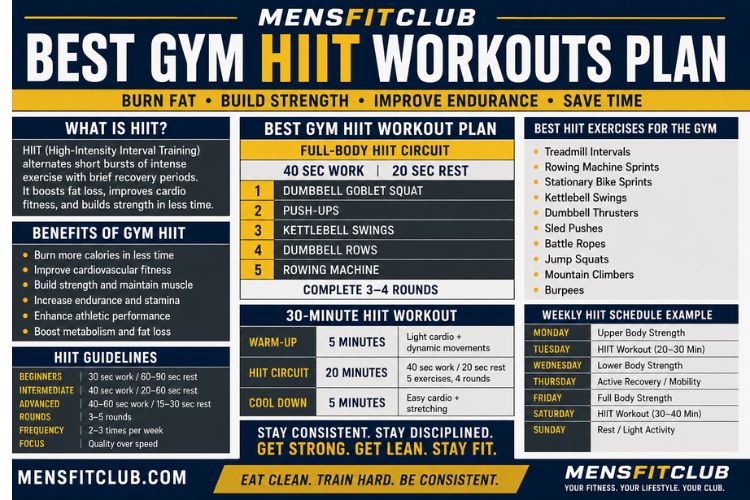
Best Gym HIIT Workouts Plan To Burn Fat & Build Strength
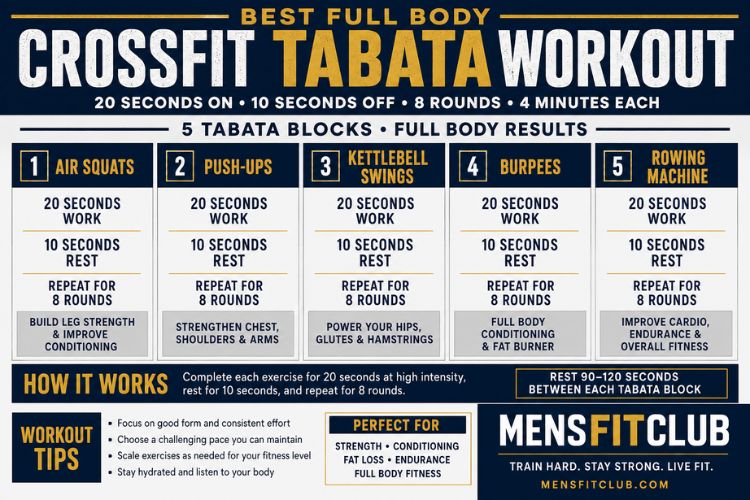
Best CrossFit Tabata Workout for a Full Body Burn
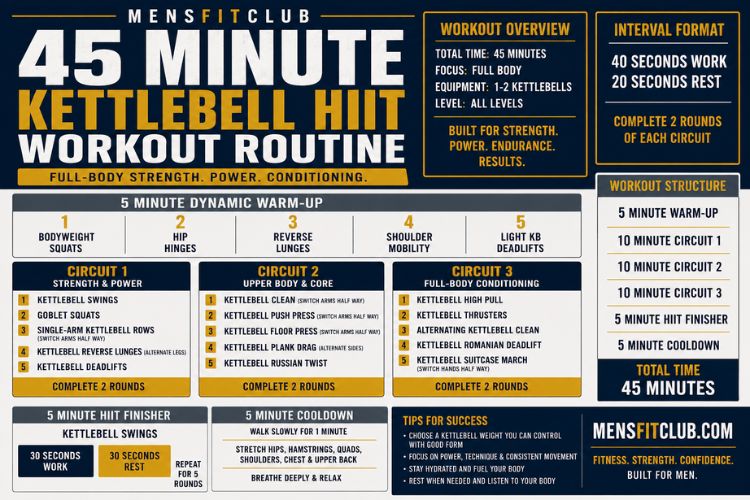
45-Minute Kettlebell HIIT Workout: Full-Body Fat Burning Routine
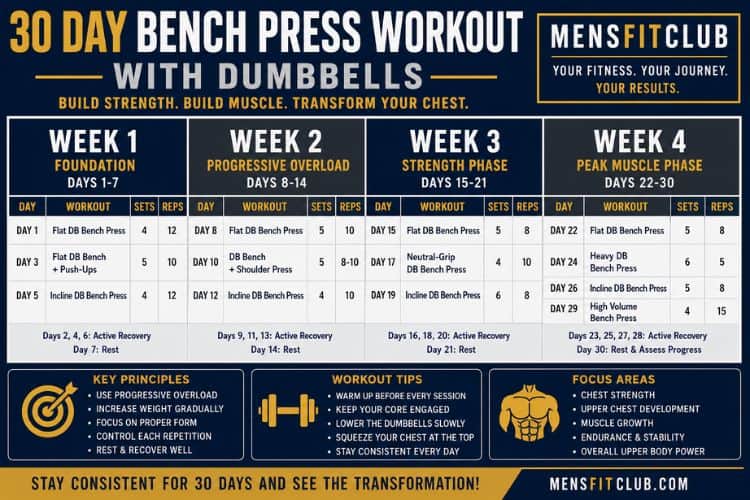
30 Day Dumbbell Bench Press Workout for a Bigger Chest
Dumbbell Bench Press vs Barbell Bench Press Which Is Better
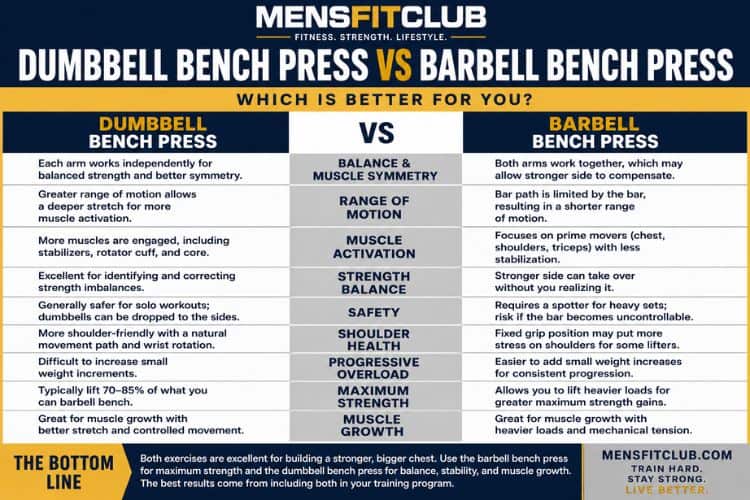
The debate between the dumbbell bench press vs barbell bench press has existed for decades among bodybuilders, powerlifters, athletes, and everyday gym-goers. Both exercises are considered staples for developing chest strength and upper-body muscle mass, yet each offers unique advantages and disadvantages. Some lifters prefer the raw strength-building capabilities of the barbell bench press, while others appreciate the improved range of motion and muscle activation provided by dumbbells.
If your goal is to build a bigger chest, increase upper-body strength, improve shoulder stability, or prevent muscular imbalances, understanding the differences between these two exercises can help you choose the best option for your training program. The truth is that neither exercise is inherently superior; the right choice depends on your goals, experience level, and individual needs.
In this guide, we’ll compare the dumbbell bench press and barbell bench press in detail, covering muscle activation, strength development, safety, injury prevention, and hypertrophy benefits.
Understanding the Barbell Bench Press
The barbell bench press is one of the most popular exercises in strength training. It involves pressing a loaded barbell from chest level to arm extension while lying on a flat bench.
The exercise is widely used in powerlifting competitions and has become a benchmark for measuring upper-body strength. Most lifters can handle heavier weights with a barbell because both arms work together to move a single load.
Muscles Worked During the Barbell Bench Press
The barbell bench press primarily targets:
- Pectoralis major
- Anterior deltoids
- Triceps brachii
- Serratus anterior
- Stabilizing muscles of the shoulders and upper back
Because the movement is highly stable, more energy can be directed toward lifting heavier weights, making it ideal for building maximum strength.
Understanding the Dumbbell Bench Press
The dumbbell bench press uses two separate weights instead of a barbell. Each arm must stabilize and control its own load throughout the movement.
This exercise allows for a greater range of motion and requires additional activation from stabilizer muscles. Since each side works independently, the dumbbell bench press can help correct strength imbalances and improve coordination.
Muscles Worked During the Dumbbell Bench Press
The dumbbell bench press targets many of the same muscles:
- Pectoralis major
- Triceps
- Front deltoids
- Rotator cuff muscles
- Core stabilizers
- Shoulder stabilizers
Because each arm moves independently, the body recruits more supporting muscles to maintain balance and control.
Dumbbell Bench Press vs Barbell Bench Press: Major Differences
Although both exercises train the chest, they differ significantly in terms of mechanics, muscle activation, and training outcomes.
Range of Motion
One of the biggest differences between the two exercises is the range of motion.
Barbell Bench Press
The barbell touches the chest and stops there because the bar itself limits further movement. This creates a shorter range of motion.
Dumbbell Bench Press
Dumbbells allow the hands to travel lower than the chest, creating a deeper stretch in the pectoral muscles. This increased range of motion can lead to greater muscle fiber recruitment and potentially enhanced hypertrophy.
Winner: Dumbbell Bench Press
For maximizing chest stretch and muscle development, dumbbells have an advantage.
Strength Development
If your goal is pure strength, the barbell bench press is difficult to beat.
Why the Barbell Bench Press Builds More Strength
Because the barbell creates a more stable environment, you can typically lift 15–25% more weight compared to dumbbells. This increased loading stimulates greater neural adaptations and strength gains.
Powerlifters and athletes commonly prioritize barbell bench pressing because of its ability to develop maximal pressing power.
Winner: Barbell Bench Press
For increasing one-rep max strength, the barbell is superior.
Muscle Activation
Studies have shown that both exercises effectively activate the chest muscles. However, dumbbells require additional stabilization throughout the movement.
The independent movement of each arm increases activation in:
- Rotator cuff muscles
- Shoulder stabilizers
- Core muscles
- Smaller supporting muscles
This makes dumbbells particularly useful for building balanced upper-body development.
Winner: Dumbbell Bench Press
Dumbbells provide greater overall muscle recruitment and stabilization.
Correcting Muscle Imbalances
Many people unknowingly have one side stronger than the other.
During a barbell bench press, the stronger side can compensate for the weaker side without the lifter realizing it. Over time, this imbalance may worsen.
With dumbbells, each arm works independently, forcing both sides to contribute equally.
Benefits Include
- Balanced chest development
- Improved coordination
- Enhanced symmetry
- Reduced risk of compensation patterns
Winner: Dumbbell Bench Press
Dumbbells excel at correcting strength discrepancies.
Progressive Overload
Progressive overload is essential for continuous muscle growth and strength gains.
Barbell Bench Press Advantages
Barbells allow smaller weight increments. Many gyms provide plates that increase weight by only 2.5 pounds.
This makes progression easier and more consistent.
Dumbbell Limitations
Dumbbells often jump in increments of 5 or 10 pounds, which can make progression more challenging.
Winner: Barbell Bench Press
Barbells offer more precise progression.
Safety Considerations
Safety is another important factor when comparing the dumbbell bench press vs barbell bench press.
Barbell Bench Press Safety
Without a spotter, getting trapped under a heavy barbell can be dangerous.
Common issues include:
- Failed repetitions
- Shoulder stress
- Wrist discomfort
- Risk of chest or neck injuries
Dumbbell Bench Press Safety
Dumbbells are generally safer because they can be dropped to the sides if a repetition fails.
However, heavy dumbbells can be difficult to get into position and may strain the shoulders during setup.
Winner: Dumbbell Bench Press
For solo lifters, dumbbells are usually safer.
Shoulder Health
Shoulder pain is common among frequent bench press users.
Barbell Bench Press
The fixed hand position of the barbell forces both shoulders into the same movement pattern. This may increase stress on the shoulder joint for some lifters.
Dumbbell Bench Press
Dumbbells allow a more natural path of movement. Lifters can rotate their wrists and adjust arm angles to reduce discomfort.
This flexibility often makes dumbbells a better option for individuals with shoulder issues.
Winner: Dumbbell Bench Press
Dumbbells generally provide a more joint-friendly movement.
Which Exercise Builds More Muscle?
Hypertrophy depends on several factors:
- Training volume
- Intensity
- Progressive overload
- Nutrition
- Recovery
Both exercises can produce impressive chest growth.
Barbell Bench Press for Hypertrophy
Benefits include:
- Heavier loading
- Greater mechanical tension
- Efficient progression
Dumbbell Bench Press for Hypertrophy
Benefits include:
- Increased stretch
- Better contraction
- Improved stabilization
- More balanced development
The Real Winner
Neither exercise clearly dominates.
Combining both exercises often produces the best muscle-building results.
Comparing Strength Levels
Most people can dumbbell press approximately 70–85% of what they can barbell bench.
For example:
| Barbell Bench Press | Equivalent Dumbbell Press |
|---|---|
| 135 lbs | 50-pound dumbbells |
| 185 lbs | 70-pound dumbbells |
| 225 lbs | 85-pound dumbbells |
| 275 lbs | 100-pound dumbbells |
These numbers vary based on experience and shoulder stability.
Benefits of the Barbell Bench Press
Maximum Strength Development
The ability to lift heavier loads makes the barbell bench press one of the best strength exercises available.
Easier Progression
Micro-loading allows gradual increases over time.
Time Efficiency
Loading a barbell is often faster than handling multiple heavy dumbbells.
Powerlifting Performance
The barbell bench press is one of the three competition lifts in powerlifting.
Benefits of the Dumbbell Bench Press
Greater Range of Motion
A deeper stretch may stimulate additional muscle growth.
Improved Stability
The body recruits more supporting muscles.
Corrects Imbalances
Each arm develops independently.
Reduced Joint Stress
The freedom of movement often makes dumbbells easier on the shoulders.
Increased Functional Strength
Stabilizer activation improves overall athletic performance.
Dumbbell Bench Press vs Barbell Bench Press for Beginners
Beginners often wonder which exercise they should start with.
Barbell Benefits for Beginners
- Easy to learn
- Straight movement path
- Simple progression
Dumbbell Benefits for Beginners
- Better coordination
- Balanced development
- Enhanced shoulder stability
For many beginners, learning both exercises provides the greatest long-term benefit.
How to Include Both Exercises in Your Program
Combining dumbbells and barbells allows you to enjoy the advantages of each movement.
Option 1: Strength Focus
Main Exercise
Barbell Bench Press
4 sets × 5 reps
Accessory Exercise
Dumbbell Bench Press
3 sets × 10 reps
Option 2: Muscle Growth Focus
Dumbbell Bench Press
4 sets × 8–12 reps
Incline Dumbbell Press
3 sets × 10 reps
Barbell Bench Press
3 sets × 6–8 reps
Option 3: Upper Body Day
Barbell Bench Press
4 × 6
Incline Dumbbell Bench Press
3 × 10
Cable Flyes
3 × 15
Triceps Pushdowns
3 × 12
Lateral Raises
3 × 15
Common dumbbell barbell bench press Workout Mistakes to Avoid
Bouncing the Weight
Lower the weight under control and avoid using momentum.
Arching Excessively
Maintain proper spinal alignment.
Flaring the Elbows
Keep elbows around 45 degrees from the body.
Neglecting Full Range of Motion
Partial repetitions limit muscle development.
Ignoring Progressive Overload
Gradually increase resistance over time.
Which Exercise Is Better for Athletes?
Athletes benefit from both exercises.
Football Players
Barbell bench press improves explosive strength.
Fighters and Martial Artists
Dumbbells enhance stabilization and unilateral control.
Bodybuilders
Combining both exercises produces superior chest development.
Older Lifters
Dumbbells often provide greater comfort and joint safety.
Dumbbell Bench Press vs Barbell Bench Press: Final Verdict
When comparing the dumbbell bench press vs barbell bench press, there is no single winner. The barbell bench press reigns supreme for developing maximal strength and allowing consistent progression, while the dumbbell bench press provides greater range of motion, enhanced stabilization, and improved muscle symmetry.
If your primary goal is increasing raw strength and lifting heavier weights, the barbell bench press deserves a central role in your program. If your focus is muscle growth, shoulder health, and balanced development, dumbbells offer significant advantages.
For most lifters, the smartest approach is not choosing one over the other but incorporating both into a well-designed training routine. By combining the strength-building power of the barbell with the muscle-activating benefits of dumbbells, you can maximize chest development, improve upper-body performance, and continue making progress for years to come.
If you’re trying to decide between the dumbbell bench press vs barbell bench press, it’s important to understand how each exercise fits into a complete chest-building program. At MensFitClub, we have several guides that can help you improve strength, maximize muscle growth, and perfect your bench press technique. Start with our Dumbbell Bench Press Tips for Beginners to master proper form and shoulder stability, then explore The Best Chest Workout With Barbell for heavy strength-building movements. You can also add variety with our Best Chest Exercises With Dumbbells and Flat Bench Workouts: The Ultimate Guide to target your chest from multiple angles. Finally, if your goal is overall upper-body size and strength, our Top Chest Workouts for Men to Build Mass and Strength provides complete routines for maximizing results.


Most Recommended

Subscribe to our Newsletter
Stay up to date on the latest men’s health, fitness and lifestyle trends and tips.
About Us
Men’s Fit Club was started with the goal of empowering men to get the most out of their lives. This meant going beyond exercise and diet tips to really address the broad range of issues that men face on a daily basis – topics like recreation, finding love, sexual health and even sound fashion advice.
Quick Links
© COPYRIGHT MEN'S FIT CLUB 2026. All Rights Reserved