

Sled-Free HYROX Workout Without Equipment at Home
Barbell Contrast Training Workout for Explosive Power
Power Training Workout for Men Over 50: Sets and Reps
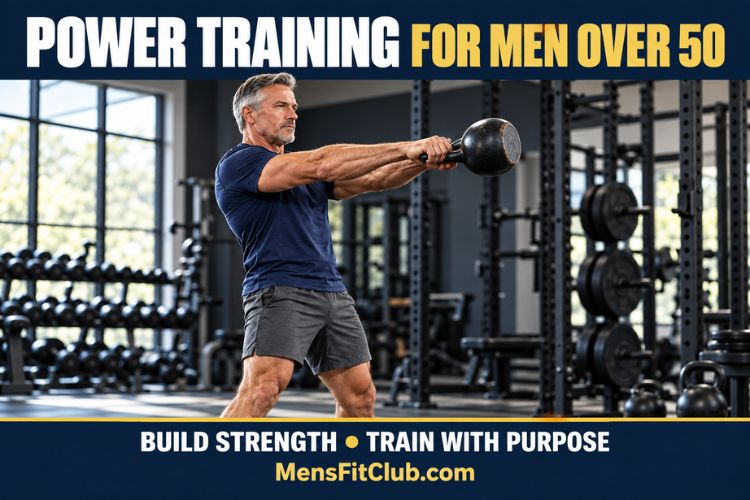
Power training for men over 50 deserves a place beside traditional strength training. Being strong matters, but so does being able to use that strength quickly. Rising from a chair, stepping onto a curb, climbing stairs, and moving confidently during recreational sports all involve producing force within a limited amount of time. A well-designed workout trains that ability without requiring box jumps, Olympic lifts, or exhausting circuits.
The right approach combines fast, purposeful lifting with controlled lowering, manageable resistance, and enough rest to keep each repetition sharp. It also respects your starting point. A man who has lifted consistently for twenty years needs a different introduction than someone returning after a long break. Your training history, joint comfort, balance, and recovery should guide the program more than your birthday alone.
This power training workout for men over 50 provides two weekly sessions, practical exercise instructions, and a gradual progression. It is intended for generally healthy men who can perform basic resistance exercises with stable technique. The goal is to build useful strength and speed while finishing sessions with enough energy to stay active throughout the week.
What Is Power Training for Men Over 50?
Power describes how quickly you perform mechanical work. In practical training terms, it involves producing force while moving with speed. Strength training develops your capacity to produce force; power training adds an emphasis on how rapidly you apply it. Both qualities matter, and neither replaces the other.
For example, a conventional squat might involve standing at a comfortable, deliberate pace. A power-focused squat uses lighter resistance and the intention to stand quickly, followed by a controlled descent. Your feet remain planted, your posture remains stable, and you stop the set before fatigue turns the movement into a slow struggle.
Fast Intent Does Not Mean Rushed Technique
The instruction to move quickly applies primarily to the lifting phase. You still set up carefully, brace appropriately, and use a comfortable range of motion. Lowering a weight should remain controlled. A brief reset between repetitions can help preserve position and prevent momentum from taking over.
Actual movement speed varies with the exercise and your ability. Someone beginning with chair stands may move less rapidly than an experienced lifter using a machine. Both can practice faster force production at an appropriate level. The objective is a crisp, intentional movement rather than a sudden jerk or uncontrolled finish.
Why Include Power Training For Men After 50?
Many men focus on adding muscle or increasing the weight they lift. Those are valuable goals, but everyday movement also rewards responsiveness. Developing the ability to stand, push, or step with confidence gives your strength a practical purpose beyond the gym.
The National Strength and Conditioning Association’s position statement on resistance training for older adults recommends including faster concentric movements at moderate resistance within an individualized program. Its guidance supports combining power work with traditional resistance training rather than treating speed as a separate fitness category. Although much older-adult research involves people beyond their fifties, the programming principles offer a useful starting point when adjusted to the individual.
Train for Activities You Want to Keep Doing
Think about the movements that matter in your life. You may want to climb hills, play tennis, carry equipment, get out of low seats, or keep up during family activities. Power training can support relevant movement qualities, but a gym exercise does not automatically reproduce every demand of a sport or daily task.
Continue practicing the activities themselves. Walking, balance exercises, recreational movement, and strength training all contribute different benefits. A sensible program develops a broad foundation instead of promising that one explosive exercise will prevent falls, restore youth, or solve every limitation associated with aging.
Before You Start a Power Training for Men Over 50 Workout
First establish that you can perform the chosen movements comfortably at a controlled pace. You should be able to stand from an appropriate chair, hinge at the hips, push against a stable surface, and row without losing position. If those movements are unfamiliar, spend several weeks learning them before emphasizing speed.
Seek individualized guidance before starting if you have unstable cardiovascular disease, uncontrolled blood pressure, recent surgery, significant balance problems, or a condition that limits exercise. Osteoporosis, persistent joint pain, and neurological conditions may also require specific modifications. Stop exercising and seek medical attention for chest pain, fainting, or unusual severe breathlessness.
Choose Stability Before Complexity
Use exercises that allow you to concentrate on the working muscles. A chair positioned against a wall, a properly adjusted resistance machine, or a secure incline push-up surface can make learning easier. Stable equipment reduces the number of things you must coordinate while practicing faster movement.
You do not need to begin with kettlebell swings, push presses, or jumping exercises. Those movements can be appropriate for some experienced trainees, but they add technical or impact demands. This plan starts with simpler patterns so you can develop consistency and evaluate your response before adding complexity.
How Often Should Men Over 50 Do Power Training
Start with two sessions per week on nonconsecutive days. Monday and Thursday work well, as do Tuesday and Friday. Leave at least a day between workouts and more time when soreness, poor sleep, or other activities reduce your readiness. Each session should take approximately 40 to 55 minutes, depending on rest periods.
On other days, include comfortable walking, easy cycling, or brief mobility sessions. An experienced lifter may keep an additional strength day, but begin conservatively when introducing power work. Adding a new stimulus to an already crowded schedule can create more fatigue than progress.
Perform Power Exercises Early
After warming up, complete the faster exercises before heavier strength work. You want fresh muscles and enough concentration to maintain good technique. Finishing a demanding leg workout and then attempting fast squats usually makes it harder to produce clean, consistent repetitions.
Treat the power portion as skillful practice with resistance. Rest approximately 90 to 120 seconds between sets, extending this to two or three minutes when needed. If your breathing, balance, or focus has not recovered, wait longer. The timer should support the workout rather than dictate a rushed pace.
Selecting Weights, Sets, and Repetitions Power Training for Men Over 50
Use resistance you can move briskly without straining or changing technique. For familiar resistance exercises, moderate loads are commonly used for power training. The NSCA position statement gives approximately 40 to 60 percent of one-repetition maximum as a general reference, but you do not need a maximal lifting test to begin.
Choose a weight that feels clearly easier than your normal challenging strength sets. Perform three to five repetitions and assess their quality. You should have several additional repetitions available, but stop while speed remains consistent. If the first repetition is slow or you need momentum, reduce the resistance.
Separate Power Effort From Strength Effort
For this program, power exercises use two to three sets of three to five repetitions. Supporting strength exercises generally use two sets of six to ten repetitions, with about two or three good repetitions left in reserve. Carries and trunk exercises use brief, controlled efforts rather than exhaustive holds.
These are starting prescriptions for this workout, not universal rules for every older trainee. Progress depends on your response. A demanding strength set can be useful even when its final repetitions slow somewhat; a power set should end earlier because maintaining speed is part of its purpose.
Warm-Up for Men Power Training After 50
Begin with three to five minutes of easy walking, cycling, or marching. Gradually increase your pace until you feel warmer and can move comfortably. Follow with five controlled chair stands, six unloaded hip hinges, several gentle shoulder movements, and five incline push-ups against a stable surface.
Keep the warm-up practical. Use comfortable movements that resemble the workout rather than forcing deep stretches or chasing fatigue. If your hips or ankles feel restricted, add a few supported weight shifts or shallow squats. If your shoulders feel stiff, rehearse the pressing motion at an easier angle.
Rehearse Speed Gradually
Before the first working set, perform one easy set of the exercise slowly. Then practice two or three slightly quicker repetitions. Increase intent only if your feet, knees, trunk, and shoulders remain controlled. This creates a smooth transition from everyday movement to the workout’s faster efforts.
Use a natural breathing rhythm and avoid prolonged breath holding. During standing and pressing exercises, exhaling through the effort can be helpful. If the warm-up reveals pain or unusual fatigue, select an easier variation or perform a controlled strength session instead.
Workout A: Lower-Body Power and Full-Body Strength
The first workout emphasizes standing power, upper-body pushing, and supporting strength. Complete each exercise’s sets before moving on. Rest generously during the first two exercises, then use approximately 90 to 120 seconds for the strength work. Allow more recovery whenever technique requires it.
Fast Chair Stand: Three Sets of Four Repetitions Power Training for Men Over 50
Place a sturdy chair against a wall. Sit with both feet firmly on the floor and position them where you can stand without rocking. Lean forward slightly from the hips, press through your feet, and stand with purposeful speed. Finish tall without snapping your knees backward.
Sit down under control, taking roughly two seconds, and reset. Keep your feet planted throughout. Use a higher seat or appropriate hand support if necessary; an assisted version is preferable to an unstable unassisted attempt. Beginners should start with two sets of three repetitions and build toward the full prescription.
Fast Incline Push-Up: Three Sets of Four Repetitions
Use a fixed countertop or securely anchored bar at an appropriate height. Place your hands slightly wider than shoulder width and maintain a straight line through your trunk. Lower your chest smoothly toward the surface, then press away with quick intent while your hands remain in contact.
Avoid launching yourself off the surface or locking your elbows aggressively. Raise the incline if speed disappears or your hips sag. A chest press machine with light resistance is an alternative when available, provided you control the return and prevent the weight stack from slamming between repetitions.
Dumbbell Romanian Deadlift: Two Sets of Eight Repetitions
Hold dumbbells by your thighs, soften your knees, and move your hips backward. Lower the weights close to your legs until you feel comfortable hamstring tension, then stand by driving your hips forward. Keep your spine steady and avoid trying to reach the floor.
This is controlled strength work. Choose a load that leaves two or three repetitions in reserve, and take about two seconds to lower it. If you cannot maintain position, reduce the weight or practice an unloaded hinge. A qualified coach can help distinguish hip movement from excessive bending through the back.
Supported Dumbbell Row: Two Sets of Eight per Side Power Training for Men Over 50
Support one hand on a stable bench and arrange your stance so your trunk stays level. Pull the dumbbell toward your hip without twisting your shoulders or jerking the weight. Pause briefly, then lower it smoothly. Complete both sides before resting.
Select resistance that lets you keep the same range of motion across all repetitions. A seated cable row or chest-supported row is equally suitable. The goal is dependable pulling strength, so there is no need to force an explosive tempo or turn this exercise into a full-body movement.
Farmer Carry: Two Sets of Twenty to Thirty Seconds
Hold a manageable dumbbell in each hand and walk through a clear, level space. Stand upright, keep your shoulders relaxed, and take controlled steps. Choose a load you can carry without leaning or holding your breath. Put the weights down carefully at the end.
If space or walking balance is limited, use a brief standing hold beside secure support. This exercise develops supporting grip and trunk strength; it is not the workout’s power drill. Finish with two or three minutes of easy walking and note how your joints feel.
Workout B: Stepping Power and Strength Support
The second session develops a different lower-body pattern while maintaining upper-body practice. Use the same warm-up and rest principles as Workout A. Choose either the supported step-up or the leg press option, keeping the rest of the session consistent.
Supported Low Step-Up: Two Sets of Four per Side Power Training for Men Over 50
Use a low, sturdy exercise step beside a fixed rail. Place your whole foot on the step and rise with a brisk, controlled effort through the lead leg. Keep light support available. Step down slowly, reset fully, and complete the repetitions before changing sides.
Avoid high platforms, pushing excessively from the trailing foot, or rushing the descent. Start with controlled step-ups and introduce faster intent only when balance is reliable. If the exercise feels unstable, substitute fast chair stands. The step height should allow confident movement without excessive knee or hip strain.
Gym Alternative: Leg Press for Three Sets of Five
On a properly adjusted leg press, select light to moderate resistance and a comfortable depth. Press the platform away with quick intent, keep both feet firmly planted, and stop before forcefully locking the knees. Return smoothly without allowing your pelvis to curl away from the seat.
Use this in place of step-ups, not as additional lower-body power volume. A machine can simplify balance demands, but its settings and range still need attention. Ask gym staff or a qualified trainer for setup guidance if you are unfamiliar with the equipment.
Fast Incline Push-Up: Two Sets of Four Repetitions
Repeat the incline push-up variation from Workout A. Keeping the same exercise makes it easier to practice and compare repetition quality. Use the same surface height initially, and focus on pressing briskly while maintaining steady trunk position and controlled lowering.
If your shoulders or wrists are uncomfortable, use a suitable chest press machine or omit pressing until you have an appropriate alternative. Pain is a reason to adjust the exercise rather than speed through it. Two clean sets provide a useful second weekly exposure without unnecessary volume.
Goblet Squat to a Box: Two Sets of Eight
Hold one light dumbbell close to your chest and stand in front of a stable box or chair. Sit your hips downward and backward until you lightly touch the surface, then stand at a controlled pace. Keep your whole foot grounded and your knees aligned comfortably with your toes.
Use a higher surface or perform the movement without added weight when needed. This is the strength portion of the session, so you can concentrate on range, control, and steady effort. Finish each set before your posture changes or you need to rock forward to stand.
Seated Row: Two Sets of Eight to Ten
Use a cable machine or a resistance band anchored securely according to its manufacturer’s instructions. Sit upright, pull your elbows backward, and return the resistance smoothly. Avoid leaning back to finish the repetition. Select tension that permits a comfortable pulling range without shrugging.
At home, a supported dumbbell row can replace this exercise. Consistency matters more than using different equipment each day. If you increase resistance later, preserve your trunk position and leave enough reserve to perform the final repetition as neatly as the first.
Pallof Press: Two Sets of Six per Side
Stand beside a cable or securely anchored resistance band and hold the handle at chest height. Press your hands forward while resisting rotation, pause briefly, and return. Use light tension and a stable stance. Complete six deliberate repetitions facing each direction.
This exercise provides trunk practice without demanding rapid twisting. If standing balance is limited, use an appropriate seated variation or another clinician-approved trunk exercise. End the session with easy movement and record whether you felt recovered between the power sets.
Eight-Week Progression Power Training for Men Over 50
During weeks one and two, prioritize learning. Use two sets of three repetitions for each power exercise and one or two sets for supporting strength work. Keep resistance light, rest fully, and repeat the same exercise variations so your technique becomes familiar.
During weeks three and four, gradually reach the listed set and repetition targets. Add volume only when repetitions remain crisp and recovery is comfortable. You do not need to increase weight at the same time. Familiarity, better positioning, and smoother execution are meaningful improvements.
Progress Without Sacrificing Speed
During weeks five and six, consider the smallest available resistance increase on one exercise at a time. Compare movement quality with the previous load. If speed drops noticeably, return to the lighter weight. For bodyweight exercises, a small change in incline or chair height can increase difficulty, but avoid changing both difficulty and volume together.
During weeks seven and eight, consolidate rather than chase a dramatic finish. Keep the schedule sustainable and review your training notes. If fatigue accumulates, reduce sets for a week. Progress can mean performing the same workload with better control, more confidence, or less perceived effort.
Recovery and Common Power Training for Men Over 50 Mistakes
Give hard sessions room in your schedule. Regular sleep, adequate meals, and hydration support consistent training. Include protein-containing foods across your day and avoid combining an aggressive diet with rapidly increasing exercise demands. Individual nutrition needs vary, particularly when medical conditions affect dietary choices.
The most common mistake is treating power work like a conditioning circuit. Short rests, excessive repetitions, and training to failure make speed harder to maintain. Another mistake is progressing because a calendar says to. Your technique and recovery provide better guidance than an automatic weekly weight increase.
Track Quality Alongside Resistance
Record the exercise variation, resistance, completed repetitions, and whether the final repetition stayed crisp. Also note joint discomfort and next-day recovery. These simple observations help you recognize when a heavier load improves training and when it only makes the workout harder.
Avoid maximal tests or unsupported balance challenges just to measure progress. More comfortable chair stands, consistent low step-ups, and stable lifting technique can provide useful practical feedback. If function worsens or symptoms persist, obtain individualized advice before continuing progression.
FAQ About Power Training for Men Over 50
Do You Need to Jump to Build Power?
No. Fast chair stands, incline presses, and suitable machine exercises can introduce power training while keeping your feet or hands supported. Jumping is an optional progression for appropriately prepared individuals, not a requirement for this program. Start with exercises you can control confidently.
Can Beginners Use This Workout?
Beginners can use the structure after learning the movements at a controlled pace. Start with fewer sets, easy variations, and gradual increases in intent. Someone with significant weakness, balance limitations, or medical restrictions should use a more individualized introduction with appropriate professional support.
Should Power Training for Men Over 50 Replace Heavy Lifting?
It does not need to. Power and strength work can coexist within the same session, as this plan demonstrates. Experienced lifters can maintain appropriately programmed heavier training while adding a small amount of faster work early in the workout. Total volume still needs to match recovery.
Build a Sustainable Power Training for Men Over 50 Habit
A useful power training workout for men over 50 develops quick, controlled effort alongside dependable strength. Begin with stable exercises, manageable resistance, and two weekly sessions. Keep power sets short, rest enough to repeat them well, and progress only when speed and technique remain consistent.
You do not need an exhausting workout to make the practice worthwhile. The aim is to build physical capacity you can use in everyday life while maintaining a routine you can repeat. Train with purpose, adjust to your starting point, and let consistent movement quality guide the next step.
To complement your power training workout for men over 50, explore our guide to Power Strength Training After 50 Sets and Reps for additional programming ideas. Build a stronger foundation with Strength Training After 50 Sets Reps and Recovery, and practice stability with our 3 Day Strength and Balance Program for Older Men. For adaptable resistance exercises, try the Dumbbell Strength Training Program for Over 50, then explore our Longevity Strength Training Workout for a broader approach to staying strong and active.


Most Recommended

Subscribe to our Newsletter
Stay up to date on the latest men’s health, fitness and lifestyle trends and tips.
About Us
Men’s Fit Club was started with the goal of empowering men to get the most out of their lives. This meant going beyond exercise and diet tips to really address the broad range of issues that men face on a daily basis – topics like recreation, finding love, sexual health and even sound fashion advice.
Quick Links
© COPYRIGHT MEN'S FIT CLUB 2026. All Rights Reserved